How to Cook A Perfect Sirloin Steak
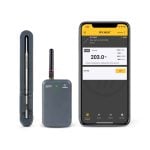
Sirloin is one of the cheapest steak cuts, but that doesn’t mean it can’t also be absolutely delicious. Get out your RFX™ Wireless Starter Kit—it’s time to make this steak worth more than its price tag.
Sirloin steaks (whether petite or top) are not generally known as the “kings of steaks.” They aren’t as tender as a filet, nor as rich as a ribeye. But that doesn’t mean they don’t have something to offer. When it comes to beefy, satisfying flavor at a price you can actually afford, sirloin is one of your best friends.
But with a cheaper, leaner cut of meat like this you have to be extra careful about how you cook it. Sirloin is less forgiving than a ribeye, for example, which has abundant fat that can help offset lost moisture.
You know what that means: sirloin steaks demand careful temperature control if you want them to turn out juicy, tender, and every bit as impressive as that expensive ribeye.
What is Sirloin, Anyway?
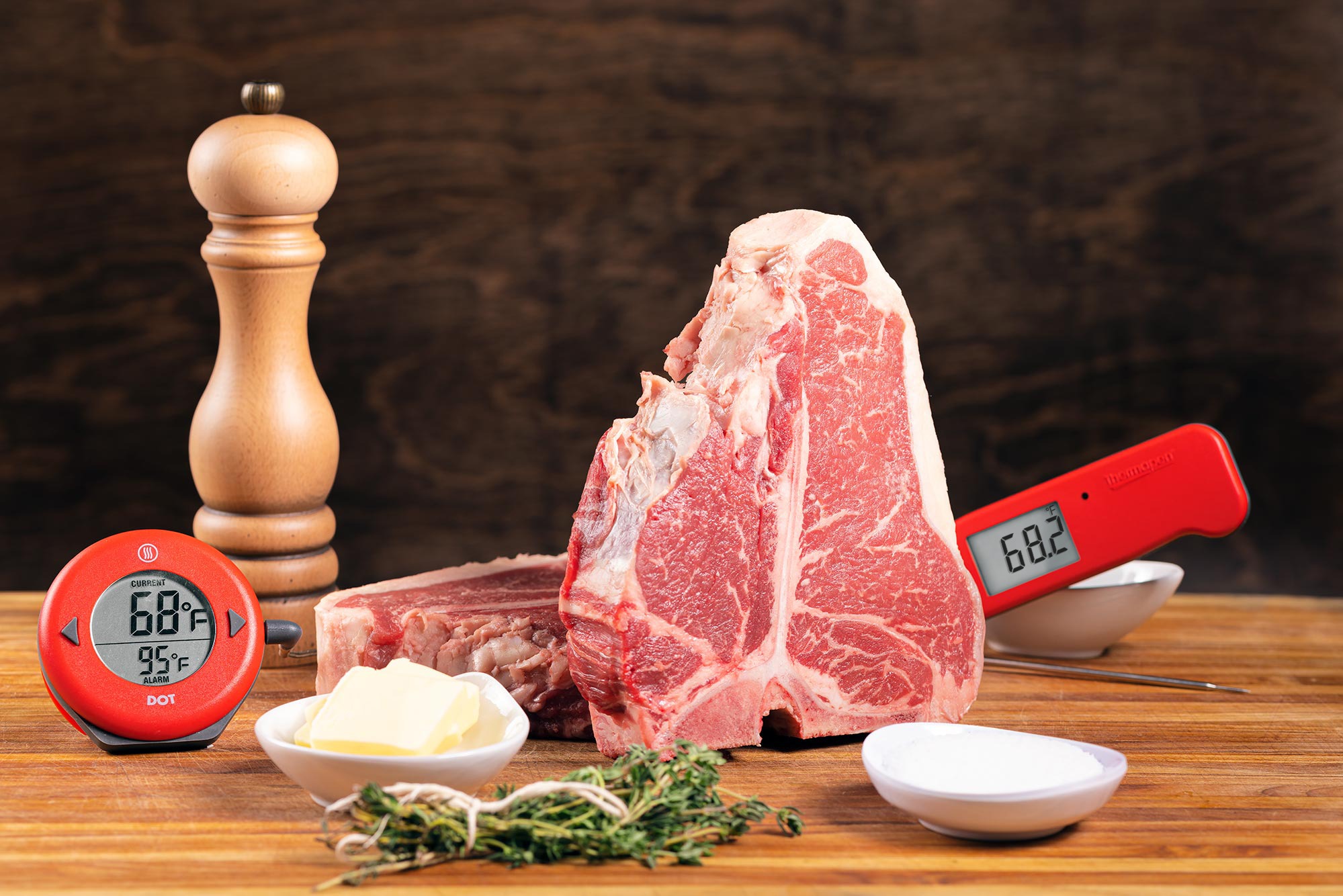
If you walk up to a good butcher’s counter and say “give me a sirloin steak, please,” you’ll likely get some follow-up questions. Top sirloin? Petite sirloin? Sirloin cap? These are not all the same thing. In fact, “sirloin” is kind of a vague term.
The word itself (from the Old French words surloigne and surlonge—both meaning “above the long part” or “above the loin”) varies by geography. British butchers give the name to what we would generally call the short loin. Here in North America, we consider the sirloin to be the muscle group that attaches at the end of the short loin—not above it, as the old name implies.
Top Sirloin Vs Petite Sirloin
Top sirloin steaks are from—you guessed it—the top sirloin muscle group (but not the fatty cap, which is often removed and sold separately because it’s prized for grilling and churrasco-style cooking). They tend to have a little more fat in them.
Petite sirloin steaks, meanwhile, are cut from further down that group, closer to the round.Petite sirloin These typically feature bands of connective tissue that run through the meat.
Both are delicious and deliver beefy flavor in spades, and neither will break the bank. (The petites we cooked for this post came out to about $8 a piece.) Whichever you choose, these cuts can toughen up when overcooked, so they need to be handled with care. Here’s how we did it.
How to Cook Sirloin Steak
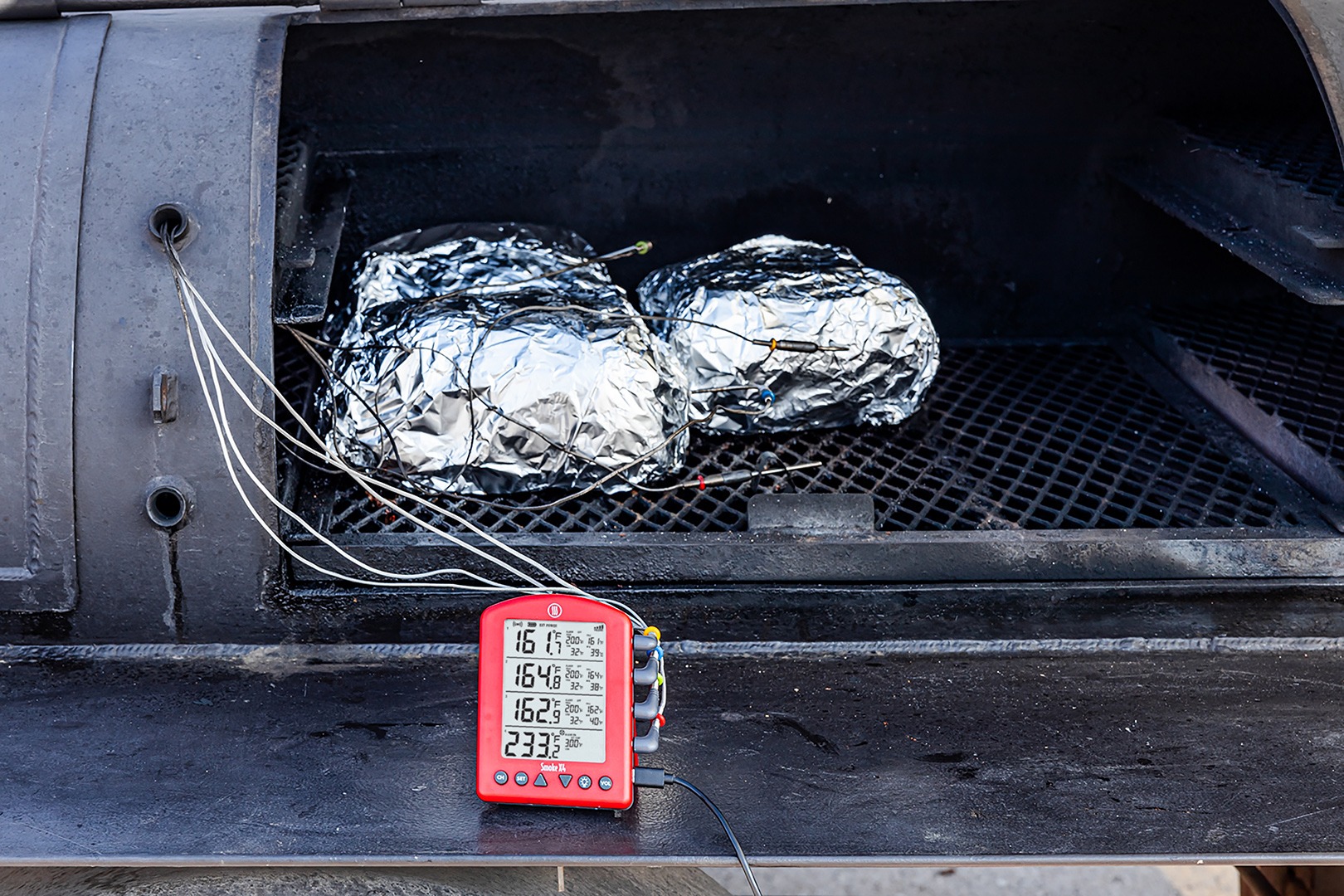
If you read this blog often, you know we’re big proponents of the reverse-sear method. We find it’s easier to hit your target temperature and achieve perfect results with easy repeatability. In this case, we chose to use a smoker for the low-heat portion of our reverse sear (read: big BBQ flavor), instead of an oven.
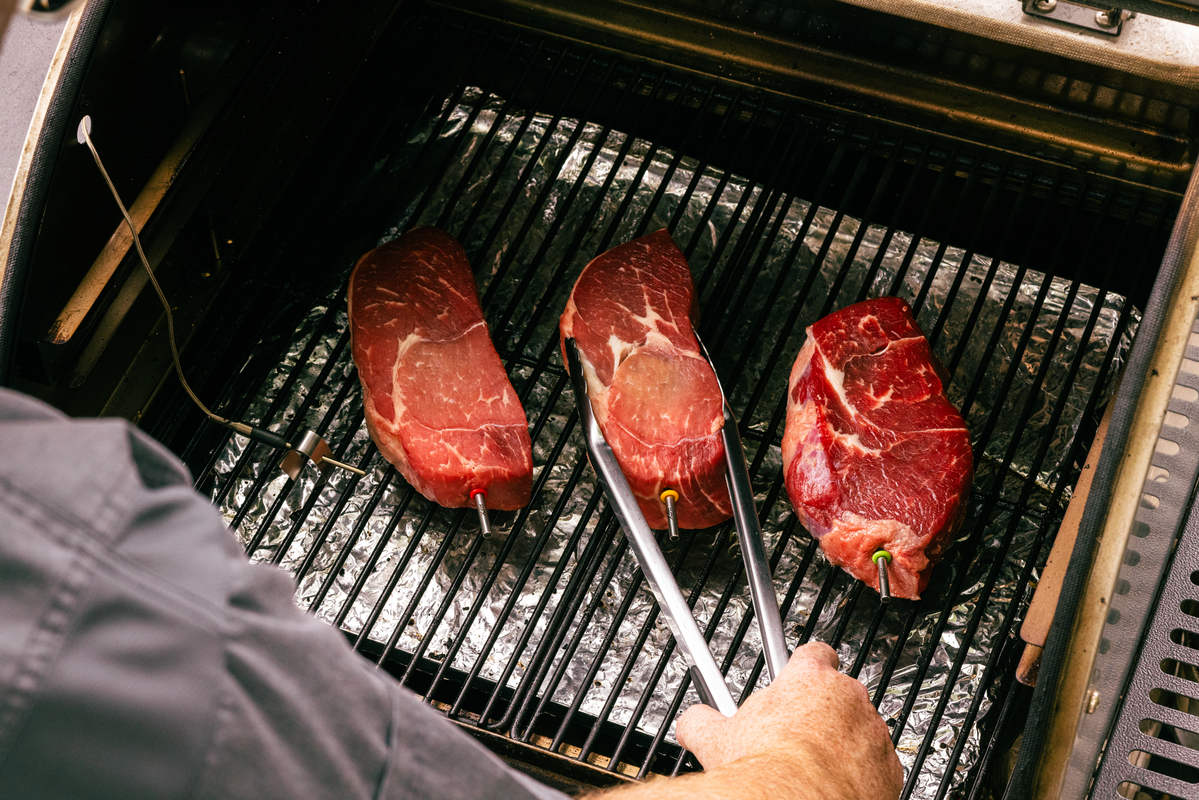
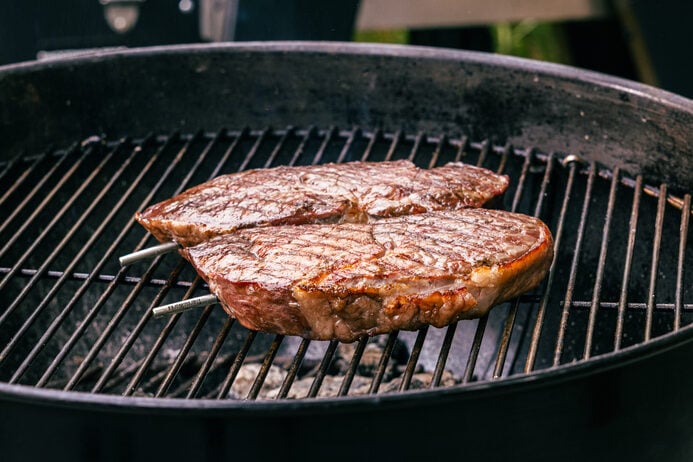
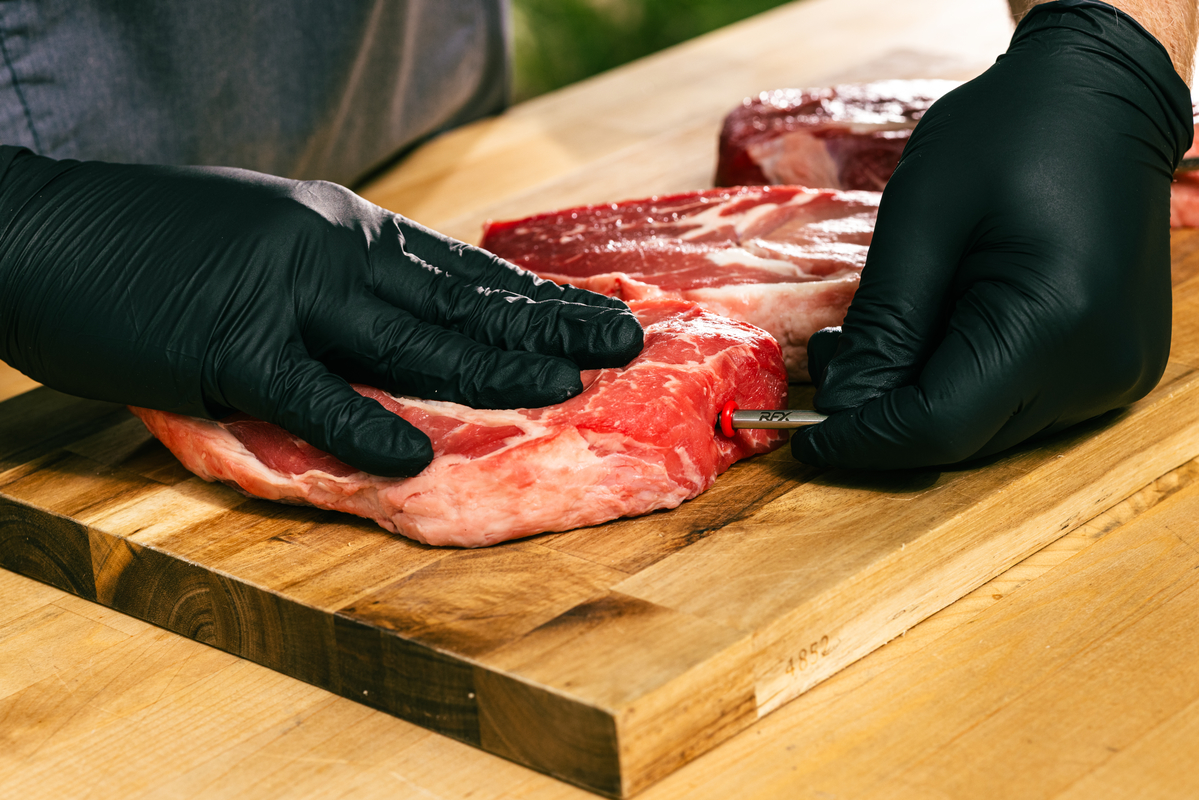
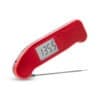
First, we seasoned our steaks with salt and pepper. Then we used our RFX wireless leave-in probe thermometer to monitor the temperature throughout the cook. Inserted up to the minimum immersion line, it can handle the high heat of the sear—and the low-and-slow smoke. We cooked the steaks at 225°F (107°C)until they reached an internal temperature of 100°F (38°C), double checking them with Thermapen® ONE, then removed them from heat.
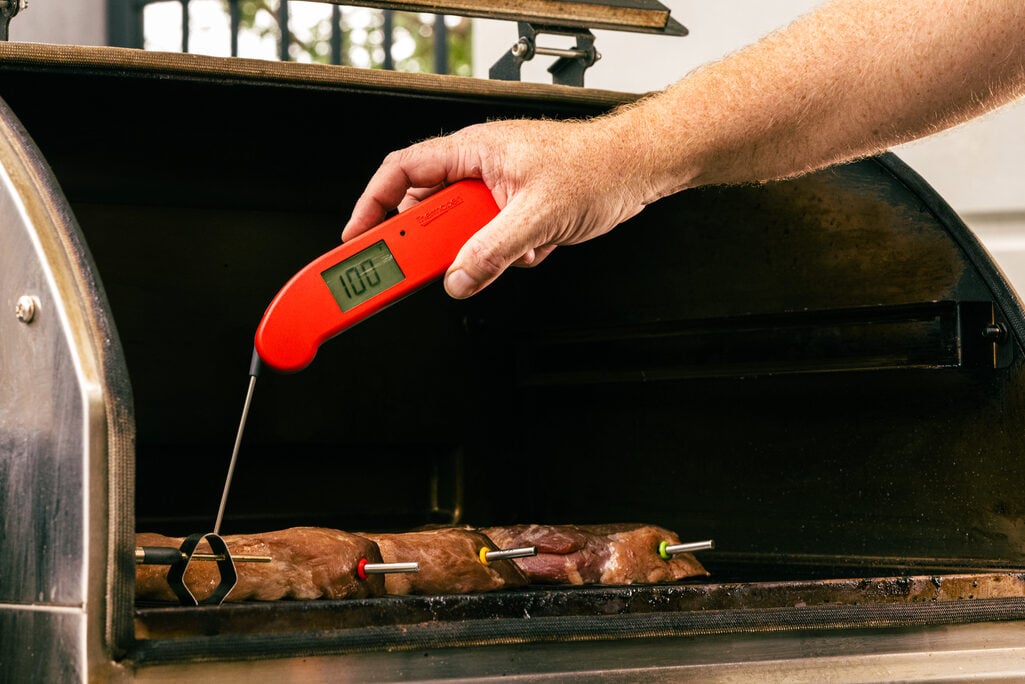
Though the steaks were far from fully cooked at this point, we let them rest before we seared them—basically giving them a chance to level off so we didn’t blow past our target temp once they hit the grill. We watched the temperature curve on our ThermoWorks app and waited until it stopped rising and actually started to drop. Then we started the sear. (If this seems odd, you may want to watch our video about how carryover cooking affects steaks.)
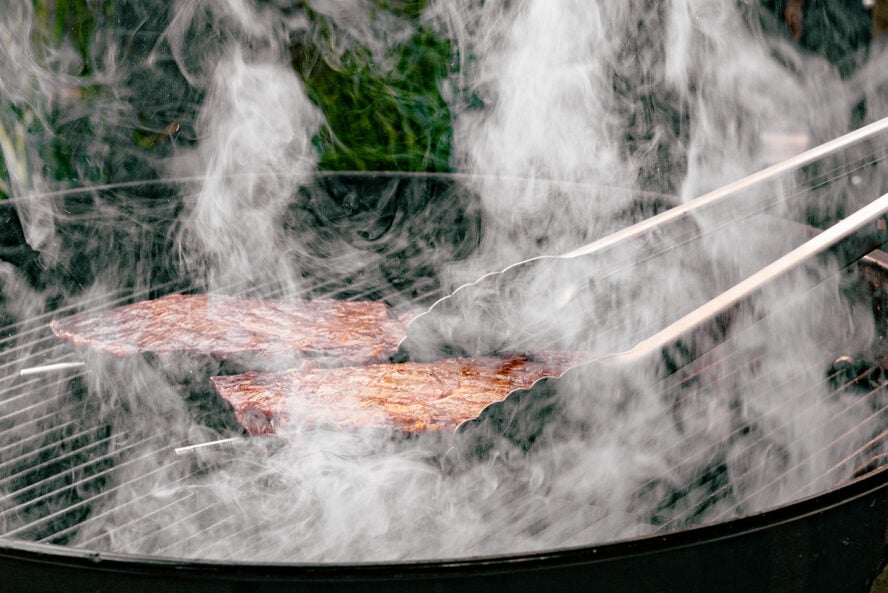
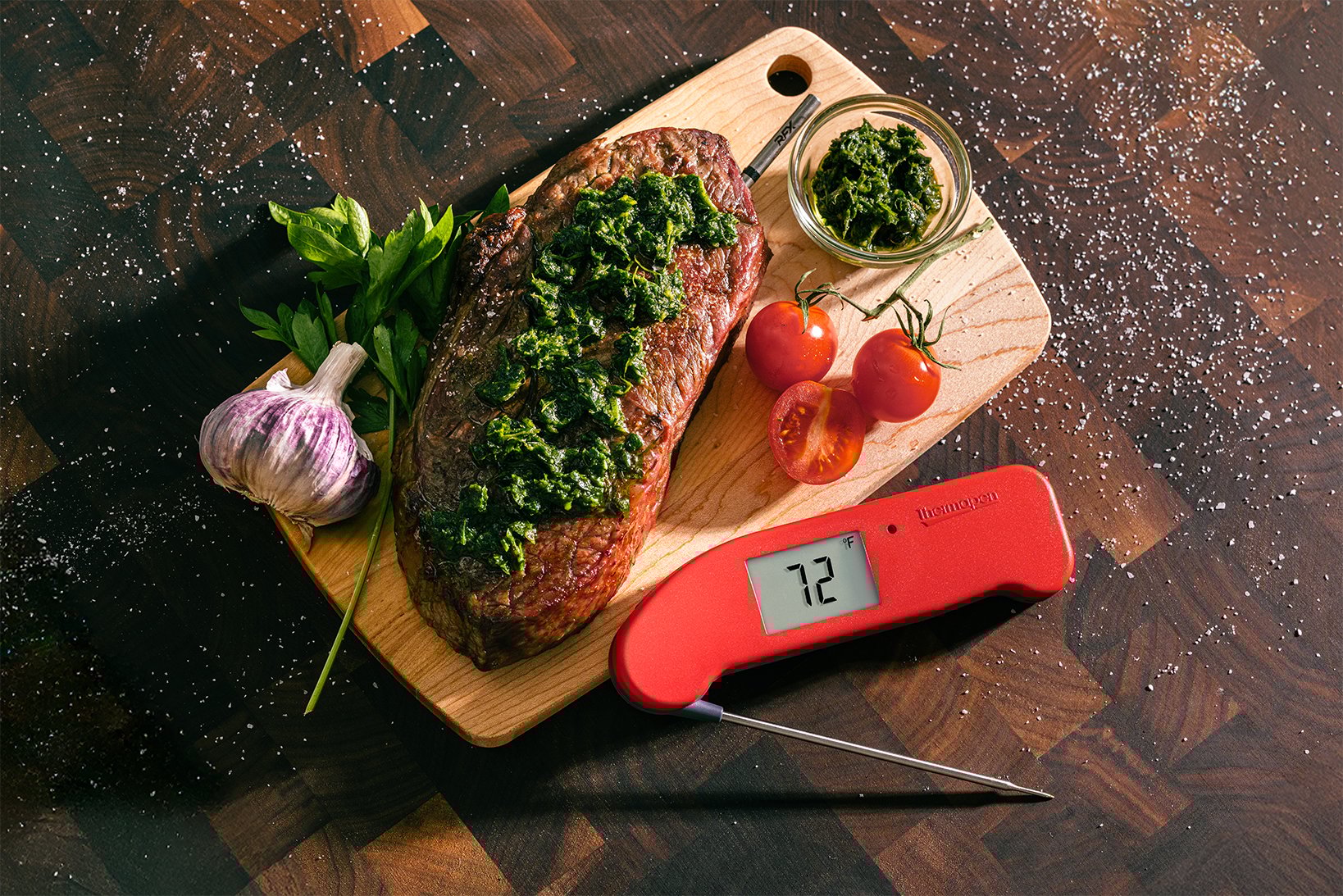
Flipping every 30 seconds, we seared the steaks on a hot grill, until the internal temp hit 120°F (49°C). After resting, carryover brought them right up to a perfect medium rare (about 130°F or 54°C). By cooking the meat slowly and carefully at first, letting that round of carryover run its course, and searing until we were about 10°F (4°C) below our target temp, we turned an affordable piece of meat into a meal as good as you’ll get at all but the very best steakhouses. Dress it up, of course, with a loaded baked potato and some compound butter.

Treat yourself (and your wallet) to a treat this weekend and try a sirloin steak. Temperature control makes food better, and sirloin steak is a great example of how. And it’s remarkable how a few meals like this, cooked perfectly at home, will actually make up the cost of your thermometers. Cooking to temp: great for the palate, great for the wallet. Happy cooking!
Sirloin Steak Recipe
Equipment
Ingredients
- 4 Sirloin steaks about 1–1.5” thick
- Salt & pepper
Instructions
- Preheat your smoker to 225°F (107°C).
- Season your steaks well on both sides with salt and pepper.
- Insert your RFX MEAT wireless probes into the steaks and place them in the smoker. Set high-temp alarms for 100°F (38°C) and cook.
- Preheat your grill to medium-high.
- When the RFX alarm sounds, verify the internal temp of your steaks with your Thermapen ONE. Remove them from the smoker and let them rest and carryover until you see the temperature stop climbing in the app.
- Once the temperature stops climbing and starts reversing, place the steaks on the grill and sear, flipping every 30 seconds, for about 3 minutes. Keep one eye on the app to make sure the steaks don’t shoot past your desired doneness temp. RFX can stay in the steaks for this portion of the cook, but remove any probe rings you may have used before.
- After a few minutes of searing, and while watching the app temp, spot check your steaks with your Thermapen ONE. You want an internal temperature of about 120–125°F (49–52°C) to land at a final temp of 130–135°F (54–57°C) when the carryover stops.
- Serve your steaks with your favorite steakhouse sides!