Why Beef Cheeks Make Better Sliders Than Brisket
What Are Beef Cheeks and Why They’re Perfect for Ultra-Tender Sliders
Move over brisket — beef cheek sliders are here, and they’re taking over. If you love brisket sliders but don’t love the price, the long cook time, or the babysitting, beef cheeks might just change your BBQ life.
I’ll admit it, I was skeptical at first. I’m a huge brisket fan. But after hearing Malcolm Reed call beef cheeks phenomenal on his podcast, I had to try them. One cook later, I was fully converted.
Beef cheeks deliver deeper beef flavor, incredible tenderness, and far more consistency—especially when you cook them to the right temperature.
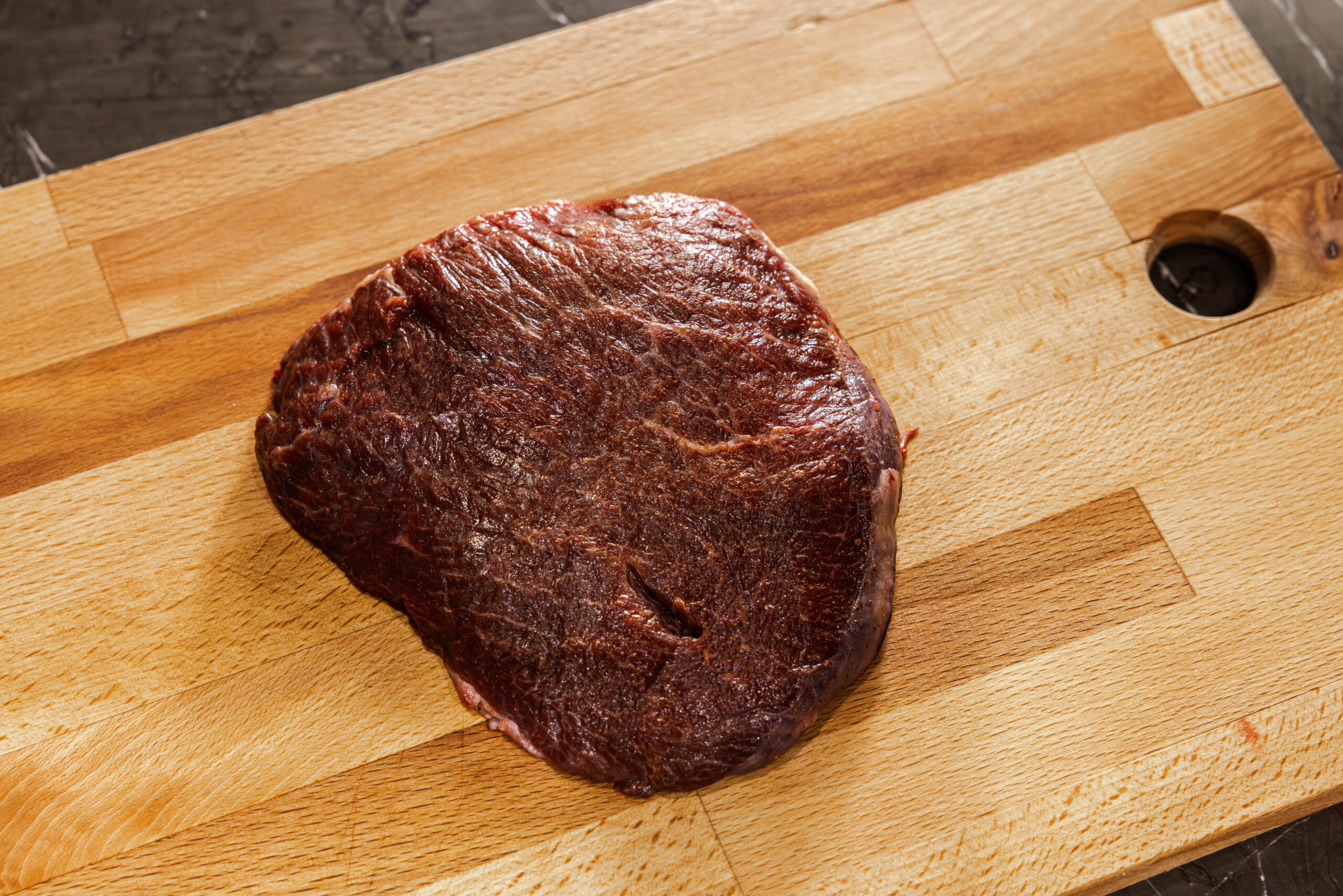
Beef cheeks come from the facial muscles of the cow. Because they work hard, they’re packed with connective tissue and collagen. When cooked low and slow to the right temperature, that collagen breaks down into gelatin, creating incredibly rich, tender meat that’s perfect for sliders.
The Temperature Trick for Ultra-Tender Beef Cheek Sliders
Beef cheeks are loaded with connective tissue, which means time alone won’t get you there. Temperature is everything.
Target Internal Temperature for Beef Cheeks
For beef cheek sliders, here’s the sweet spot:
- 190–195°F – Collagen has started breaking down, but the texture is still tight
- 195–203°F – Beef cheeks become tender and shred easily
- 203–205°F (ideal range) – Ultra-tender, juicy, and perfect for sliders
Quick Answer: Beef cheeks are best for sliders when cooked to 203 – 205°F internal, until probe-tender.
Why I Prefer Beef Cheeks Over Brisket for Sliders
After cooking both side by side, here’s why beef cheeks win for sliders every time:
- More affordable than brisket
- Shorter, more predictable cook time
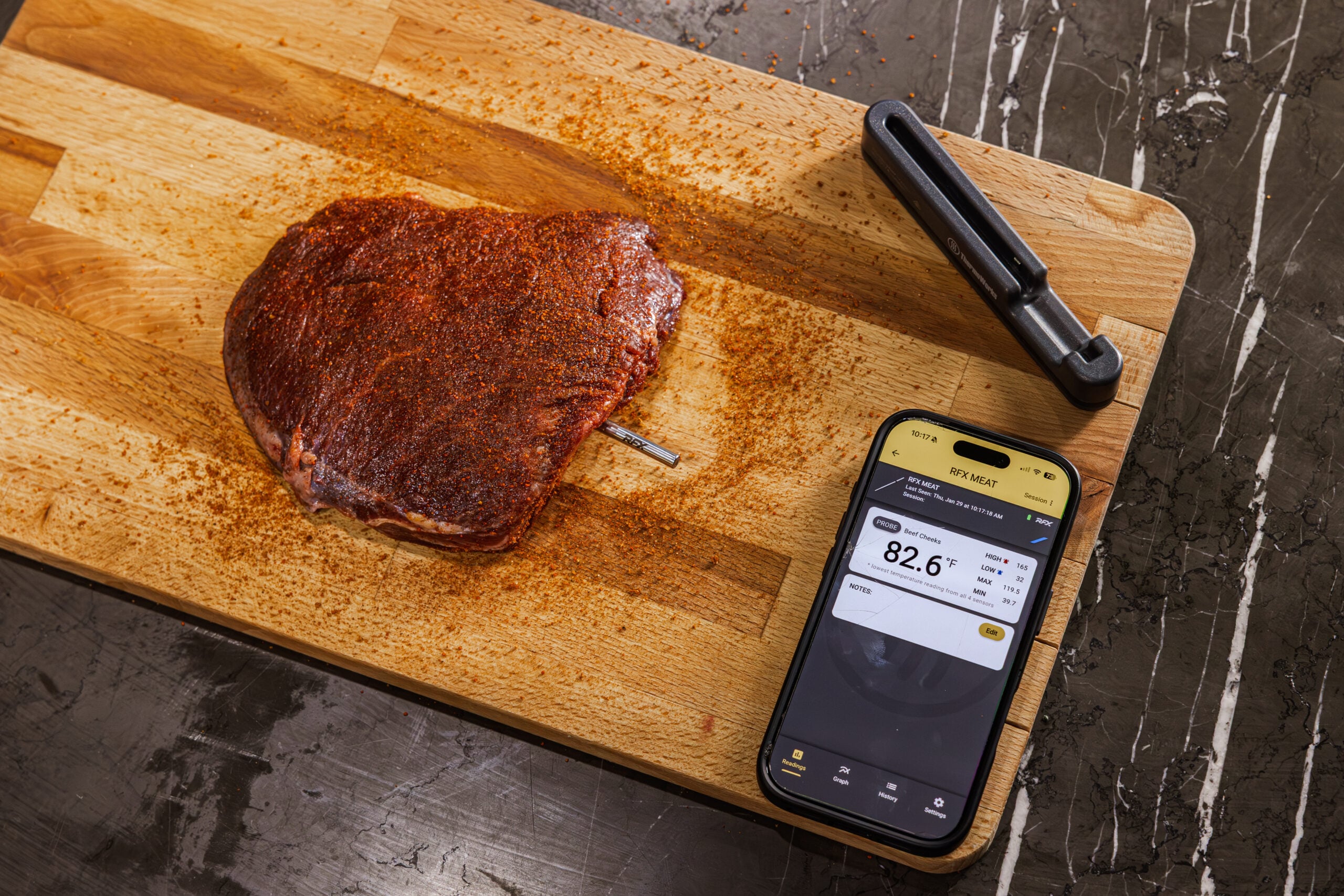
- Less babysitting—I set my RFX™ Wireless probe and easily monitored from my phone
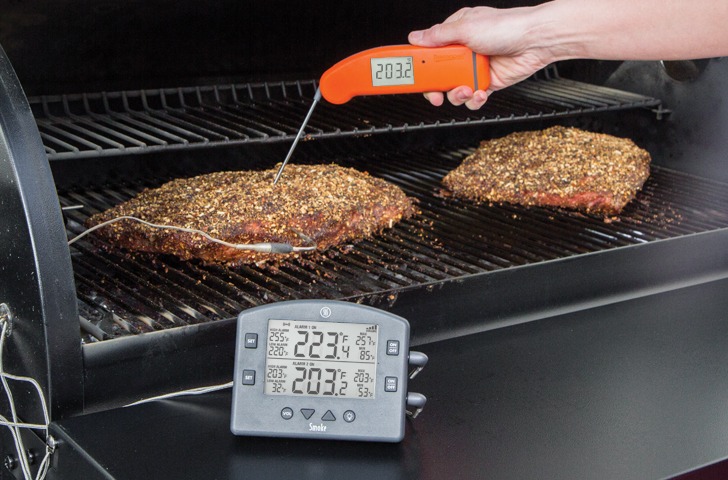
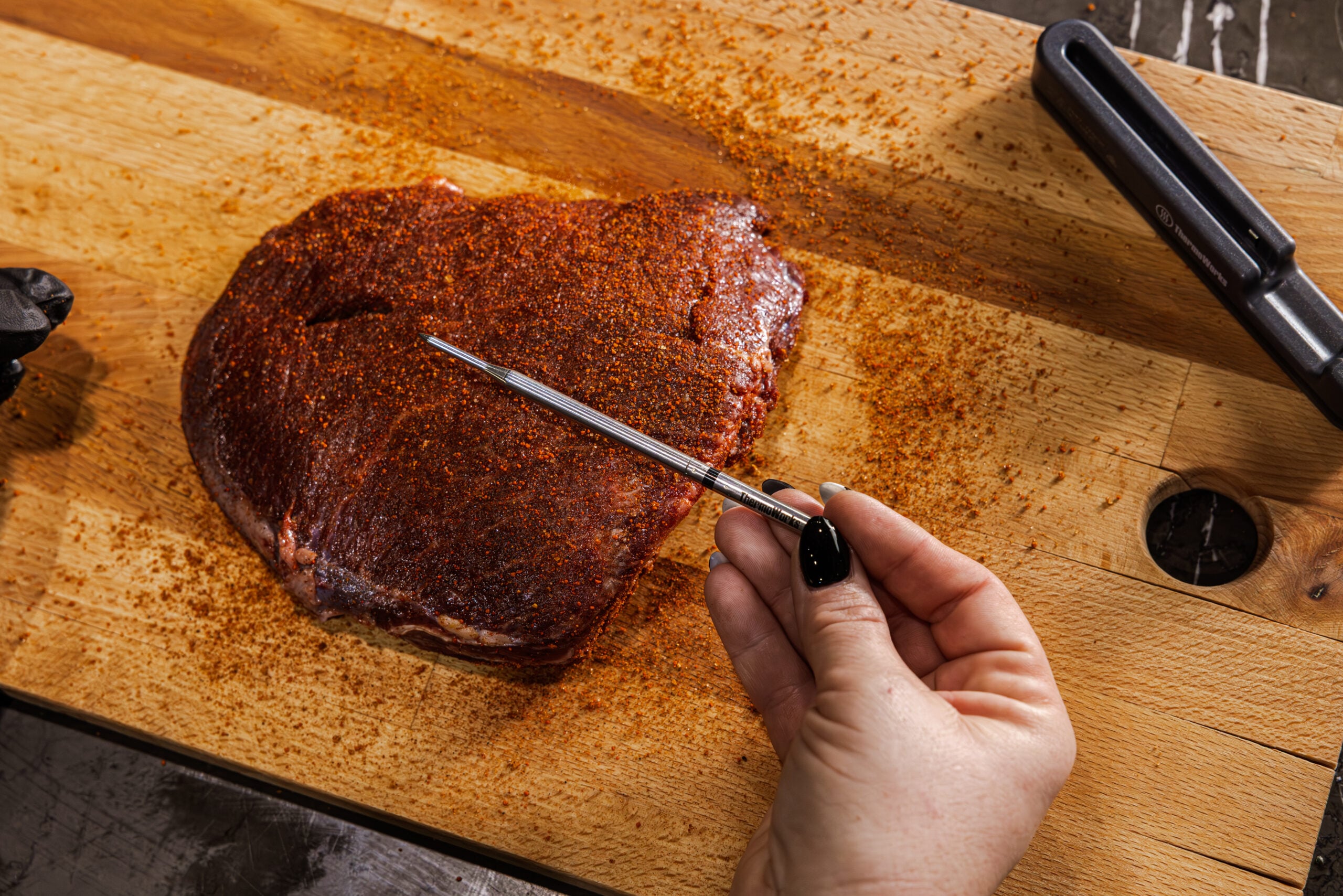
- Pro-tip: when using RFX Wireless, always insert to the minimum immersion line.
- Forgiving for groups—they hold beautifully without drying out
- Richer beef flavor with incredible moisture
Once cooked, beef cheeks can sit for a bit without losing texture or taste, making them ideal for parties, game days, or feeding a crowd.
Seasoning & Setup
- Light coat of W Sauce
- Season generously with Hardcore Carnivore Black
- Smoker set to 275°F
- Cherry wood chunks added for smoke and color
Monitoring the Cook
Insert RFX™ Wireless probe into the thickest part of the cheek and set a high alarm at 165°F. This lets me walk away without constantly checking the smoker.
Smoking Phase
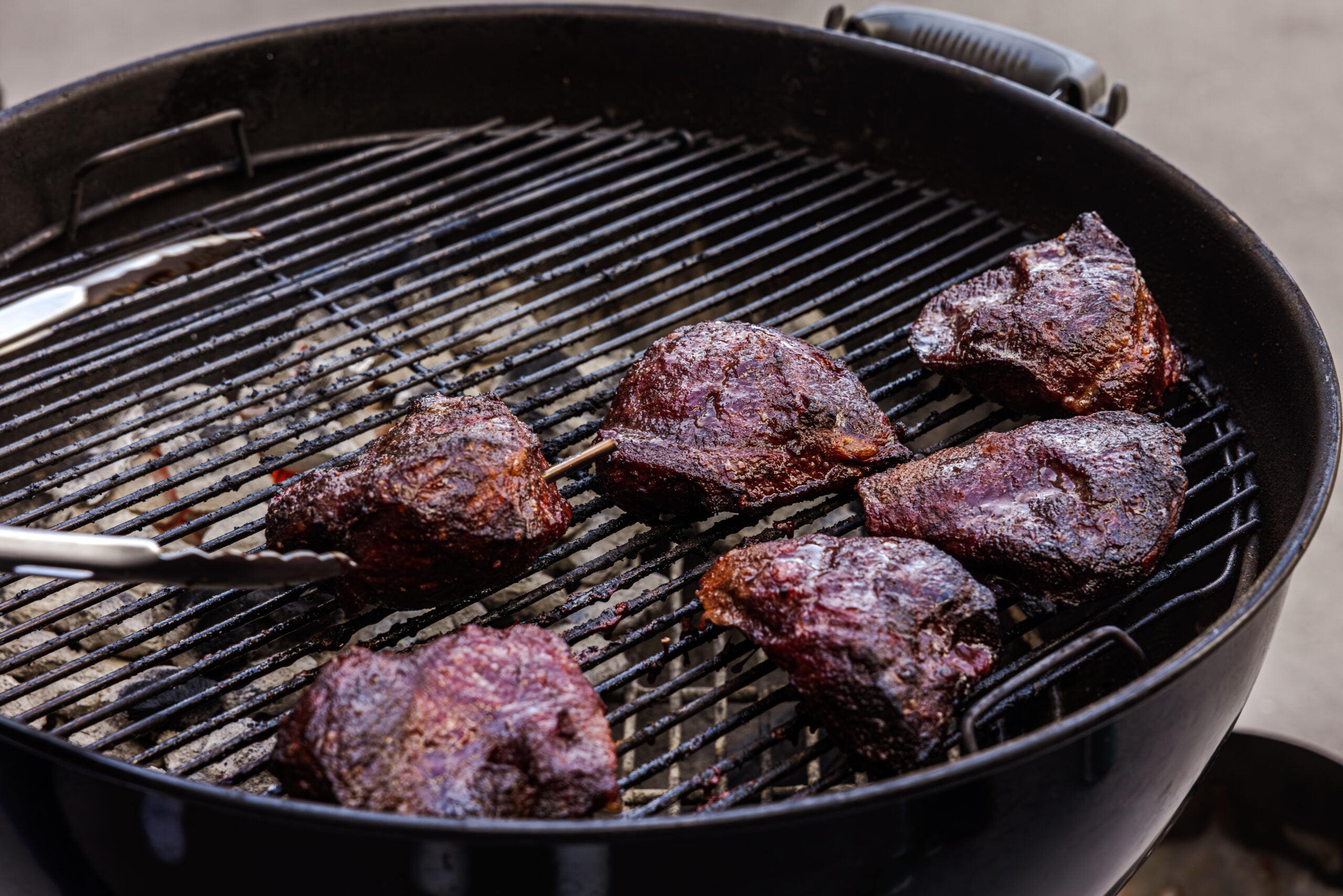
The beef cheeks go directly on the smoker with a drip pan underneath filled with onions and broth. As they cook, the fat renders down into the pan, building serious flavor.
After about 2 hours, the cheeks develop a beautiful bark, take on plenty of smoke, and hit 165°F internal temperature. I always double-check with Thermapen® ONE.
Braising to Finish
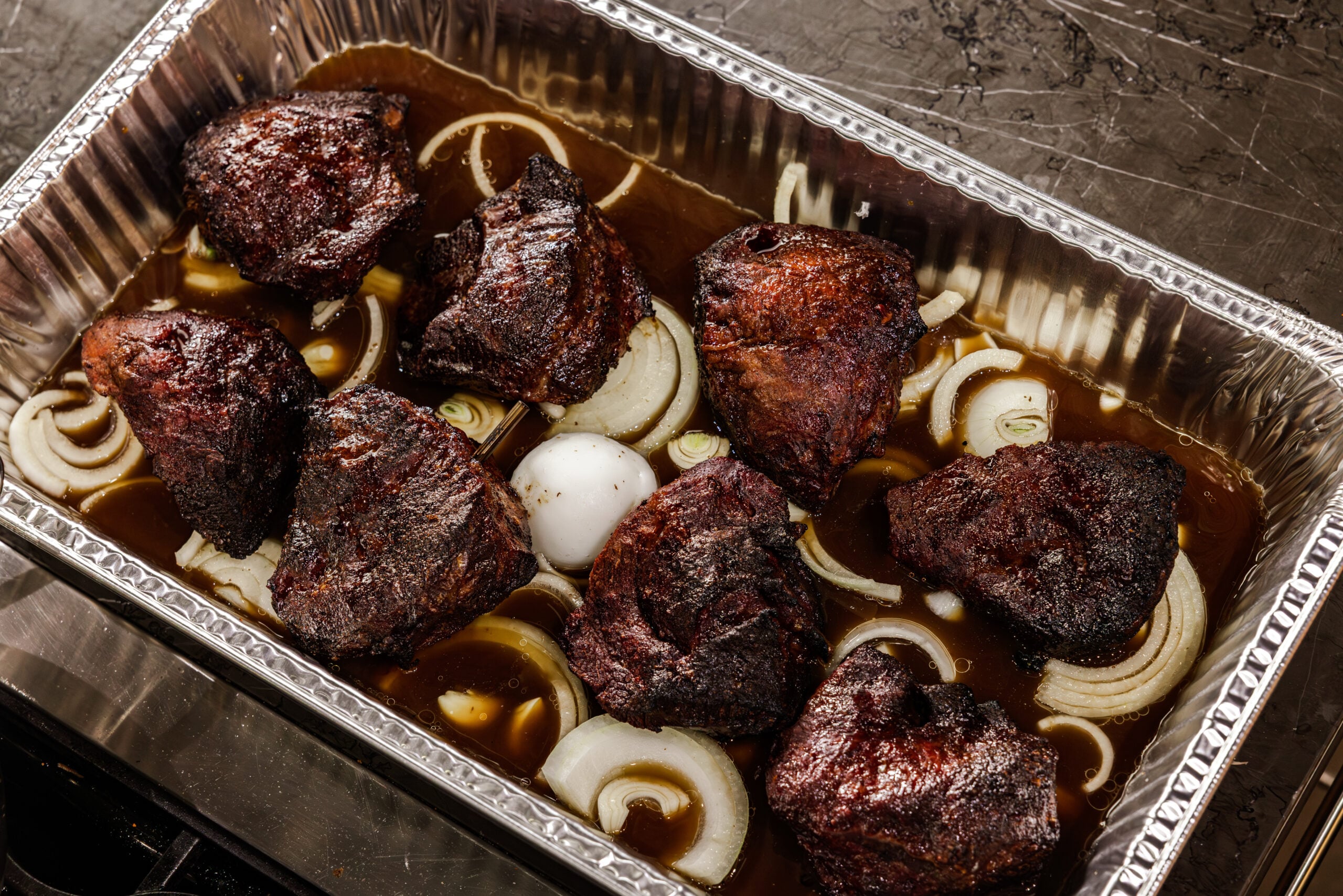
At 165°F, I transfer the beef cheeks into the drip pan, add beef broth, one whole onion and a head of garlic, cover tightly with foil, and return them to the smoker or the oven. From here, they braise until they reach 203 – 205°F internal temperature and are probe-tender.
We used Tuffy Stones White BBQ Sauce as a base for a slaw with green apples. The tart apple really cuts that rich beef cheek.

Beef Cheek Sliders
- Cook Time: 6-9 hours
- Total Time: 0 hours
Ingredients
For the Beef Cheeks
3–4 lbs beef cheeks, trimmed
W Sauce (or Worcestershire-style sauce), light coat
Hardcore Carnivore Black seasoning (or coarse black pepper–forward rub)
Cherry wood chunks (for smoking)
For the Braise
2–3 cups beef broth (enough to partially submerge)
1 large onion, sliced
1 whole head garlic, halved
For the Slaw
1½ cups mayonnaise
½ cup + 1 tablespoon apple cider vinegar
3 tablespoons fresh lemon juice
¾ teaspoon granulated garlic
1½ teaspoons celery seed
¾ teaspoon cayenne pepper
2¼ teaspoons kosher salt
3 teaspoons simple syrup
¾ pound green cabbage, julienned
¾ pound Granny Smith apple, julienned
1/2 pound carrots, julienned
For the Sliders
Slider buns
Beef cheeks, shredded
Celery Seed White Sauce (recipe here)
Instructions
- Preheat the smoker
Set smoker to 225°F. Add cherry wood chunks or pellets for smoke and color. - Season the beef cheeks
Lightly coat beef cheeks with W Sauce. Season generously on all sides with Hardcore Carnivore Black. - Insert thermometer
Insert an RFX™ Wireless probe into the thickest part of one beef cheek. Set a high alarm for 165°F. - Smoke the beef cheeks
Place beef cheeks directly on the smoker grates. Position a drip pan underneath filled with sliced onion and beef broth. Smoke until the cheeks develop bark and reach 165°F internal, about 2 hours. - Braise to tenderness
Transfer beef cheeks into the drip pan. Add garlic halves and additional beef broth if needed. Cover tightly with foil and return to the smoker or place in a 275°F oven. - Cook to the final temperature
Continue cooking until beef cheeks reach 203–205°F internal and are probe-tender, meaning the probe slides in with little resistance. - Rest and shred
Remove from heat and rest for 20–30 minutes. Shred beef cheeks and toss lightly in the braising liquid. - Build the sliders
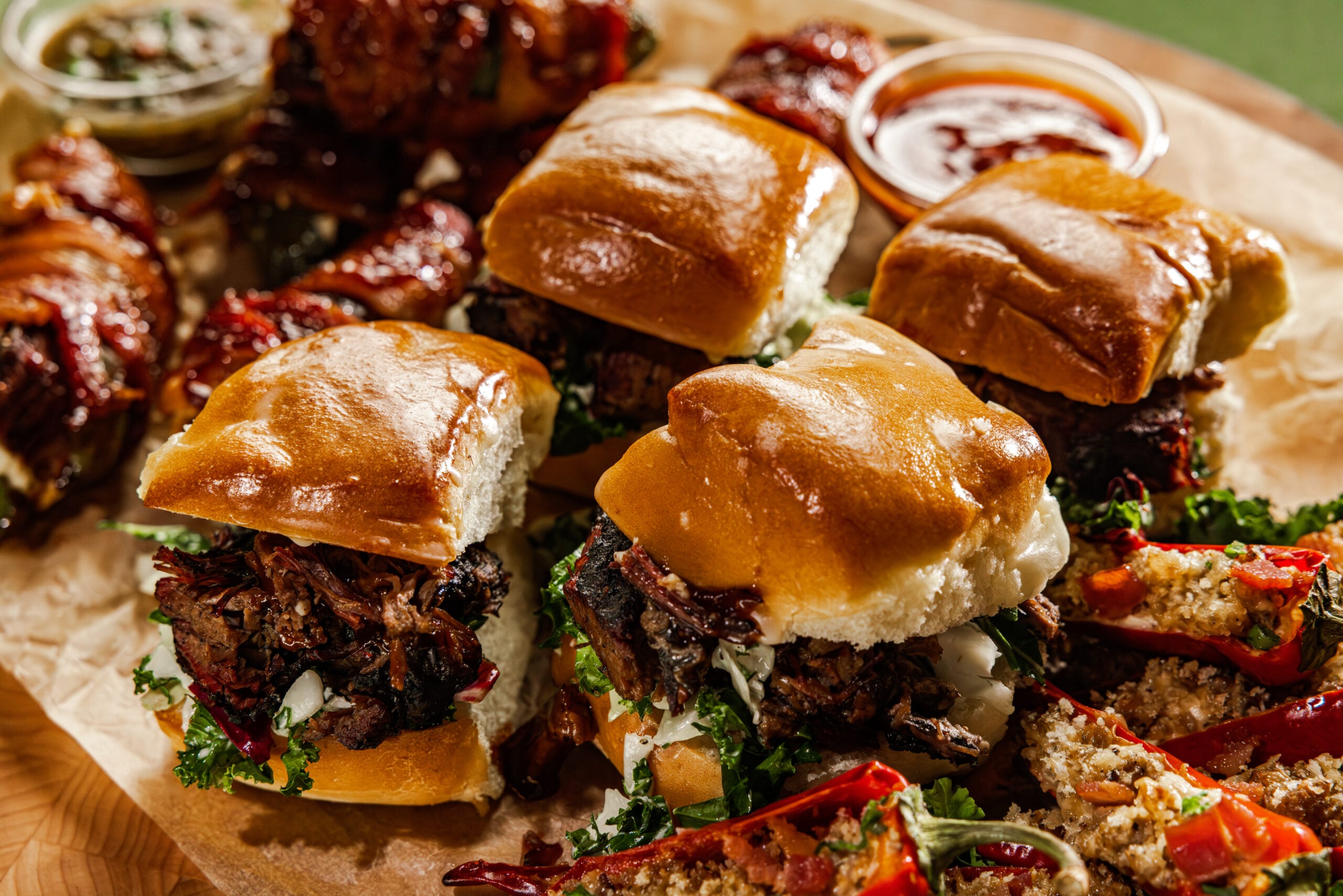
Toast slider buns. Add shredded beef cheeks, top with green apple slaw, and drizzle generously with Celery Seed White Sauce.
Beef Cheek Sliders: Frequently Asked Questions
Beef cheeks come from the facial muscles of the cow. Because they work hard, they’re packed with connective tissue and collagen. When cooked low and slow to the right temperature, that collagen breaks down into gelatin, creating incredibly rich, tender meat that’s perfect for sliders.
For sliders, many cooks prefer beef cheeks over brisket. Beef cheeks are more forgiving, often more affordable, and deliver a deeper beef flavor. When cooked properly, they shred easily and stay juicy without the long cook times or constant babysitting brisket often requires.
Beef cheeks are at their best when cooked to an internal temperature of 203–205°F. This is the point where collagen fully breaks down, resulting in ultra-tender, pull-apart meat. Pulling them early can leave the texture tough, even if they look done.
Cook time varies based on size and cooking method, but most beef cheeks take 4–6 hours when cooked low and slow. Instead of cooking by time, focus on internal temperature for consistent results.
Yes—beef cheeks are excellent on the smoker. Smoking them first builds bark and flavor, then finishing them covered or braised helps push them through the stall and reach the ideal internal temperature without drying out.
Wrapping or braising beef cheeks after they reach about 165°F helps retain moisture and speeds up collagen breakdown. This step is key to achieving tender, shred-ready meat for sliders.
Absolutely. Beef cheeks hold their texture well after cooking and don’t dry out quickly, making them ideal for parties, game days, or anytime you’re feeding a group.
Yes. Beef cheeks reheat extremely well when stored with their cooking liquid. Rewarm gently and bring them back to serving temperature without sacrificing moisture or tenderness.
Usually, your local butcher has these, and seasonal, bigger markets like Sam’s Club and Costco have them.