

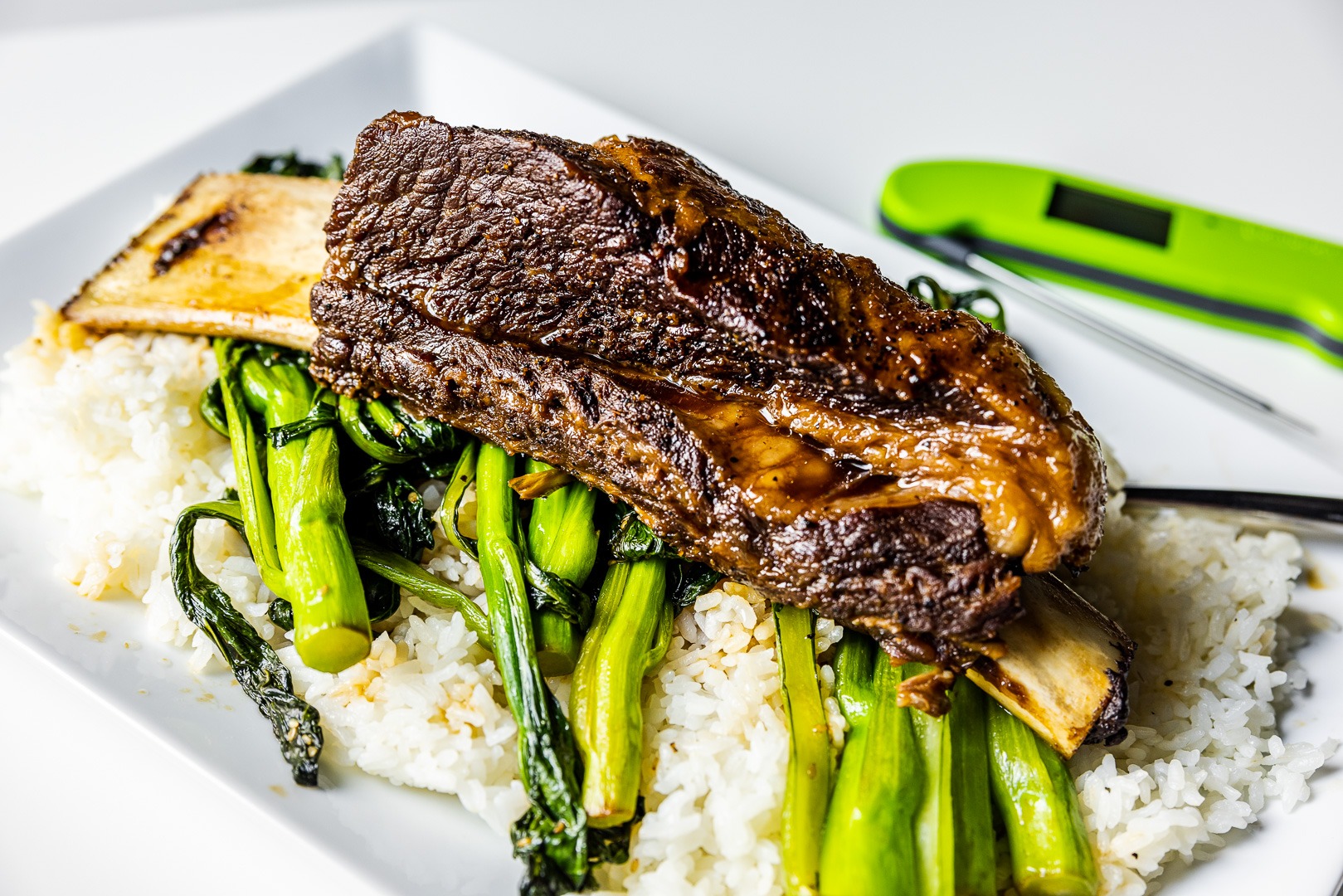
Whole Braised Short Ribs: Temperatures for Tenderness
Here we are at the door of winter cold and wanting warm things to eat. What we need in this season is rich, festive, comforting food, and braised short ribs are perfect for exactly that. When properly braised, the otherwise tough meat of short ribs becomes soft, tender, and delectably gelatinous. That texture, combined with the deep, warm sauce in which they braise, is a perfect recipe for wintertime comfort.
Oh, and we’re not talking about the short short ribs, either. No, we’re talking about the long ones, the “dino ribs,” cut from a whole plate. They’re huge and beautiful and super fun to cook, and the name is evocative of the kind of big, meaty experience you get from this cut.
Here, we’ll give you the thermal keys to perfect braised beef dino ribs, and we’ll also give you a great recipe based on one found at Food52. Let’s take a look.

“Dino” ribs: what are they?
Short ribs come in a few styles, some more readily available than others. You can usually get them cut in strips across the bone (as used in Korean BBQ), or you can get them cut into neat little cubes. But if you have a butcher that actually cuts meat and can do custom cuts, you can usually get a whole plate of short ribs or get them cut into long, individual ribs (you can also buy the plate and easily cut them into the individual ribs yourself). Because of their appearance, these long (6–8″), meaty ribs are familiarly known as “dino ribs,” though the proper name for them is English-cut short ribs.
Braising beef short ribs: why and how
The tender goodness that is short ribs is only accessible via long, slow cooking, optimally in a humid environment, which is to say that they are best when braised. Braising allows the ribs to tenderize while bathing in a flavorful liquid, absorbing the flavors as they also melt their connective tissue and release their own meaty essences into the mix. You end up with a meat and a sauce that are ideally suited to each other and are both incredibly tasty.
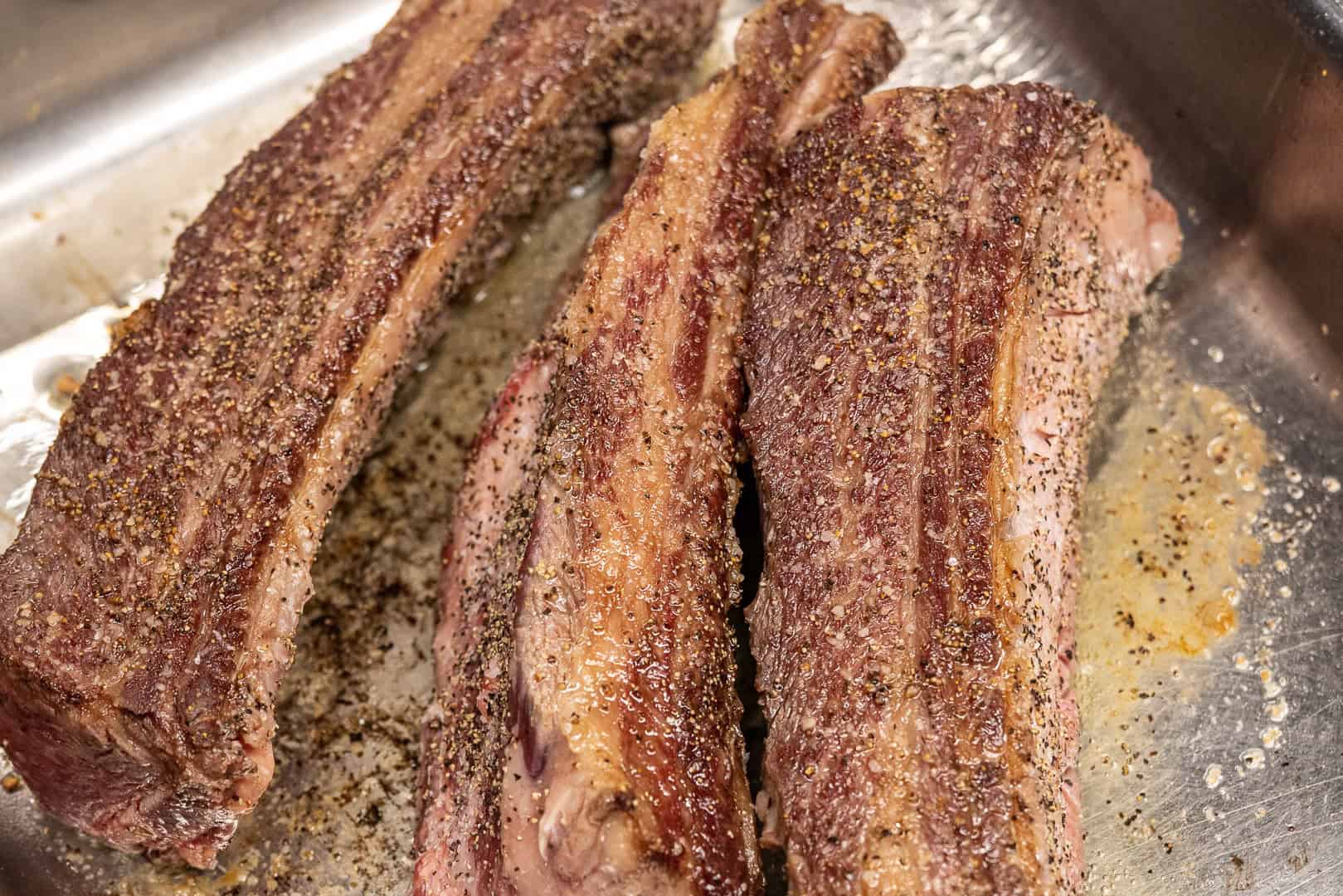
Braising is an ancient means of cooking tough cuts of meat to tenderize them, and is also quite simple. Start with meat, and brown it well. Browning gives the whole braise flavor, especially the meat itself. Those Maillard-browning byproducts are what make everything taste meaty, so don’t skimp on the browning stage.
Then comes the liquid. Braising liquids are often fortified with aromatics: alliums like onion and garlic or leeks, root vegetables like carrots, herbs (matching the cuisine from which you’re braising), all added to the broth, wine, plain water or, as in the case of this recipe, soy sauce and other flavorings. You want liquid to come about a quarter and no higher than half way up the side of the meat. Because of the curvature of the dino ribs, we’ll be cooking them on their sides, so they make a crescent in the pan.
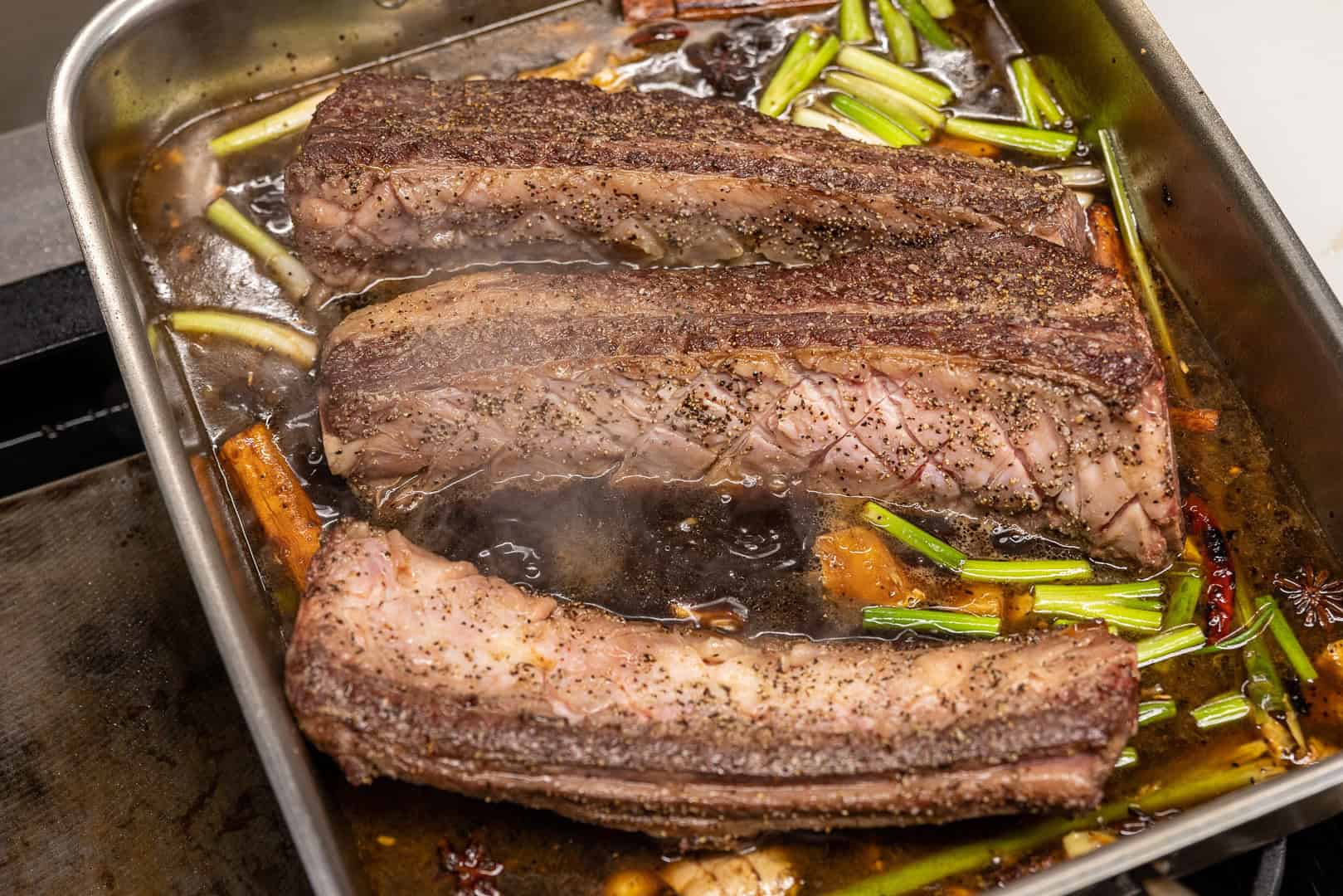
Then, of course, you must cook them. Cover the pan in which you are braising and put the ribs in the oven. As the liquid cooks and even boils inside the foil-covered pan, the steam will accumulate and create a humid, hot environment for the ribs to cook in, even the parts that are above the level of the braising liquid.
How to know when braised short ribs are done
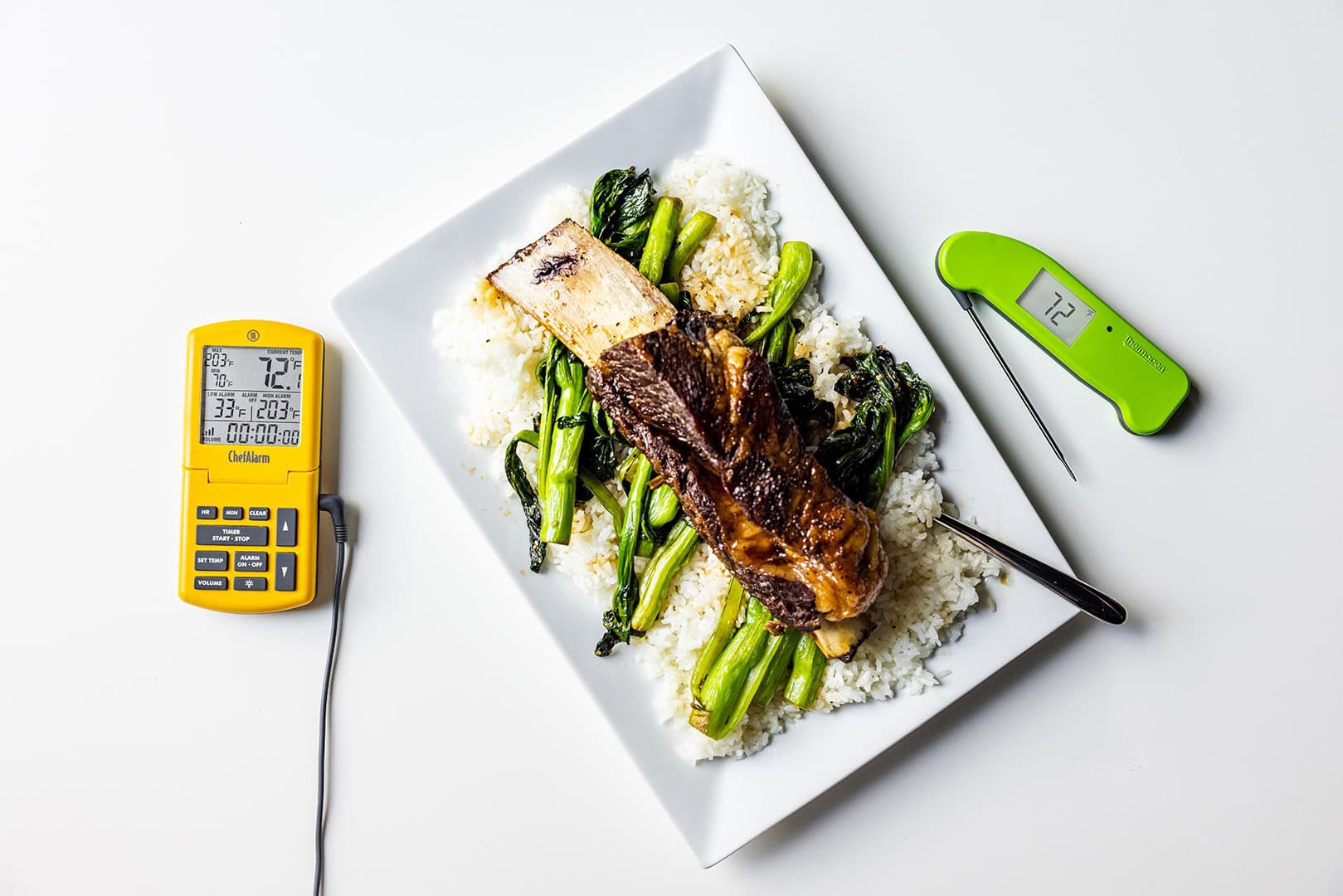
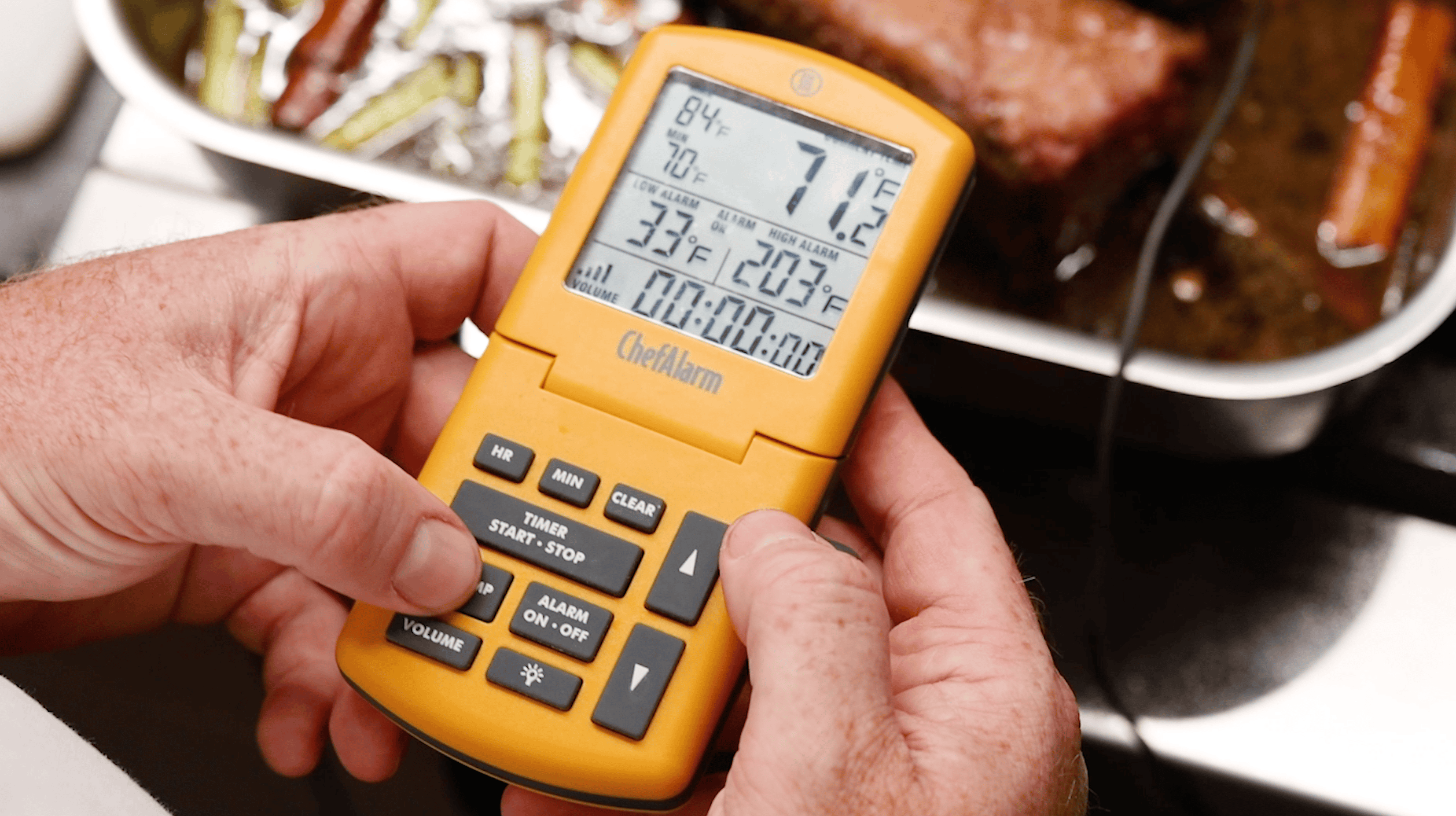
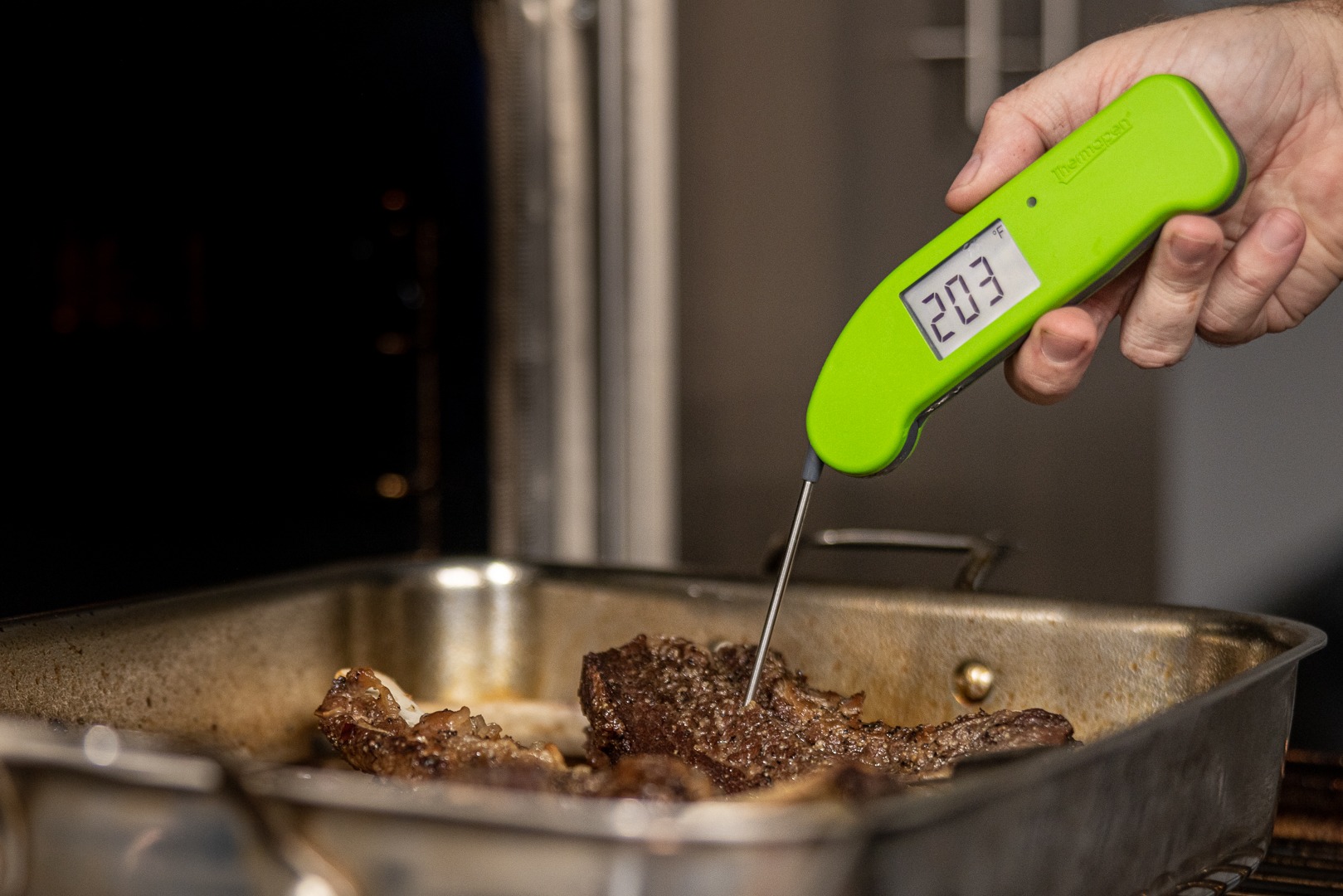
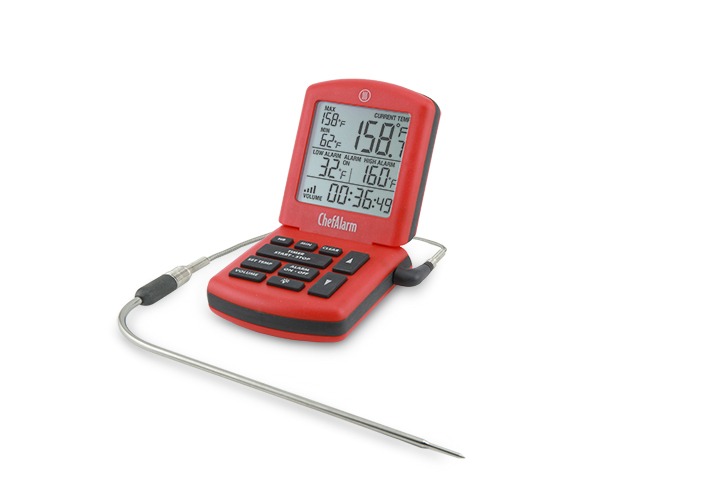
It takes a few hours for the short ribs to cook through, but trying to do the cook by time and time alone is not going to work. Instead, we can cook by temperature. Using a leave-in probe thermometer like ChefAlarm® will help us know when to take the meat from the oven. Ribs like these won’t be done until they hit a temperature of about 203°F (95°C), so stick the probe into the thickest part of the largest rib and set the high-temp alarm. When it sounds, verify the temperature with your Thermapen® ONE, which will tell you if there are any lower readings, but will also let you feel the tenderness of the meat.
A note on flavoring short ribs
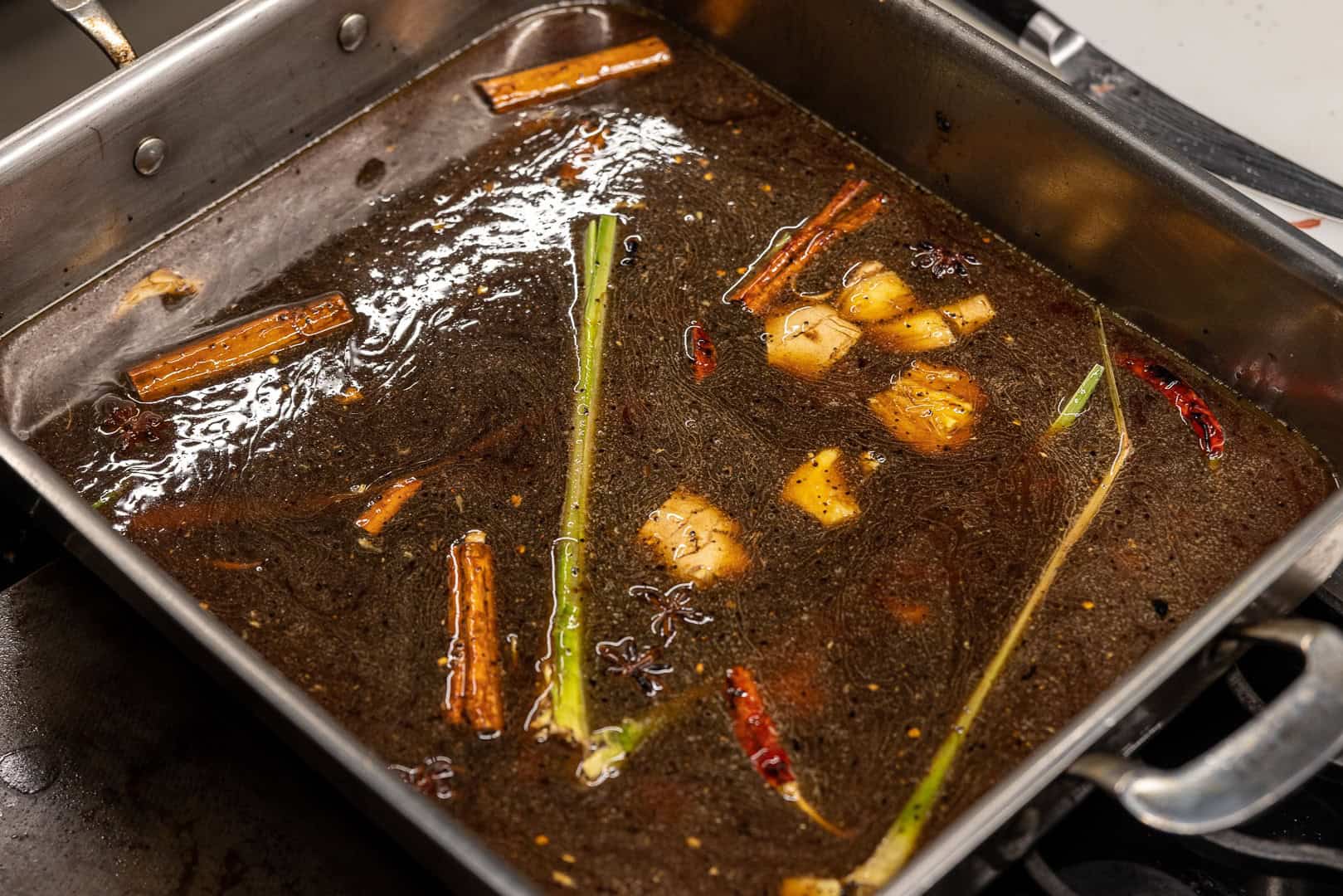
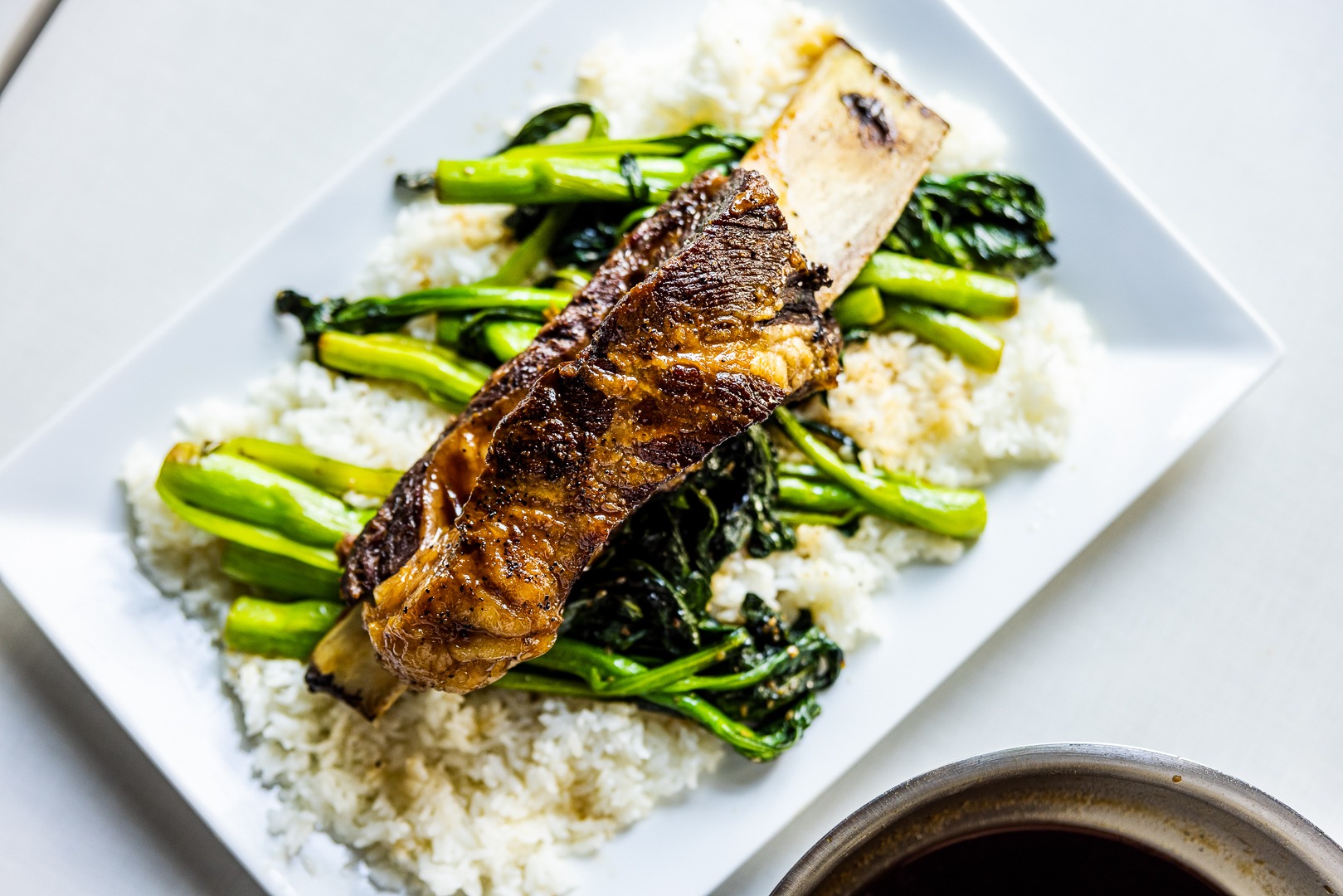
This recipe is heavily influenced by Asian flavors and ingredients, made intriguing with star anise and lemongrass as well as ginger and hoisin sauce. I love it. Serve it over a bed of good steamed rice with sauteed greens and spooned over with more dark sauce from the braising pan and you’ll be incredibly satisfied.
But if you don’t feel like having those Asian flavors, you can do this any way you like. Use celery, carrot, and onion; use fennel bulb and tomatoes; use red wine or brown ale or rich homemade beef stock instead of soy sauce. The thermal principles remain the same, no matter what flavors you throw at it.
I love cooking like this. I look forward every year to braising season and now that it’s here I’m excited to take advantage of it. I hope you will too! This braise of beef short ribs is a fantastic way to not only get through but even celebrate a season of cold. Use your thermal knowledge in tandem with your ChefAlarm to get amazing results your first time making this and every time. Happy winter. Happy cooking.
Whole Braised Short Ribs: Temperatures for Tenderness
Equipment

Ingredients
- 3–5 lb English-cut bone-in short ribs one whole plate
- 2 Tbsp olive oil
- 4 cloves garlic smashed
- 2 –3 dried hot chilies such as arbol or Japones
- ¼ C soy sauce
- ¼ C hoisin sauce
- ½ C rice wine Shaoxing wine, or sub a dry white wine
- ½ C brown sugar
- 3 C water
- 2 lemongrass stalks tender bulby part crushed
- 1 stub of ginger thumb size, crushed
- 4 cinnamon sticks
- 5 whole star anise
- 4 scallions cut into 2-inch lengths
- Kosher salt and freshly ground black pepper
- Green onions and chopped cilantro for serving
Instructions
- Preheat your oven to 375°F (191°C).
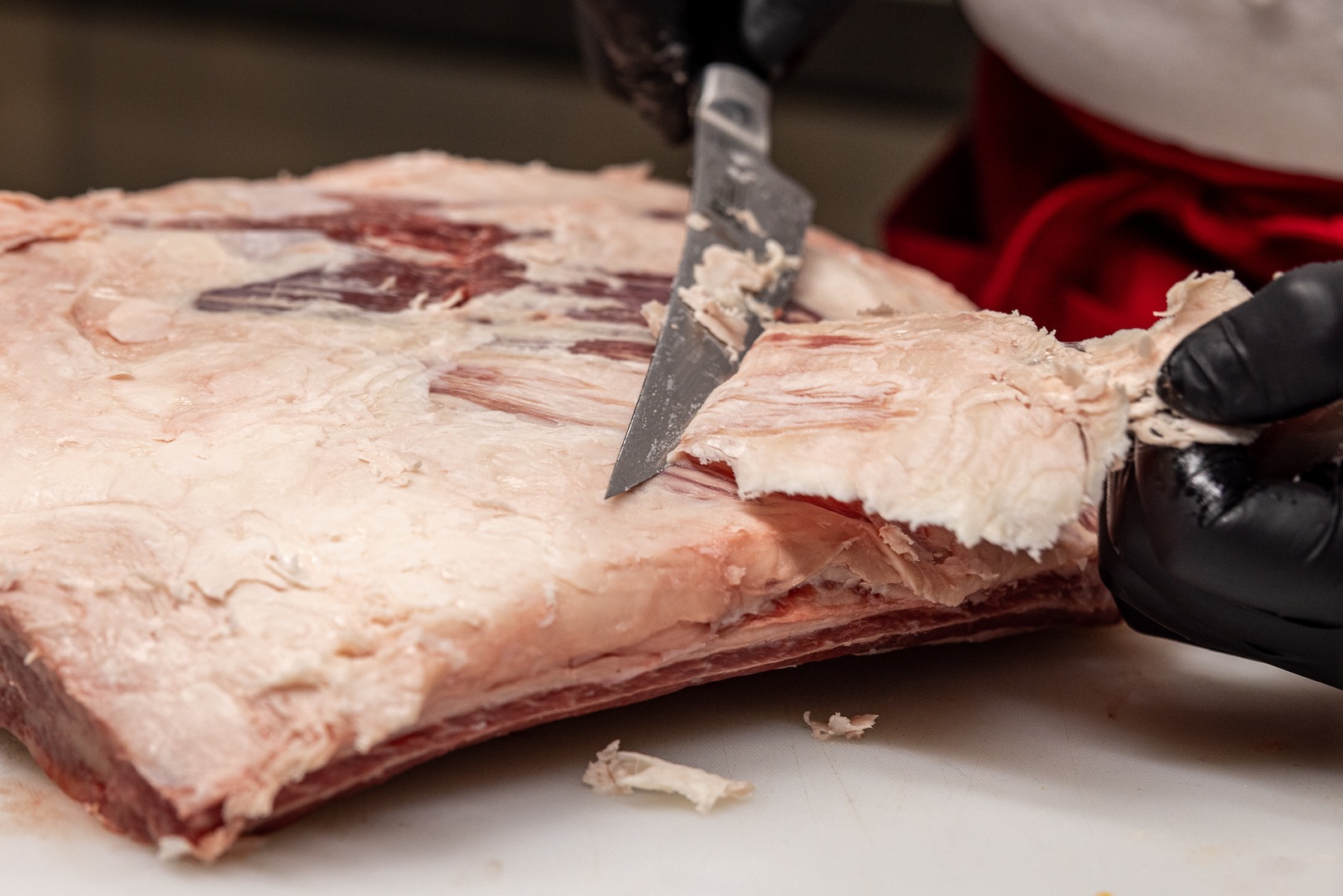
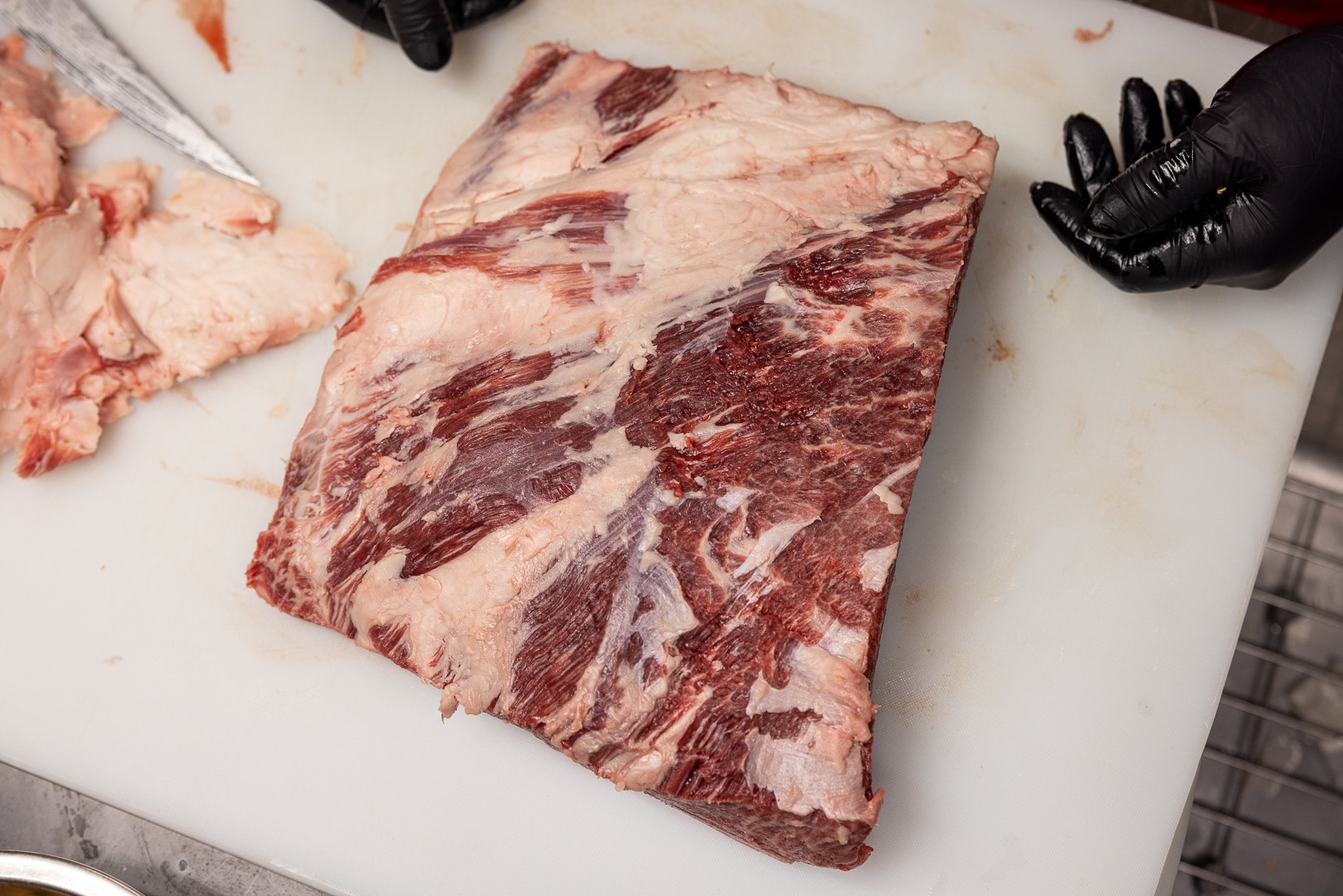
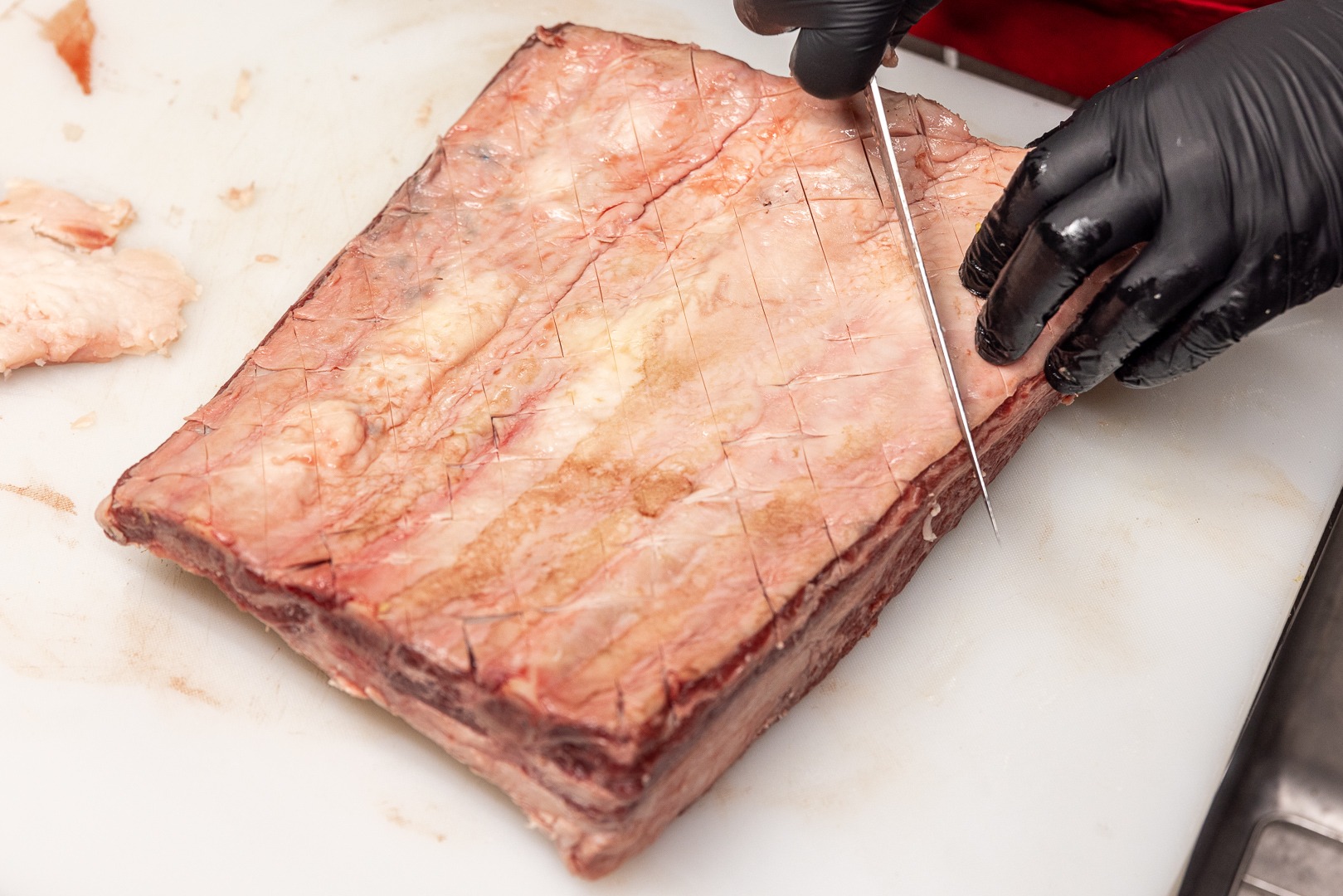
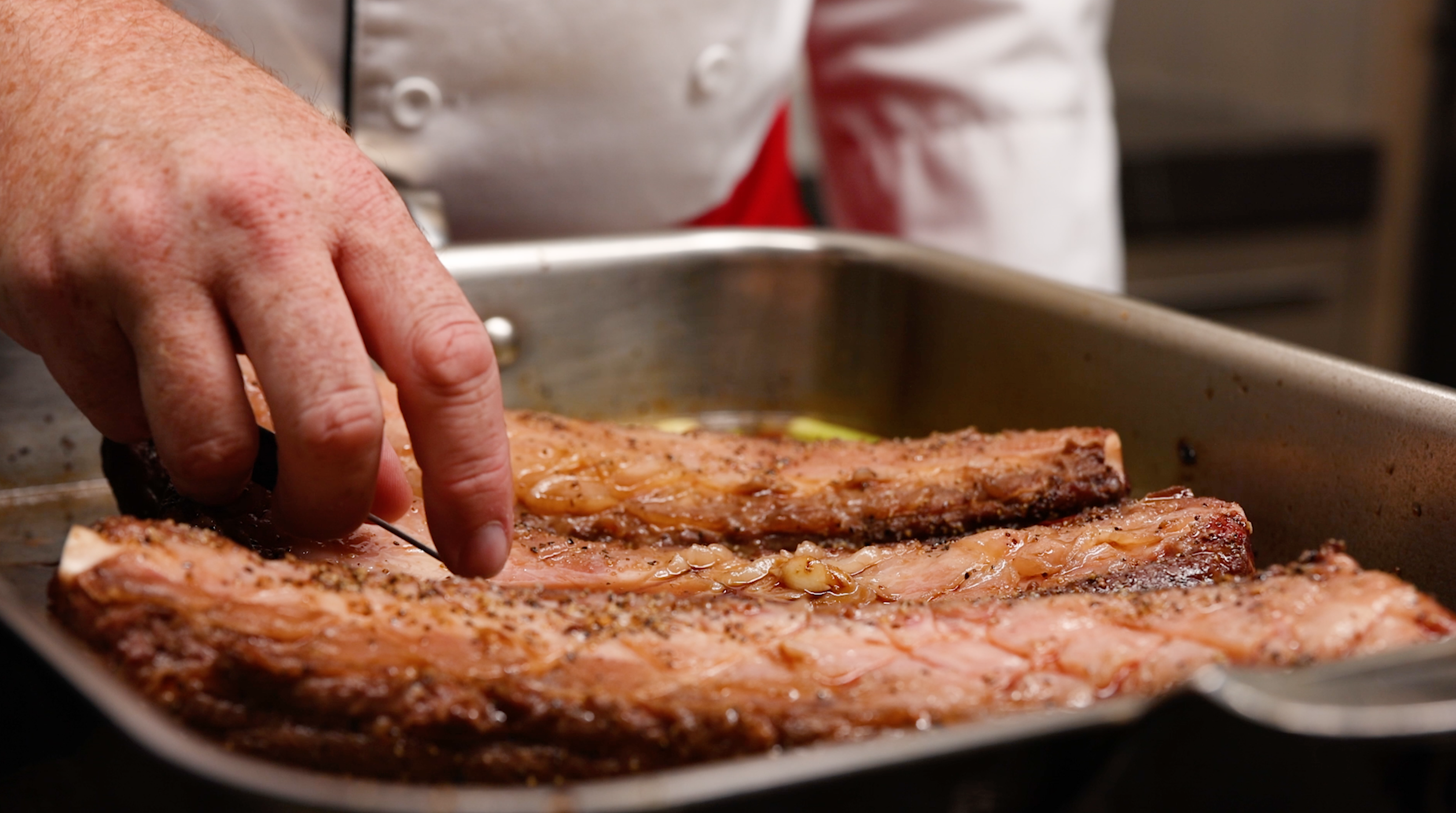
- Trim most of the fat cap from the ribs. Score the underside of the bones so that flavor can penetrate the membrane more easily.

- If your ribs came in a whole plate, cut them apart with a sharp knife. Season them liberally with kosher salt and black pepper.
- Heat a large, heavy roasting pan over medium-high heat.
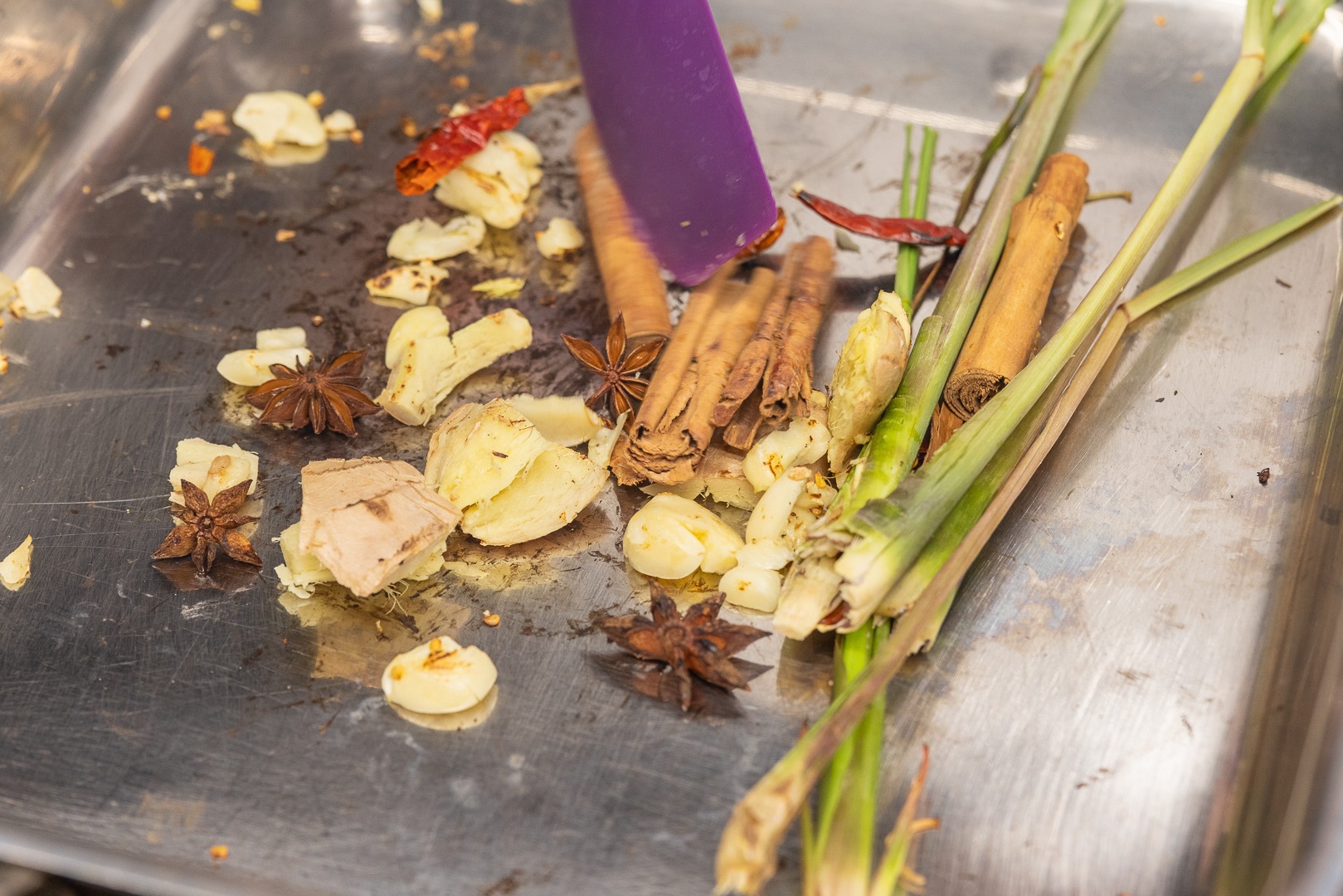
- Toast the ginger, anise, chilies, garlic, lemongrass, and cinnamon sticks in the pan until fragrant and somewhat charred in places.
- Remove the spices to a plate and set aside.
- In the same pan, brown the ribs. Lay them on their sides and brown them well, then place them on their backs and brown as much of the back as you can.
- Remove the ribs to a platter, put the spices back in the pan. To the pan, add the brown sugar, the soy sauce, the hoisin, the wine, scallions, and the water. Bring to a boil.
- Put the ribs back into the pan on their sides. The liquid should not come more than halfway up the ribs. Cook them for about 10 minutes on the stovetop like this.
- Insert a probe from your ChefAlarm into the thickest meat of the thickest rib. Set the high-temp alarm for 203°F (95°C).

- Cover the pan with foil, crimping the edges to seal it as well as you can.
- Move the roasting pan to the oven and cook, about 2 hours, until the alarm sounds.
- If you like, you can flip the ribs once during cooking, but be sure to re-place the probe appropriately.
- When the alarm sounds, verify temperature and tenderness with your Thermapen ONE.
- Remove the pan from the oven and pour off a few cups of the braising liquid. Skim as much fat from it as you can, then reduce it in a small sauce pan until it thickens somewhat and becomes glaze-y.
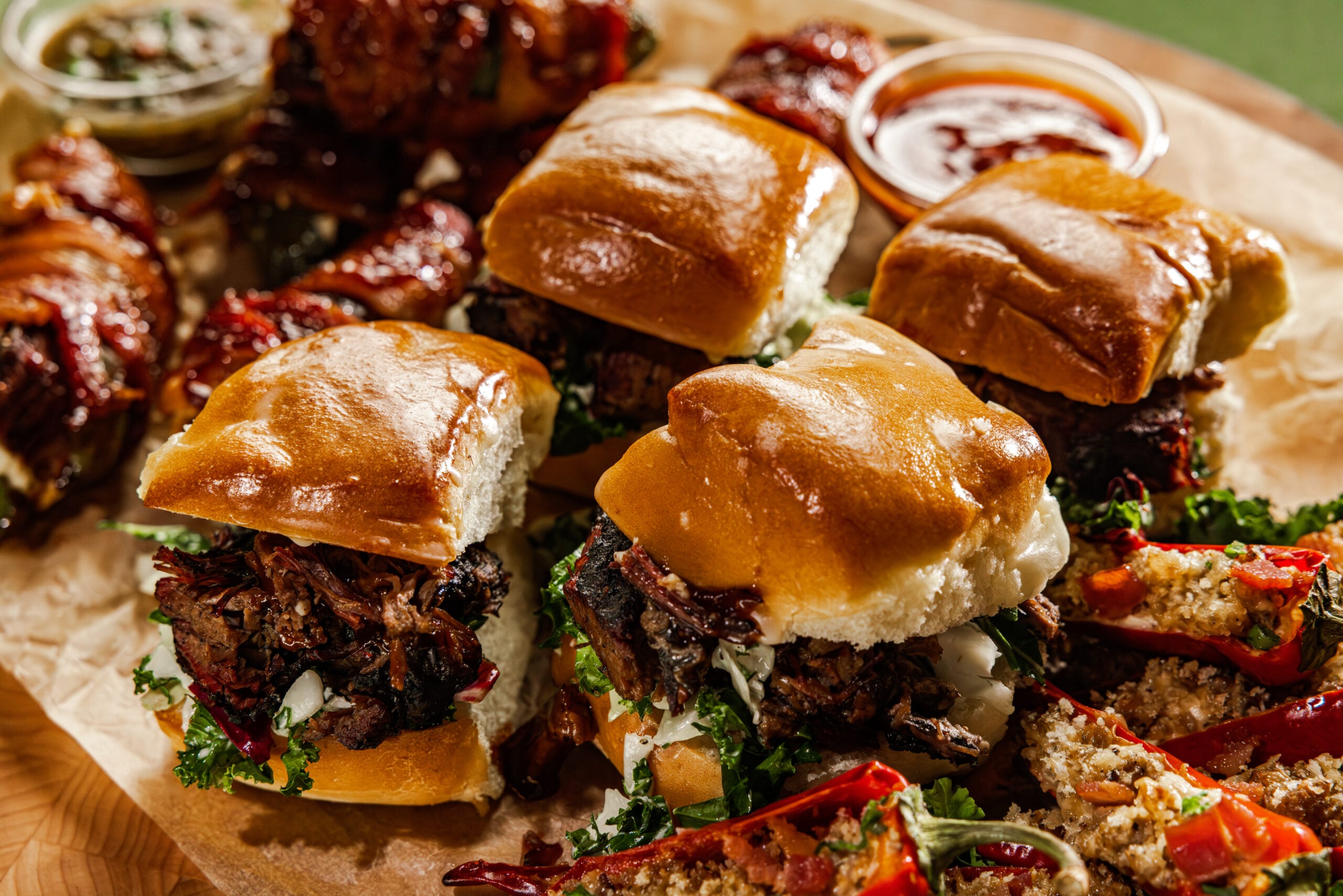
- Serve the ribs on a platter or a bed of rice, spooning the sauce over them to taste.
Shop now for products used in this post:

Absolutely spectacular recipe. I did cheat and had Prime quality full plate beef short ribs. I followed the recipe as closely as I could and it tasted (and smelled) phenomenal. Monitoring the temperature resulted in perfect meat texture.
Megan,
Fantastic! I’m glad you liked it as much as we did.
I was so intrigued by this recipe. I was looking for a whole rib recipe that was different than the usual carrots & onion. Love the idea of the ginger, lemon grass, etc. Until I got to the star anise. I detest licorice flavours. Could I make this without it – or sub something else… allspice, clove???
By all means! Cumin might even be fun.
Hi Martin,
Is there a reason the temp in the oven is 191 degrees celcius? That seems rather high.
Thanks.
Braising at those higher temperatures in the oven works great, if the meat is well covered so it doesn’t dry out on the surface. We create an environment inside the pot/pan that doesn’t get too much higher than local steam temperature, because the water acts as a =moderating force, releasing more steam that is only 212°F (100°C) (at sea level) into the pot. Having the oven at 375°F (191°C) provides plenty of energy to keep the water going at a simmer.
Thanks for your reply, Martin. That makes sense.
I have another question, if you don’t mind.
I cooked some short ribs today according to the principles in your article above, but I actually used your braised (Jewish) brisket recipe as a guideline.
I cut the short ribs into sections, then I browned them and added them to a stainless steel pan with the sofrito. The liquid maybe came up to the base of the ribs themselves – I wouldn’t say a quarter up the meat.
I covered the pan and placed it in the oven at 150 degrees Celsius (not fan-forced).
I cooked the ribs until the lower of my two Thermoworks signals probes read 96 degrees (I assume there is variance across the meat).
When I pulled the short ribs, they probed tenderish, but there was no resistance.
When it came to eat the ribs, they were very moist, but they were kind of chewy. It’s a hard to describe kind of chewiness, because the meat was really soft, it just didn’t came apart.
This has happened to me when I smoked a brisket as well. I wrapped it in foil during that cook.
I was wondering if there was a thermal explanation for this, and if you knew of a possible solution.
Archie, great question, thanks for the background so I can answer better. It sounds to me like your meat got to the “almost” perfect” zone. At this point, most of the collagen has dissolved, but not quite enough. The thing to do is let it cook about a half hour longer after it gets to that temp, but maybe with the oven turned down a fair bit. Or, pull it from heat but keep it at temp by putting it in an insulated box for 30–90 minutes. That usually takes it over the edge form the kind of chewiness you describe (I’m well familiar with it) to something silkier and tenderer.