

Chocolate Guinness Cake Recipe (Moist, Rich Stout Chocolate Cake)
Why Bake a Cake with Guinness?
We know what you’re thinking, beer in cake? Stay with us.
Like many things that sound strange at first, it makes a lot more sense once you try it. When Guinness stout is reduced on the stovetop, its roasted malt flavors concentrate and transform into something completely different. Instead of tasting like beer, the reduction develops a deep, rich flavor that leans toward butterscotch, caramel, and dark chocolate. (Note: you can sub the beer for a dark soda like Dr. Pepper or Coke).
That concentrated stout becomes the backbone of this cake, adding depth and moisture that pairs perfectly with cocoa.
We were inspired by several recipes across the internet—from the technical approach of Serious Eats to the decadent versions from Delish—and decided to develop our own version with a focus on precision.
Because when it comes to baking, precision is everything.

Why Temperature Matters for Cake
Many cake recipes rely solely on bake times, but ovens vary, and timing alone rarely guarantees the perfect result.
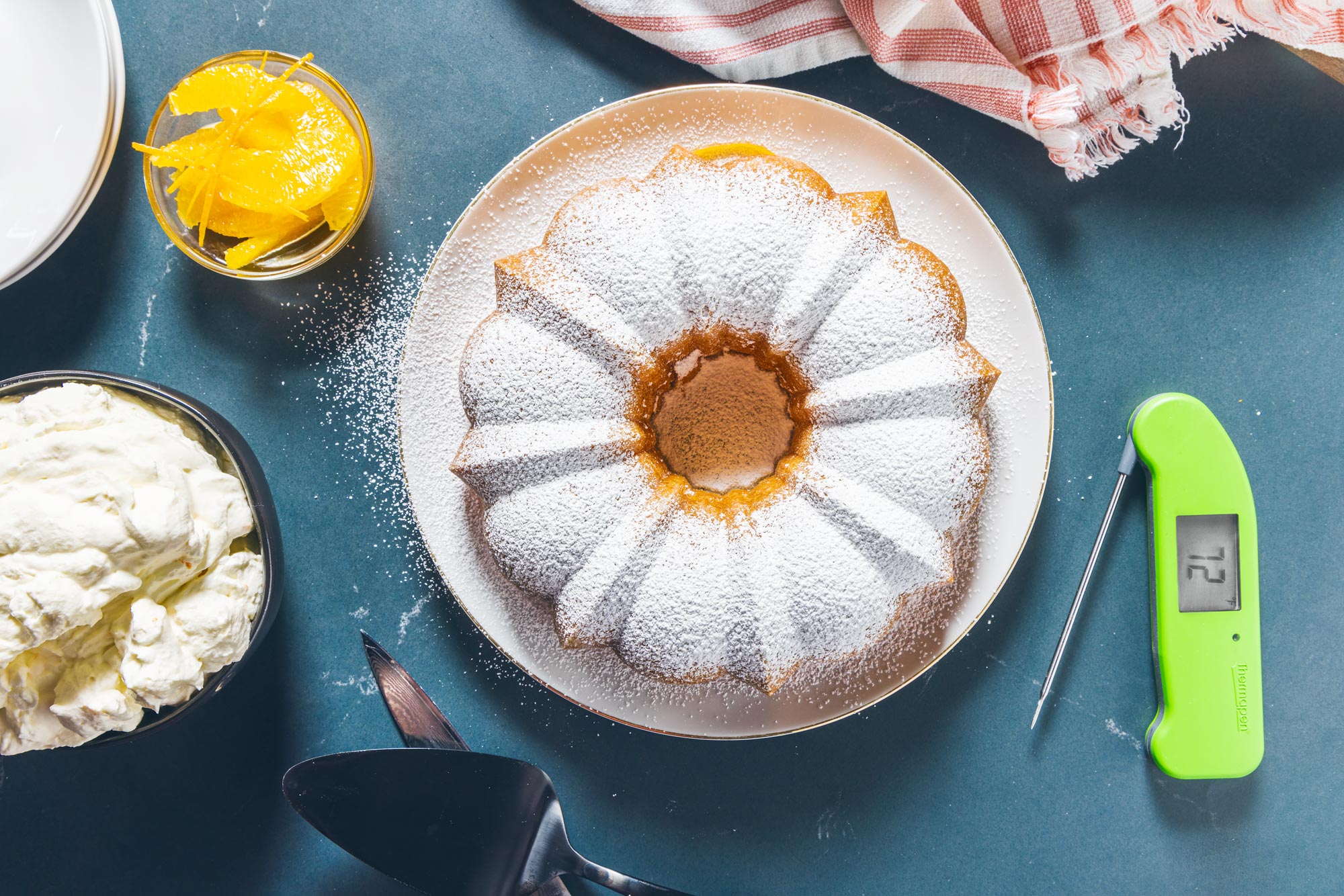
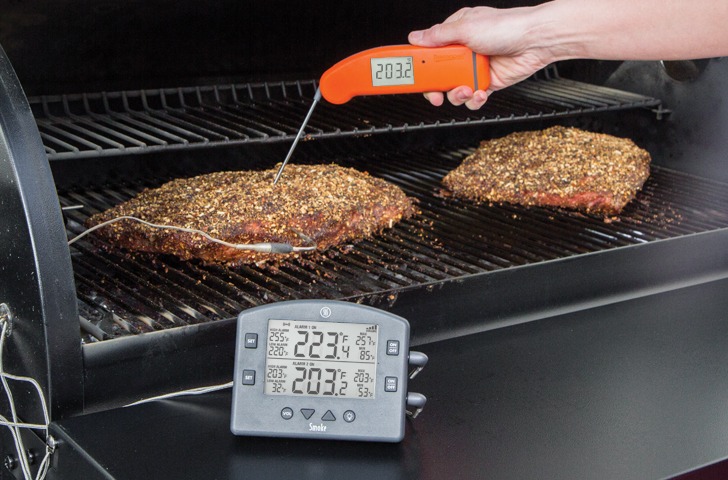
Instead, we cook this Guinness cake until the internal temperature reaches 206°F (97°C) on our Thermapen ONE.
At this point, the starches in the flour have fully gelatinized, and the crumb structure has set, creating a cake that’s moist, tender, and stable without being underbaked or dry.
Using an instant-read thermometer ensures your cake reaches the exact point where the texture is just right.

Reducing the Guinness
One of the most important steps in this cake happens before the batter is even mixed. We reduce the Guinness stout.
Simmering the beer concentrates its roasted malt sugars and removes excess water. What starts as a bitter stout transforms into a rich syrup with notes of caramel, butterscotch, and dark chocolate that deepen the flavor of the finished cake.
Many recipes simply say to reduce the liquid by half. That sounds easy enough until you realize you are guessing where that halfway point actually is.
This is where your Hi‑Temp Reduction Spatula – Rose Levy Beranbaum Signature Series shines.

Designed in collaboration with legendary baker Rose Levy Beranbaum, the spatula includes high-contrast measurement marks along the blade so you can see exactly how far a liquid has reduced without pouring it into a measuring cup.
To use it, simply insert the spatula into the saucepan when the Guinness first comes to a simmer and note the starting level. As the stout cooks down, the markings show you precisely when the liquid has reached half its original volume.
No guessing. No pouring hot liquid back and forth.
Beyond measuring the reduction, the ultra-thin silicone edge also scrapes every bit of that concentrated stout from the pan and into the batter. The high-temperature silicone is rated to handle hot reductions and bubbling liquids, making it ideal for this step.
It is a small detail, but in a recipe built around precision, scale, and temperature, knowing exactly when your Guinness has reduced by half makes all the difference in flavor and consistency.

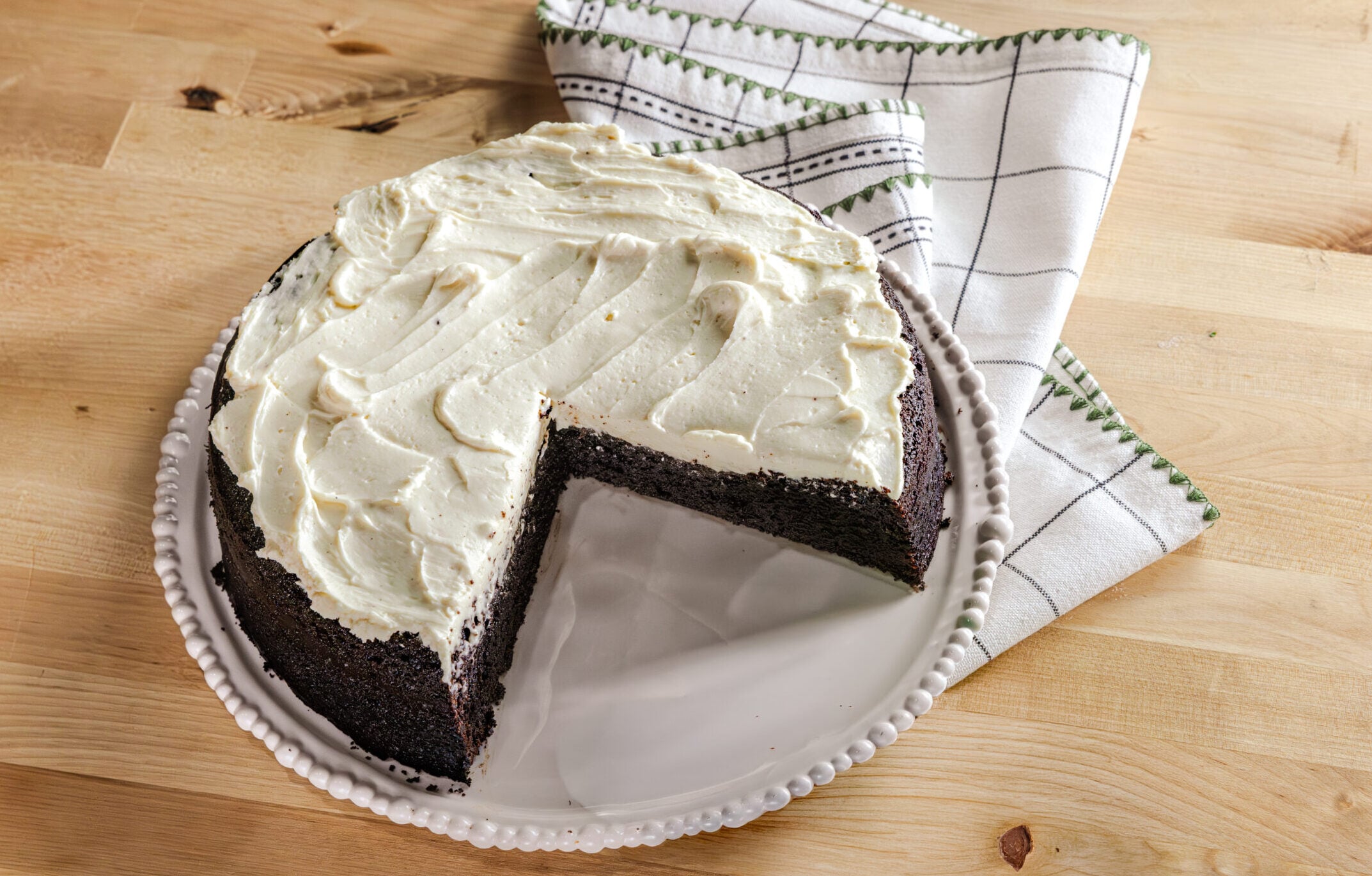
Guinness Chocolate Cake
Ingredients
Cake
- 64 grams unsweetened Dutch process cocoa powder 3/4 C
- 624 grams Guinness Stout (reduced to 312 g)
- 100 grams eggs approx 2 large eggs
- 400 grams granulated sugar approx 2 cups
- 240 grams sour cream approx 1 cup
- 125 grams sunflower oil approx 1/2 cup
- 20 grams vanilla bean paste 1 tablespoon
- 210 grams all purpose flour approx 1 3/4 cup
- 10 grams baking soda 2 teaspoon
- 7 grams kosher salt 1 1/4 teaspoon
White Chocolate Cream Cheese Frosting
- 170 grams white chocolate approx 1 cup
- 226 grams cream cheese softened 8oz block
- 113 grams unsalted butter softened 1/2 cup
- 1 tbsp vanilla bean paste/ powder do not add until the end
Instructions
- Reduce the GuinnessPour the Guinness into a saucepan and bring to a gentle simmer over medium heat.Reduce the liquid by half until you have 312 g of concentrated stout. This step intensifies the roasted malt flavors and adds depth to the cake.Let the reduction cool before using.
- Prepare the PanPreheat the oven to 350°F (177°C).Spray a Bundt pan or 9 inch springform pan thoroughly with cooking spray.Add a few spoonfuls of cocoa powder and rotate the pan until the interior is evenly coated. Tap out the excess cocoa.
- Mix the BatterMeanwhile, in a large bowl, use a handheld mixer on medium high speed to beat the eggs and granulated sugar until the mixture becomes pale and fluffy, about 2 minutes. This step helps dissolve the sugar and builds the structure that gives the cake a light, tender crumb.Add the sour cream, vegetable oil, and vanilla extract, then continue mixing until everything is smooth and fully combined. The sour cream adds moisture and richness, while the oil keeps the cake soft even after it cools.Once your reduced beer is under 100 degress, you can add it to the wet mixture.
- Add dry ingredients in a bowl and mix together. Slowly pour them into your wet mixture ensuring not to overmix.
- BakePour the batter into the prepared pan.Bake until the internal temperature of the cake reaches 206°F (97°C) This usually takes 45 to 55 minutes, depending on the pan used and oven variations.Remove from the oven and allow the cake to cool completely before frosting.
- Make the Frosting Beat the cream cheese and butter until smooth.Add the melted white chocolate and mix until combined. Once your cream cheese and white chocolate have fully merged, you can add your vanilla bean paste. Do not add your vanilla until your white chocolate and creamcheese mixture have fully merged together.
No. When Guinness stout is reduced and baked into the batter, the alcohol cooks off, and the beer flavor transforms. Instead of tasting like beer, it adds deep notes of chocolate, caramel, and butterscotch that enhance the cocoa in the cake.
Reducing Guinness concentrates its flavor while removing excess water. This creates a richer ingredient that adds depth to the cake without making the batter too thin.
The reduction process intensifies the roasted malt sugars, which helps produce the cake’s signature dark chocolate and caramel flavor profile.
For the best texture, bake this cake until the internal temperature reaches 206°F (97°C).
At this temperature, the starches in the flour fully gelatinize and the crumb structure sets. The result is a cake that is moist, tender, and fully baked without being dry.
Yes. This recipe works well in either:
– Bundt pan
– 9-inch springform pan
Both pans bake evenly and allow the dense chocolate cake to release cleanly when properly prepared with cooking spray and cocoa powder.
Chocolate cakes benefit from cocoa powder instead of flour when dusting the pan. Cocoa prevents sticking while preserving the cake’s dark chocolate exterior, avoiding the white residue that flour can leave behind.
Cream cheese frosting pairs beautifully with this cake.
The tanginess of the cream cheese balances the richness of the chocolate cake, while the white chocolate adds sweetness and structure. The combination creates a smooth frosting that complements the deep malt flavors from the Guinness.
Yes. This cake actually improves after resting.
You can bake the cake one day in advance and store it covered at room temperature. Frost just before serving, or store the frosted cake in the refrigerator and bring it to room temperature before slicing.

I would love to try this chocolate stout cake recipe, but all the measurements are in grams. I would need the recipe converted before trying. Thanks
Hi Donna, we made those conversions to the recipe.
The instructions are incomplete right now. When do you add the flour, baking soda, and salt?
Hi LM – We made some quick updates to this blog, you can see the step of mixing dry ingredients and then adding to your wet ingredients. We’re so sorry about that!
When do you add the Guinness reduction to the mix?
Hi Andy – we made a small update. You would add the reduced guinness once the temperature is below 100 degrees to your wet mixture. Then add your mixed dry ingredients into your wet ingredients.
I’d love to make this cake but GRAMS? I’m not that kind of baker, alas. Which means I have to translate it all. So I’ll probably never know if I could have done it or not. It looks delicious.
Hi Shirley,
Great feedback. We have added those updated incgredients in cups as well.
I love how the post highlights the importance of reducing Guinness to bring out its rich, caramel-like flavors—such a smart technique for adding depth to desserts. The tip about using internal temperature instead of bake time is also a game-changer for achieving consistent results. It really shows how small adjustments in process can make a big difference in texture and flavor.
Could you please add the approx. amount of Guinness in oz? I don’t want to buy more than needed in order to start with 624 g.
It’s about 3 glass bottles that we reduced down.
Looking forward to making this for my son and his Irish wife. Do you have any suggestions for adapting for high altitude (5,000 ft.)? Thanks!
This recipe was made as is in Utah, were sitting at about 5,000 ft. We’re excited to hear how it turns out for you!
Is it one cup of melted white chocolate or not melted?
One cup not melted, then you melt it down.
I left a review initially about things missing from the recipe, but that was because I had opened the link from the initial email. Upon refreshing the page there were updates, as other people had noted the missing items too.
Anyway, the bake itself and the cake are absolutely delicious. I don’t think it needs the frosting at all. It’s not too sweet or rich at all. I baked it in a Bundt pan, which always has a lovely design. It’s honestly better than a Bundt cake you’d get at Nothing Bundt Cakes. The frosting is good, I may try an Irish cream buttercream or ermine frosting next time.