Your Pop Up Timer Means Well, But Is Destroying Your Turkey
If we told you there was one culprit responsible for all the dried turkey you ever ate, would you want to find out what it was? And how would you feel, knowing that the culprit was operating under the guise of being a helpful friend? Well, folks, we have news for you. The culprit is the popular, handy pop-up timer. Sadly, so many holiday turkeys are dry and overcooked because people depend on that timer. Here, we’ll talk about how the pop-up works, its problems, and why you shouldn’t trust it for your holiday turkey. Let’s take a look!
Background: How did we get here?
The pop-up timer was invented as a response to grossly overcooked turkey. Think of the cultural ideas behind turkey cooking—that it takes all day, that you have to put it in in the morning, etc. All of those ideas sprang from a fear of undercooking the bird and thereby poisoning guests.
Then came Eugene Beals (or at least he gets the credit) and his pop-up timer. Now people could see when their bird was done. Hooray! People didn’t have to cook their bird for nine hours anymore! It allowed people to overcook their bird less, even if they didn’t have any experience. The fact that those turkeys were so much less bad than previous turkeys helped cement the pop-up timer as the way to cook a turkey.
Except…
Anatomy of a Pop-up Turkey Timer
To understand why we wouldn’t trust our turkeys with this gadget, we first have to look at how a pop-up timer works.
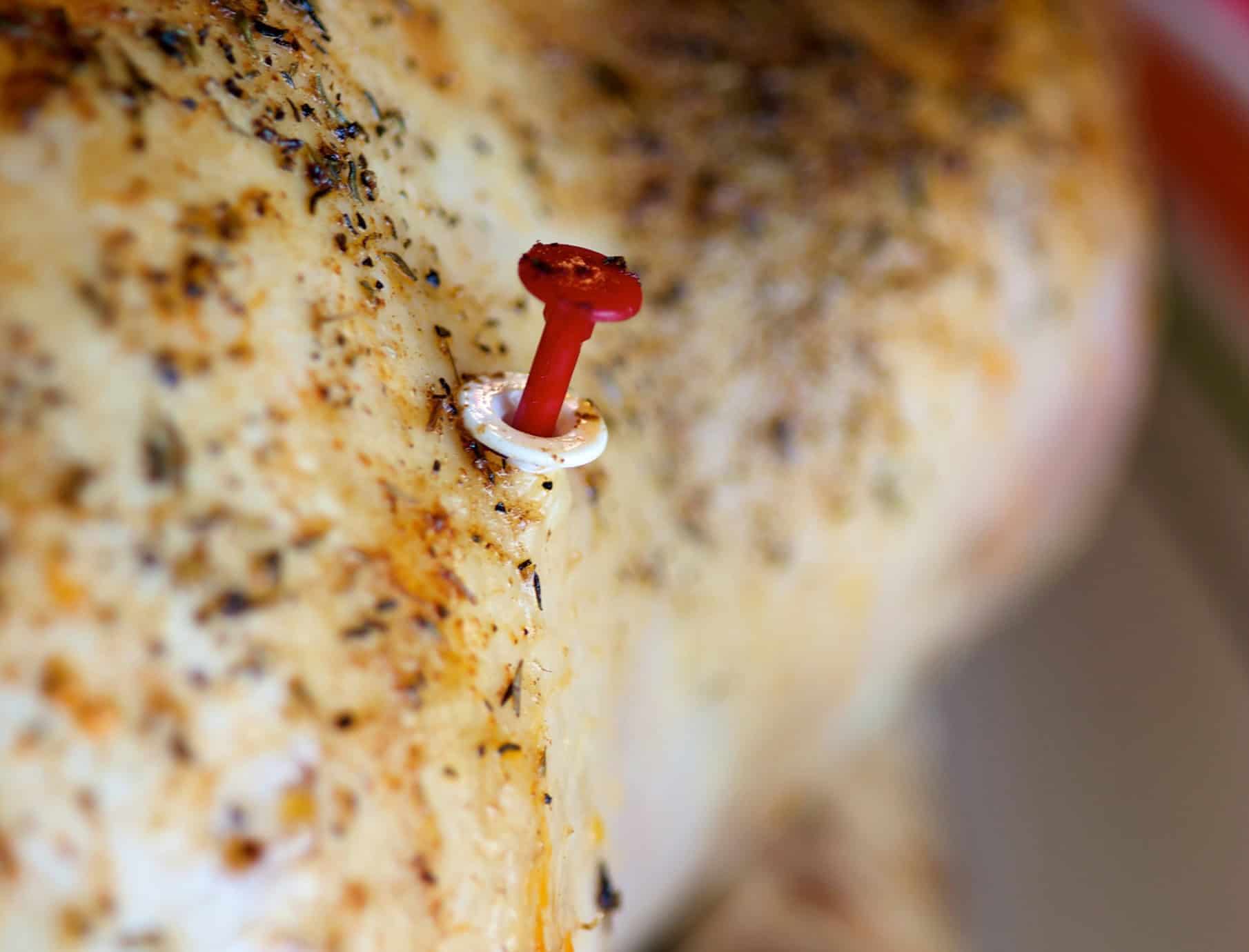
Within the timer (which should more accurately be called a thermometer—it times nothing) a spring pushes up on the colored pop-up bit. The pop-up bit is anchored to the bottom of the shaft by a soft metal or a polymer that has a particular melting point. Once the turkey warms to that point, the anchor releases its grasp on the pop-up, and up it pops. And compared to some cooking thermometers (not ours), the accuracy spec on them is not shabby: ±1–2°F for good ones.

So why is this a bad solution for your turkey? There are 4 reasons.
- The set temp of the thermometer
- Inconsistent accuracy
- Probe placement
- Human attention
Let’s examine each of them.
1—What temp is the pop up even set to?
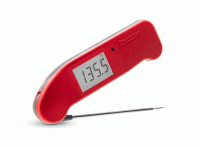
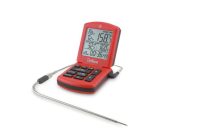
We’re going to go through all the reasons for trusting a real leave-in probe thermometer like ChefAlarm or RFX MEAT instead of a pop up, but we could stop here. This is the biggest one. You see, the little red-button pop up timer that comes inserted into your turkey is set to 180°F (82°C).
If you’ve hung around this blog for any amount of time, you know how we feel about turkey breast cooked to 180°F! We recommend pulling turkey at 157°F (69°C), and the very thought of breast cooked to 180° makes us instinctively reach for the gravy.
The pop-up is set to a temperature that overcooks your turkey. Better to use a thermometer that you can set yourself.
2—Inconsistent functioning
The quality of your pop up timer may, itself, be suspect. We’re not digging it out to discover which company made it, and their accuracy varies wildly.
Pop-Up Turkey Timer Research Study
Consumer Reports performed tests with several pop-up timers and discovered that nearly all yielded unacceptable results. In their testing, 21 turkeys were cooked, and they tracked the temperature at which each turkey timer popped up. Most of the timers popped up at temperatures well above 165°F (74°C)—making for dry turkey. But three of the timers indicated doneness well below a food-safe temperature, including one that popped up at 139°F (59°C)!
A turkey pulled at 139°F (59°C) could potentially be a food safety risk for everyone at your Thanksgiving dinner.
…neither can you trust the pop up thermometer that comes inserted in the bird. The plunger that pops up is anchored in metal that is supposed to melt at a set temp, often at 185°F [85°C]. At that temp a turkey breast is more particle board than party.
3—Timer/thermometer placement
Turkey cooks from the outside in. This is not a revelatory statement, but an important fact for understanding a problem with these thermometers.
As a turkey cooks, the heat moves in from the outside, and the part furthest from heat cooks last. We call that spot the “thermal center.” You want to take the temperature there, because it will cook last. Well, at 1-7/8” in length, inserted from the top of the breast, this thermometer isn’t going to hit that.
And we’ve purchased many a turkey where the pop up was barely inserted into the bird correctly at all, with the sensor barely an inch below the surface. That’s not ok!
Your meat is only as done and safe as the lowest temperature found, and tracking your turkey’s internal temperature with an unreliable device leaves too many variables to chance, risking food safety.
4—Who watches the watcher?
Thanksgiving is a busy day: sauces, pies, rolls, plates, cups, football, aunts, grandchildren…it’s a lot. So you put your turkey in the oven, hoping that the timing chart you found on the internet isn’t dead wrong. Time passes.
More time passes.
Silently, unnoticed, the turkey timer pops up. It goes unheeded until someone looks in the oven and sees it. “The turkey’s ready!” they call out. But in fact, the 180°F turkey thermometer had popped up 20 minutes before. Pass the gravy, indeed.
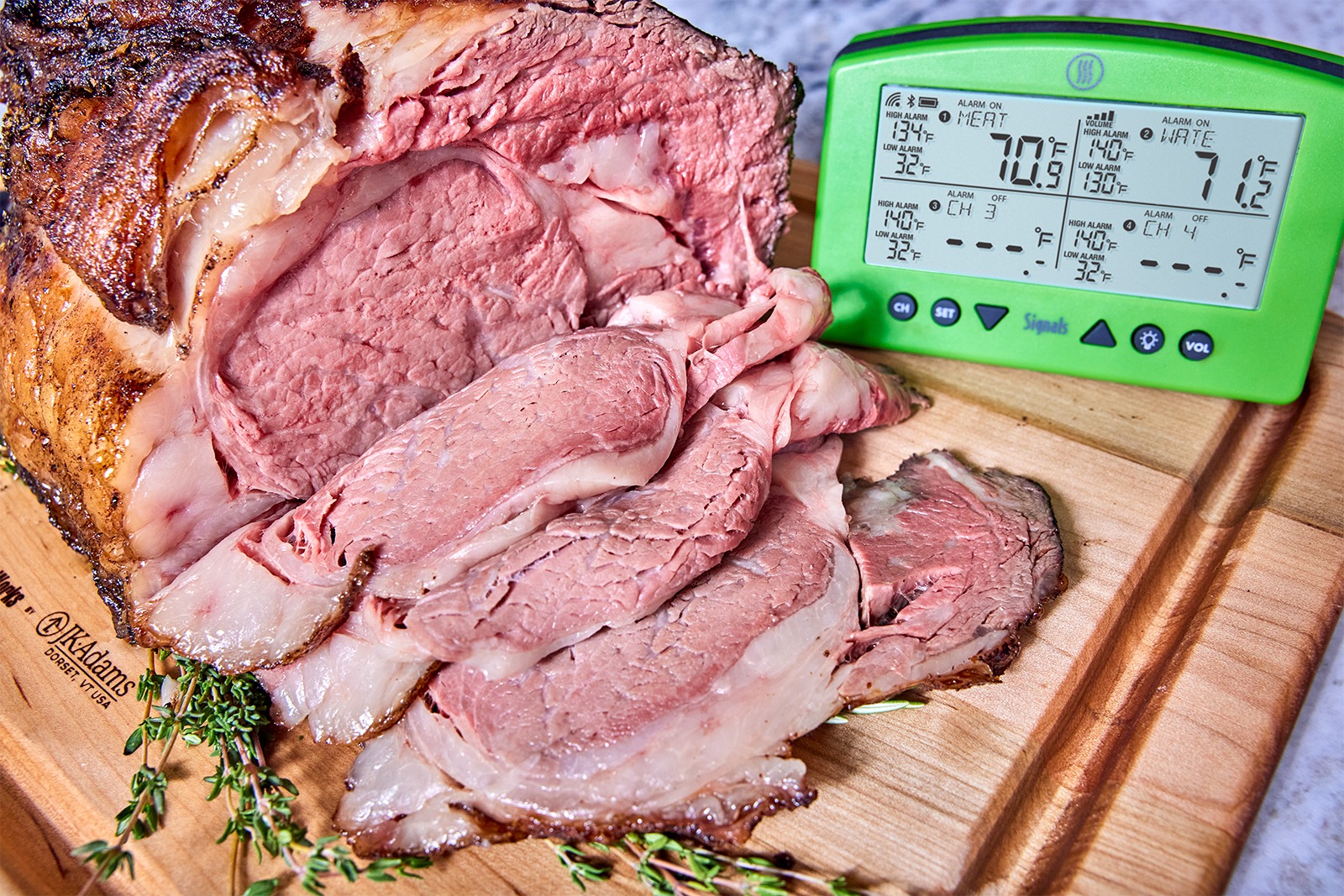
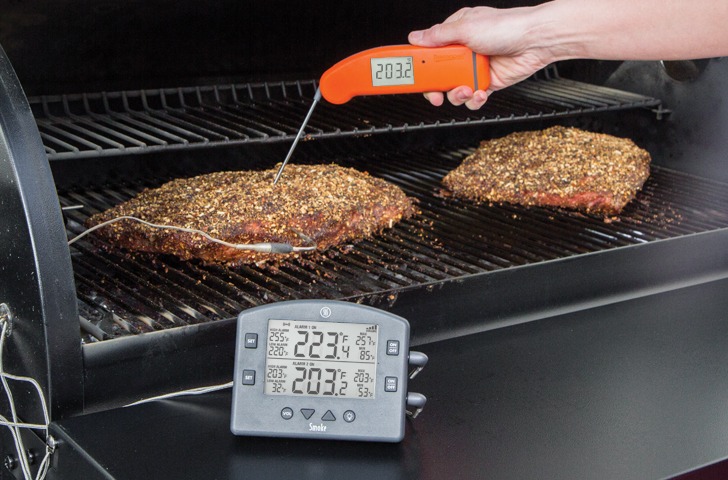
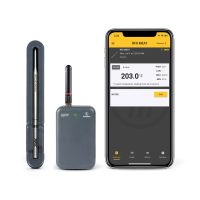
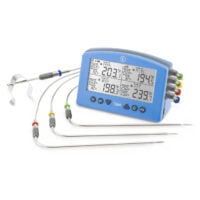
We prefer a thermometer that tells you when the meat reaches temperature. A leave-in probe alarm thermometer can tell the whole house when the turkey hits your predetermined temp, and some versions can even send push notifications to your phone. Check out ThermoWorks’ RFX™ Wireless Probe Thermometer or Signals™ with multiple wired probes to help you make your best turkey yet.
The Bottom Line
There are many different methods to go about cooking your turkey this year, but accurate temperature tracking is a key element of the perfect cook, regardless of the method. Ignore the pop-up and trust your thermometers. And if you don’t have a good leave-in probe thermometer, get one before you cook your next turkey. A ChefAlarm®, RFX™ System, or Smoke X® will help you make your turkey better than ever.
➤ Turkey Tip: If your Thanksgiving turkey has a built-in pop-up thermometer, experts recommend that you leave it in and simply ignore it. Removing it may leave a hole where juices can escape.
Get a tool that is far, far better than a pop up timer here:


Resources:
Trust a Meat Thermometer Over a Pop-up Timer for Your Turkey, Consumer Reports
Barbecue Turkey and Grilled Turkey, Meathead Goldwyn, AmazingRibs.com