Every Way to Make Prime Rib
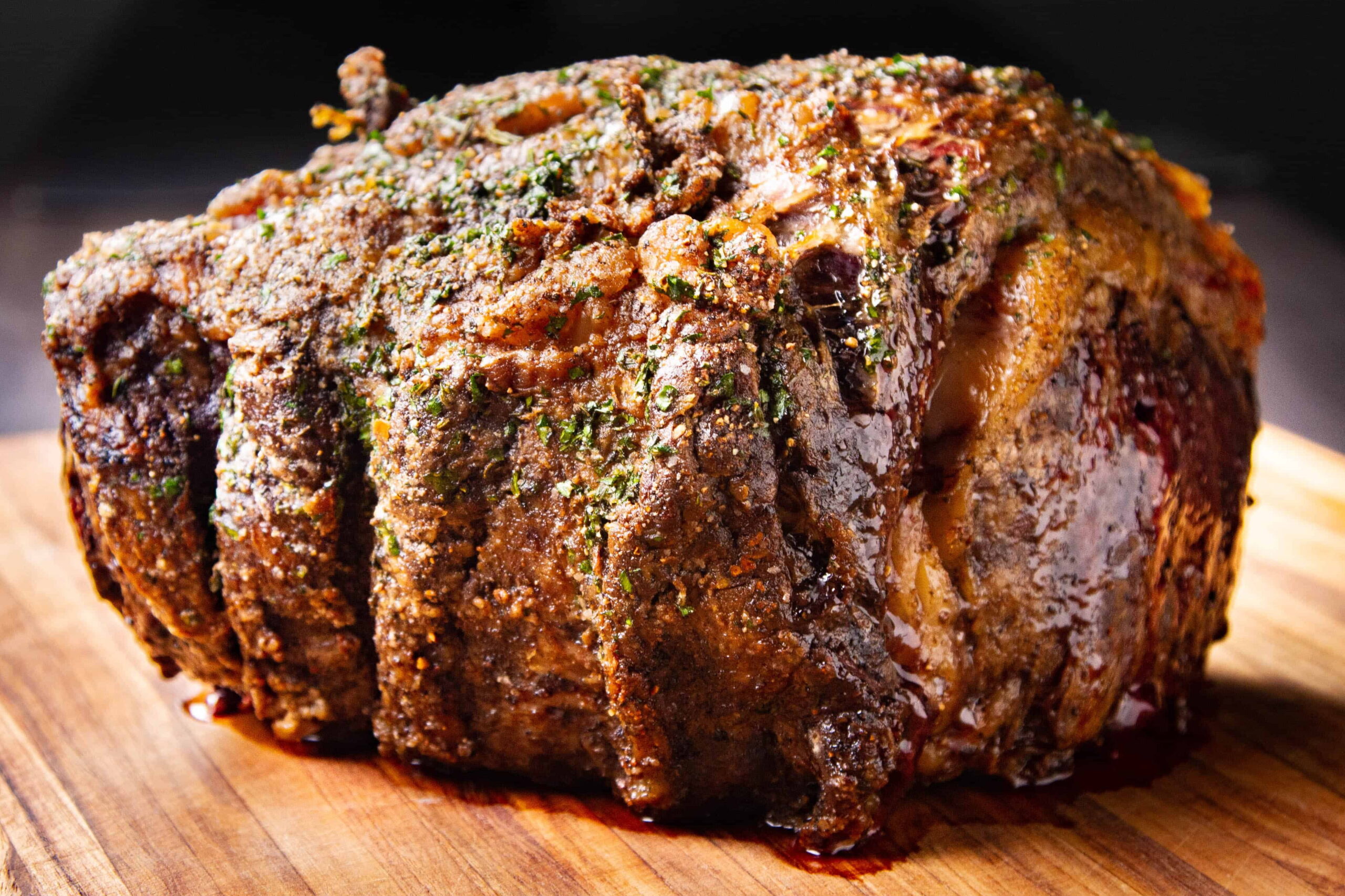
Prime rib is revered as the ultimate holiday meat. This tender, expensive cut of beef is often only cooked once a year and has enormous pressure for perfection. Lucky for you, we have dozens of prime rib cooks under our belt and will guide you through the pros and cons of several methods for cooking this King of Roasts. Spoiler alert: Temperature control is everything. Read on for the lowdown.
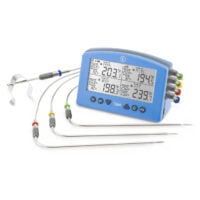
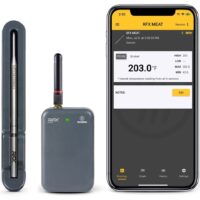
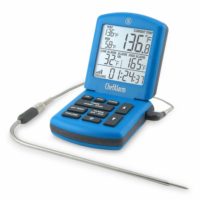
Get the tools for any prime rib cook here:


The classic prime rib roast
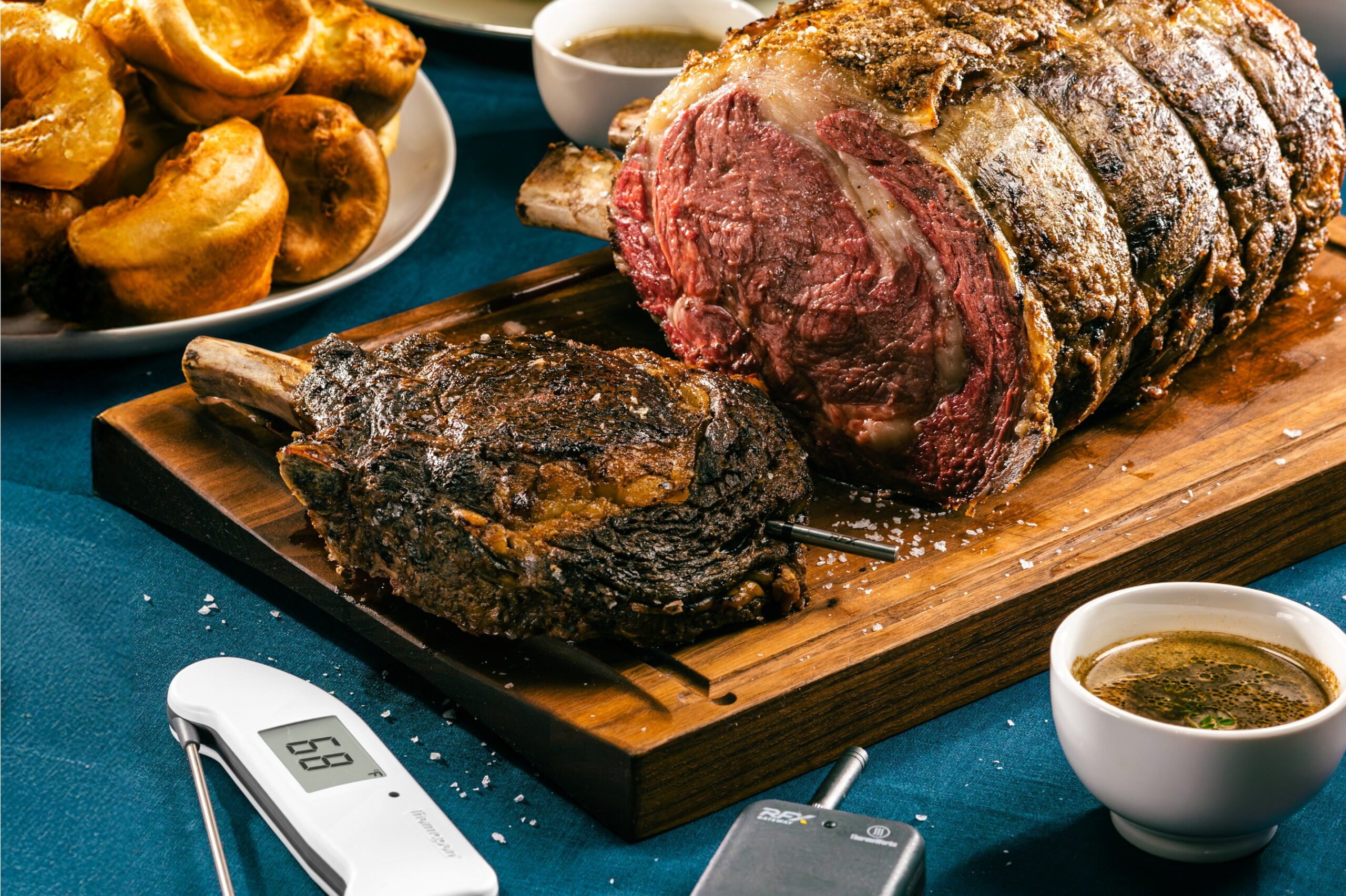
This is the one you think of, the one everyone expects: Rosy pink meat, delicious browned crust, juiciness for days—yum. Make it right and everyone is happy. Make it wrong and you’ve thrown a couple hundred dollars out the window.
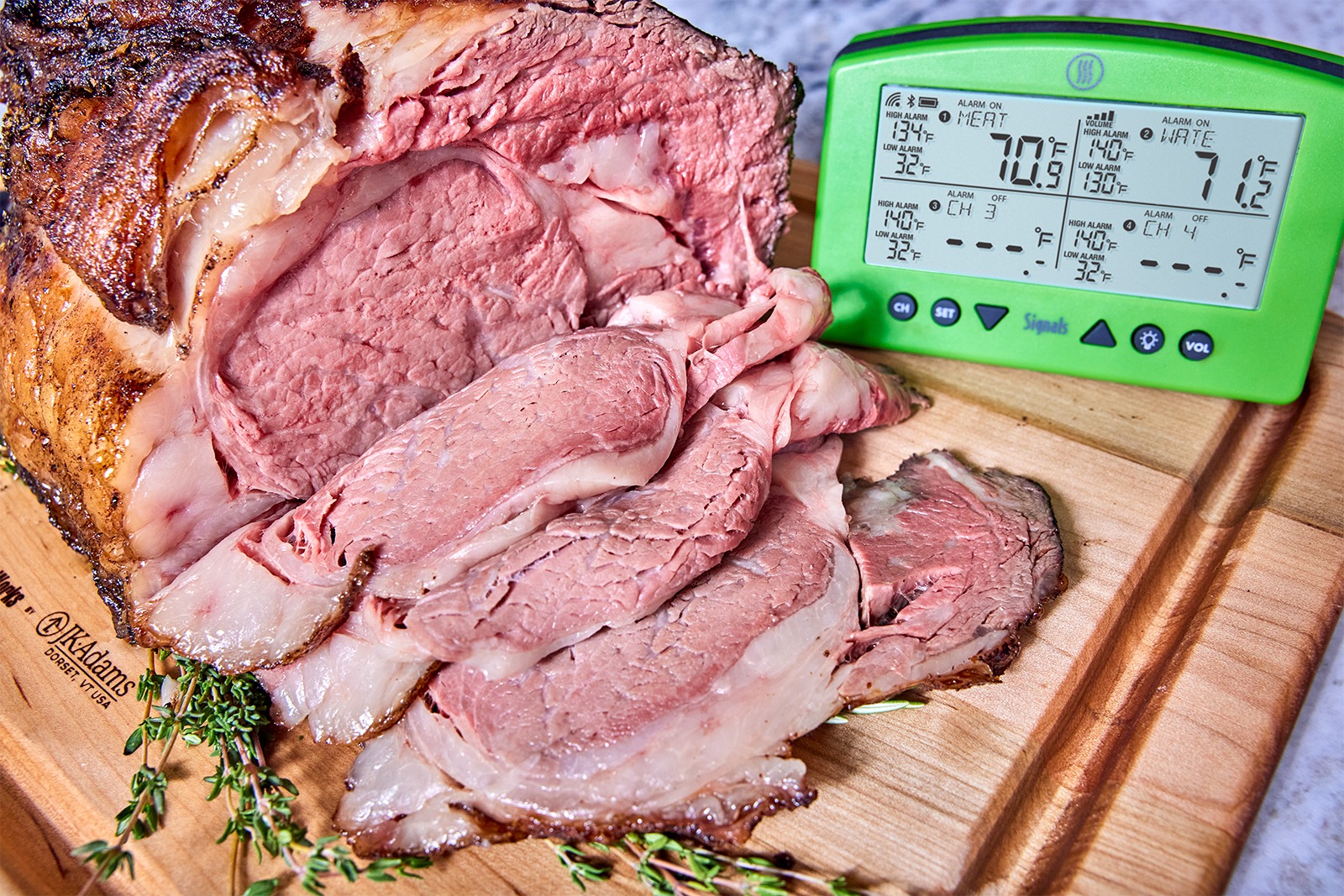
We’ve written long and hard about how to cook it right, and we stand by our method: season it, chill it, sear it, and cook it nice and low until it hits 125°F (52°C), then let it rest.
Hitting that critical temp will make or break your prime rib, so make sure you use a high-quality, accurate thermometer. Since prime rib is a longer cook, a leave-in probe thermometer is ideal. RFX MEAT is a wireless, Wi-Fi-connected thermometer that can alert you to your roast’s doneness, whether you’re in the next room or across town getting last-minute supplies.
Sous vide prime rib
Classic prime rib is plenty tender, but we’ve never had prime rib as tender as this. The key is the long low cook in the sous vide bath. We set our circulator to 130°F (54°C) and let it cook for 18 hours before searing it under the broiler.
Advantages? A tremendous amount of time in the “enzymatic tenderization” zone, plenty of time in close contact with the salt and pepper, so it can soak into the meat, and literally no gradients by the time it’s done cooking. Just be sure to use a boneless roast so the bones don’t cause bag leaks.
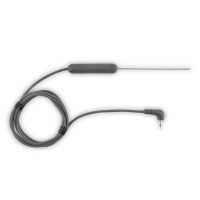
You’ll need to monitor water temp and meat temp on this one, and it cooks for a very long time, so we recommend using your Smoke X4 or Signals Wi-Fi-enabled thermometer, and you’ll definitely need a Pro-Series Waterproof Needle Probe. It’s an incredibly hands-off method once it gets going, and the results are stellar, to say the least.
Smoked prime rib
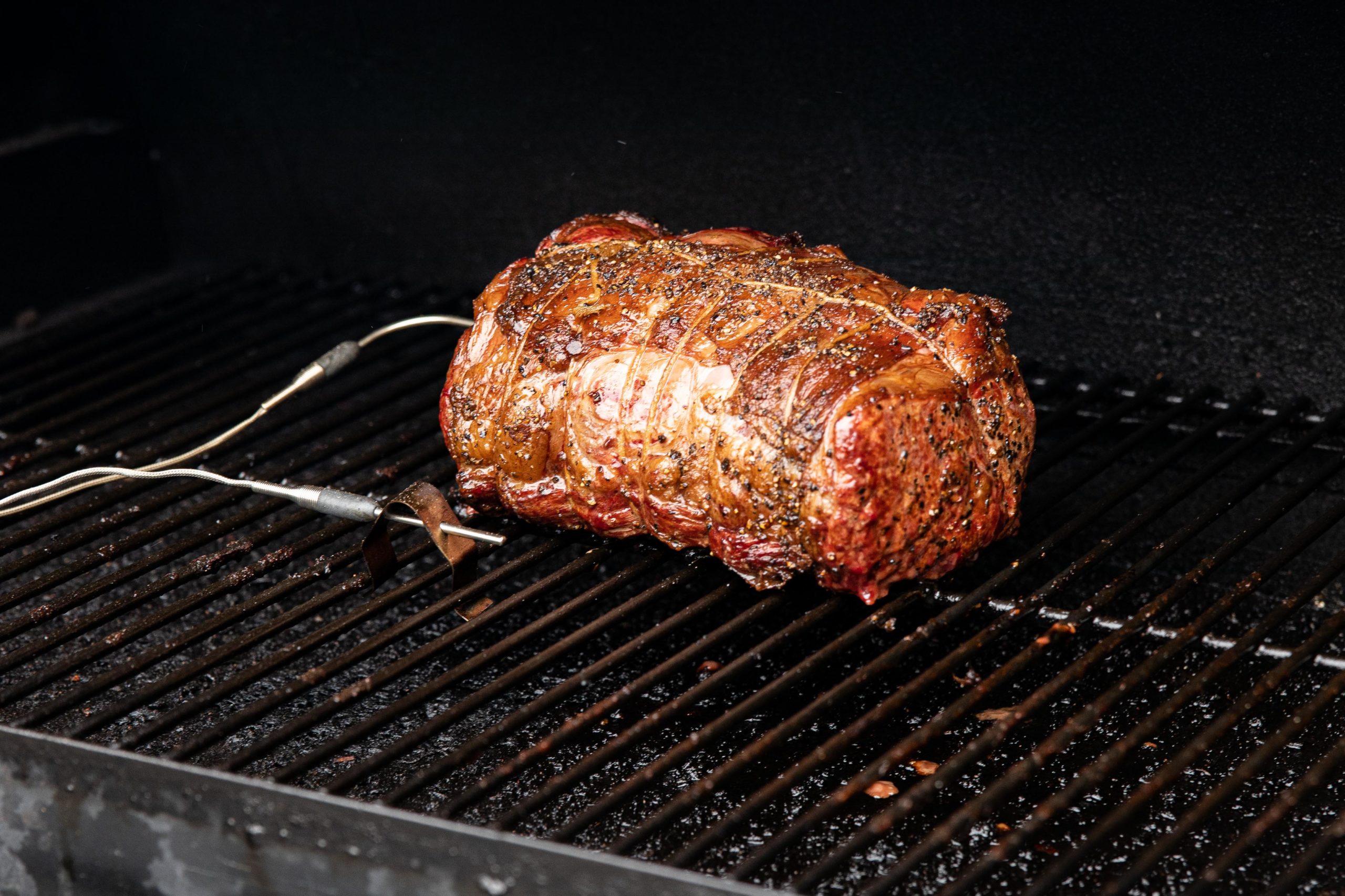
Everything you love about the classic roast, but with the added benefit of smoky, tasty flavor. We recommend smoking with oak for this one. One other thing this method gives you, besides delicious smoked beef, is a freed-up oven. Make fresh rolls, roast some potatoes, bake a cake—the oven is free because the smoker is doing the meat-work.
As with all things smoker, RFX MEAT is the thermometer to use here. No going out in the cold to check the roast every 15 minutes, just the sure knowledge that you’re cooking your meat perfectly to temp.
Deconstructed prime rib
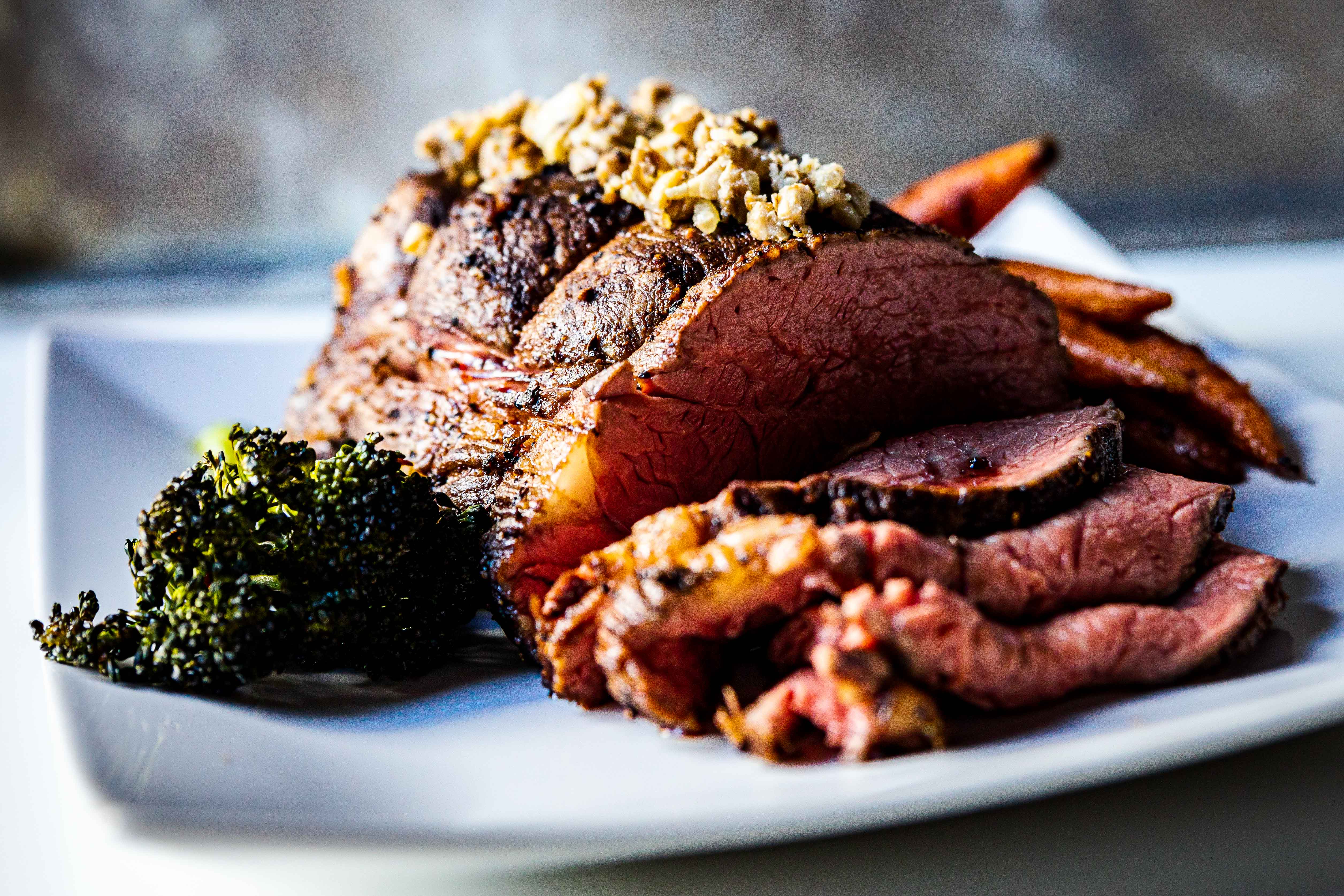
Deconstructing a prime rib gives you the best of both worlds for holiday dinner perfection. A rib roast is made of two muscles, each with its own strengths. By cutting off the rib cap to cook like a flank steak, and tying up the eye of the roast like a tenderloin, you get two perfect meals from one perfect roast.
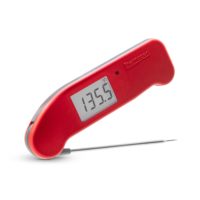
A leave-in probe thermometer like ChefAlarm or RFX MEAT is your best friend for achieving rosy perfection in the loin portion, but Thermapen ONE is your best ally for the steak-like cook of the rib cap.
Try this method, and you might never eat a whole prime rib again.
Pros and cons:
How to cook it:
The thermometer you need