

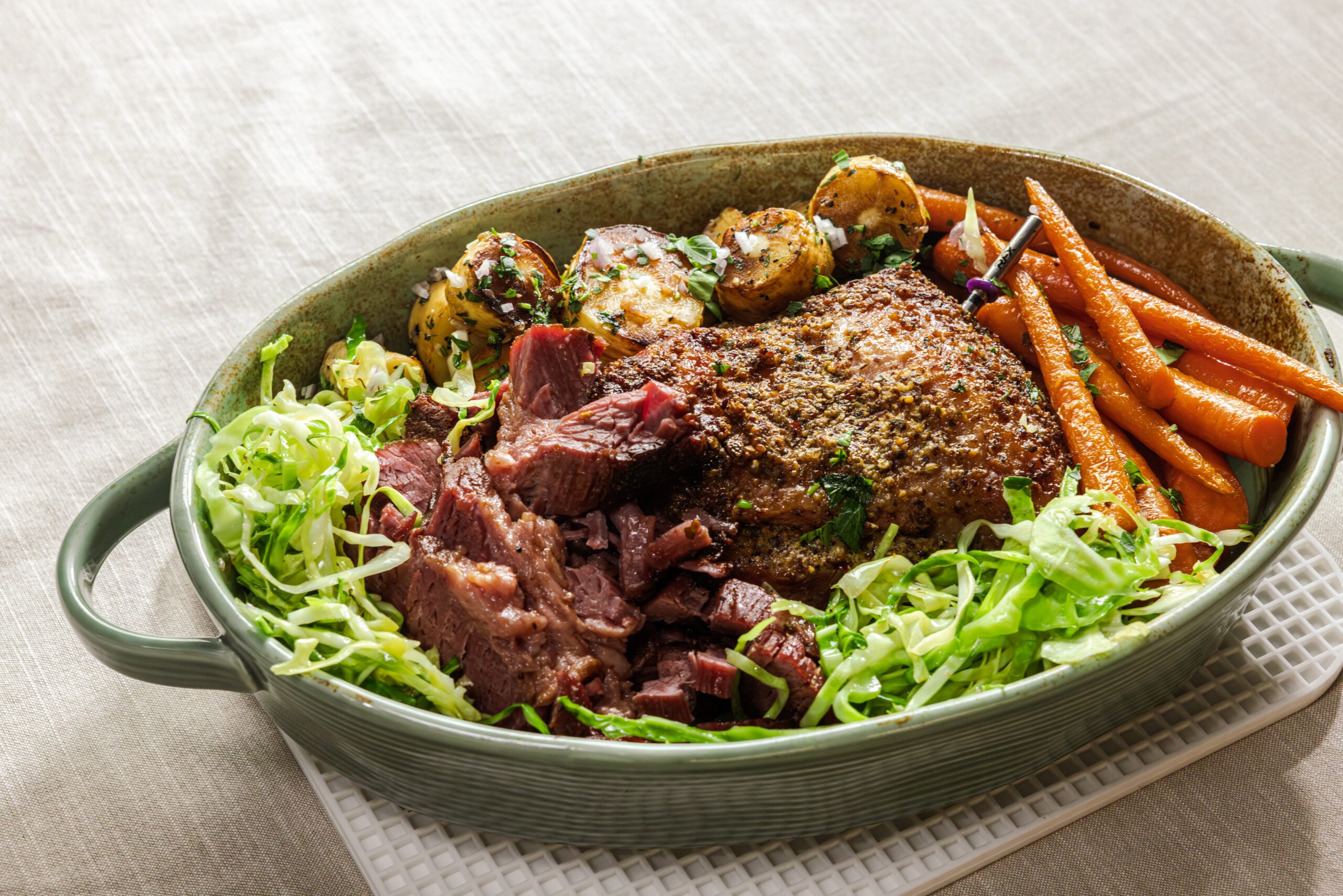
How to Cook Corned Beef Perfectly (Corn Beef Guide)
Corned beef is a St. Patrick’s Day classic, but great results come down to time and temperature. Whether you searched for corn beef recipes, corn beef temperature, or traditional corned beef and cabbage, understanding how brisket cooks will help you get tender results every time.
Whether you cure your own brisket or start with a store-bought corned beef, understanding how heat affects the meat is the key to getting it right.
(This method also works for a homemade pastrami!)
Quick Specs
- Cure Time: 7–10 days (Critical for holiday planning!)
- Internal Cook Temp: 190°F–205°F
- Water Simmer Temp: 190°F
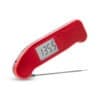
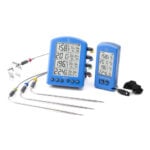
- Equipment: Thermapen ONE, RFX™ Wireless Probe Starter Kit, or ChefAlarm® Cooking Alarm Thermometer and Timer
Contents:
- History of corned beef and cabbage
- The importance of time and temp for corned beef
- Homemade corned beef cure recipe
- Cooking corned beef
St. Patrick’s Day Planning
If you plan to make homemade corned beef, start early. Corned beef takes about 7 to 10 days to cure, so plan your schedule backward from March 17.
Typical timeline:
Cook and serve: March 17
Start curing: March 7–10
Cure in refrigerator: 7–10 days
What Is Corned Beef, Really?
Despite the name, there’s no corn in corned beef.
The word “corned” comes from an old English term for large grains (or “corns”) of salt used to cure meat. Before refrigeration, curing with salt was one of the most effective ways to preserve food.
Today we still cure meat, but mostly for flavor, texture, and that unmistakable cured color.
Corned beef starts with beef brisket, a naturally tough cut loaded with connective tissue. The curing process transforms it into the flavorful cut we associate with St. Patrick’s Day.
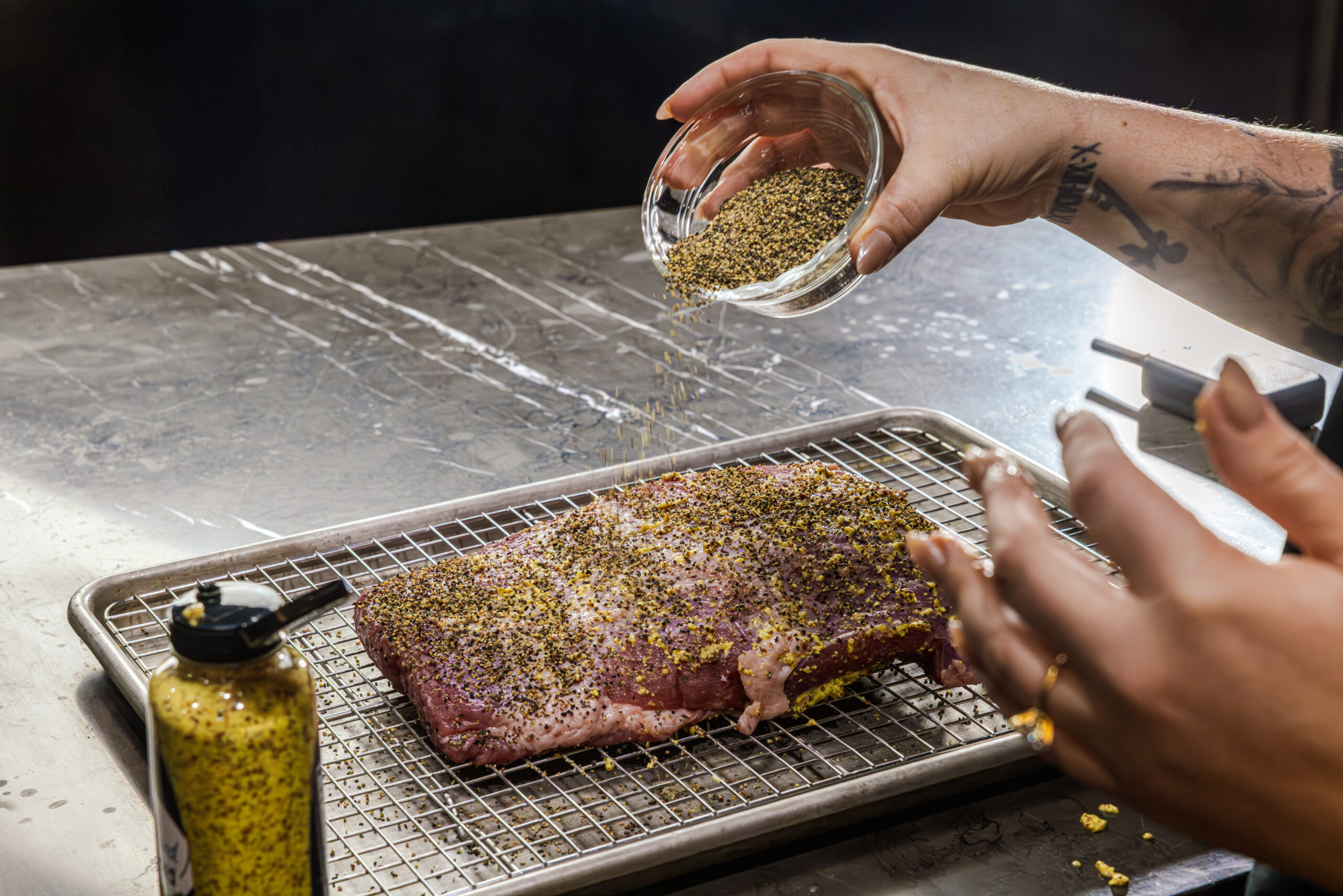
How Corning (Curing) Works
“Corning” simply refers to curing meat with salt.
Salt curing has been used for centuries because it inhibits bacterial growth, making meat safer to store for long periods. But preservation isn’t the only benefit — curing also creates the distinctive flavor and texture we expect from corned beef.
To properly cure brisket, most recipes use Prague Powder #1 (pink curing salt). This curing salt contains sodium nitrite, which reacts with proteins in the meat to:
- Create the signature rosy color
- Develop the distinctive cured flavor
- Improve food safety during the curing process
The result is the tangy, savory brisket we associate with corned beef.
Why Corned Beef Became a St. Patrick’s Day Dish
Corned beef and cabbage is often associated with Irish cuisine, but the dish actually developed in the United States.
In Ireland, families traditionally ate cured pork with potatoes. When Irish immigrants arrived in America in the 1800s, pork was often expensive. Many Irish neighborhoods shared markets with Jewish communities, whose butcher shops sold cured beef brisket instead of pork.
Irish immigrants adopted the cured brisket and cooked it with cabbage to create a hearty and affordable meal. Over time it became the Irish-American dish we know today.
Why Brisket Needs Long Cooking
Brisket comes from the pectoral muscle of the cow, which does a lot of work supporting the animal’s weight. That means the cut contains a large amount of connective tissue made primarily of collagen.
Collagen does not soften at steak temperatures. It only begins to break down into gelatin once the meat climbs above about 160°F and continues to soften as it approaches 190°F and beyond.
That is why brisket must be cooked slowly and held at high temperatures for a long time.
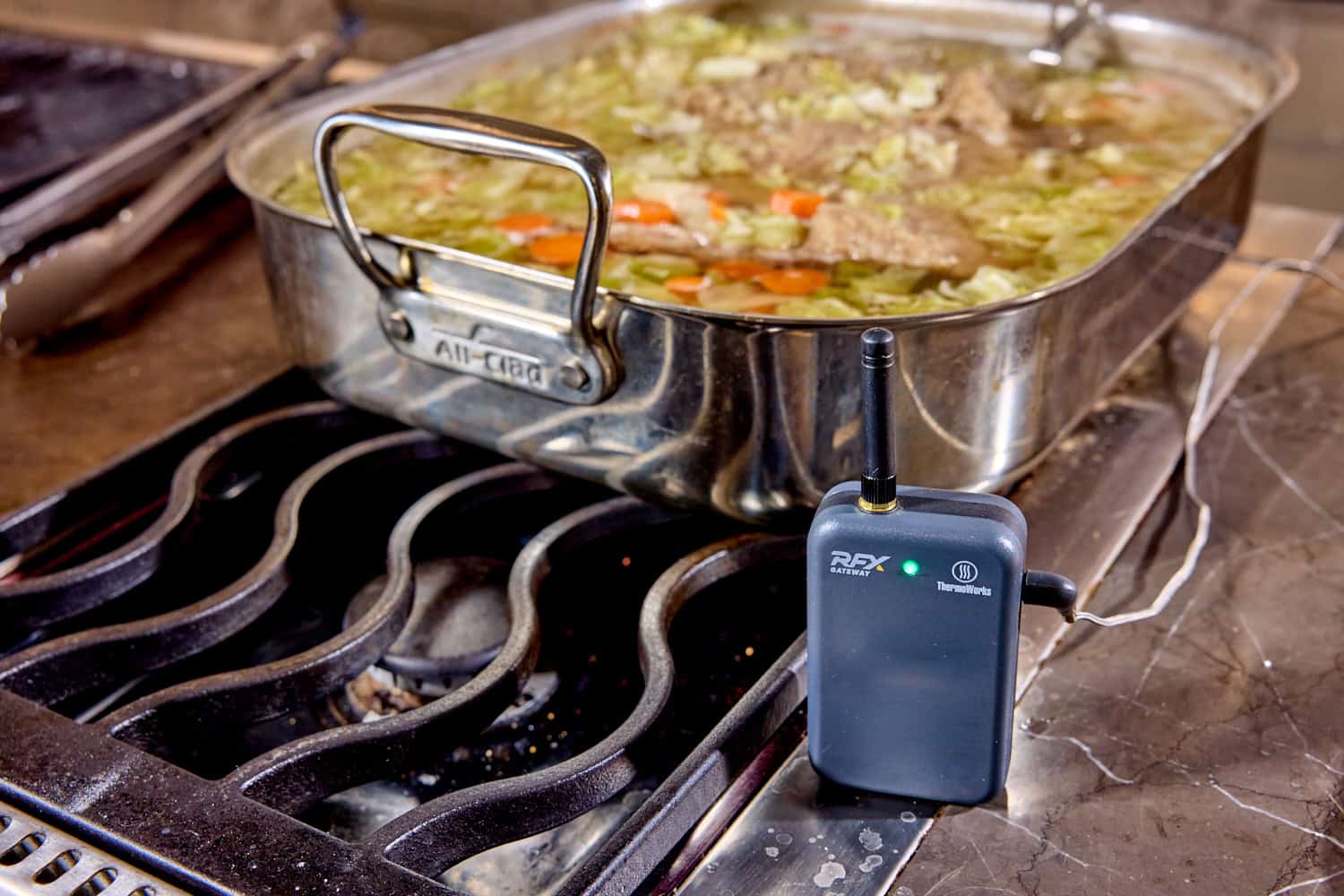
Traditional Corned Beef Cooking
The classic method is simple.
Place the brisket in a pot of water and boil it for hours, adding cabbage, potatoes, and carrots toward the end of the cook.
This method works because the meat spends enough time above the collagen-melting range to become tender.
However, boiling aggressively all day has some downsides.
- Excessive boiling can push too much gelatin out of the meat.
- Long boiling can wash away flavor.
- Vegetables often become overcooked.
A more controlled simmer produces better results.
The Better Way: Controlled Simmering
Instead of boiling hard all day, maintain a gentle simmer between 190°F and 195°F.
This temperature range breaks down collagen efficiently while helping the brisket retain moisture and structure.
At this temperature, most corned beef becomes tender in about 3 to 10 hours, depending on the size of the brisket and the final texture you prefer.
Monitoring the Cook
Precise temperature control makes a big difference with corned beef.
RFX MEAT Wireless Probe
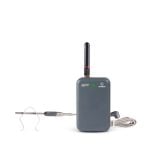
Using a wireless probe like the RFX MEAT Wireless Probe lets you track the internal temperature of the brisket while it cooks. Because the probe is waterproof, it can stay in the meat while it simmers in the pot. This allows you to monitor the entire cook without lifting the lid or disturbing the simmer.
RFX Gateway
Pairing the probe with the RFX Gateway sends the temperature data to your phone so you can track both the meat and the cooking progress from anywhere.
For corned beef, watch for the meat to climb into the 190°F range, then give it additional time for the collagen to fully soften.
When Corned Beef Is Done
Technically, corned beef is safe to eat once it reaches 145°F, but at that temperature it will still be tough.
For tender results:
- Sliceable texture: 190–195°F
- Very tender texture: 200–205°F
Once the brisket reaches your target temperature, hold it there for one to two hours to allow the collagen to fully break down.
You should be able to slide a thermometer probe into the meat with little resistance when it is ready.
The Bottom Line
Corned beef is not complicated. It simply needs enough time in the right temperature range for brisket’s tough connective tissue to melt into gelatin.
Hold the cooking liquid around 190°F, monitor the internal temperature with a wireless probe like the RFX MEAT Wireless Probe, and give the meat time to finish tenderizing.
Do that and you will end up with corned beef that is juicy, sliceable, and perfect for St. Patrick’s Day.
Many people search for corn beef, but the correct spelling is corned beef. The word “corned” refers to the large grains of salt historically used to cure the meat. Corned beef is typically made from brisket that has been cured in a salt brine with spices and curing salt.
Corned beef becomes tender when it reaches 190–205°F (88–96°C) internal temperature. While beef is technically safe to eat at 145°F, brisket is a tough cut that needs higher temperatures to break down collagen and become tender. Monitoring the internal temperature with your RFX Wireless for percision results.
Cooking time depends on the size of the brisket and the cooking temperature.
Typical simmer times:
3–4 lb brisket: about 3–4 hours
4–6 lb brisket: about 4–6 hours
Cooking at a steady simmer around 190–195°F helps the brisket tenderize without overcooking.
A gentle simmer produces better results than a hard boil.
Boiling aggressively can cause the meat to lose moisture and flavor. Holding the cooking liquid around 190°F allows the collagen in the brisket to slowly break down while keeping the meat juicy.
Corned beef is usually tough for one of two reasons:
It has not been cooked long enough.
The internal temperature has not reached the collagen-melting range above about 160°F.
Brisket needs time in the 190°F range for the connective tissue to break down. If the meat still feels firm, continue cooking until a thermometer probe slides in easily.
Yes. A slow cooker works well for corned beef because it maintains a steady low temperature.
Cooking on low for 8–10 hours usually produces tender results. If you want to monitor the internal temperature during the cook, use RFX MEAT Wireless to track progress without lifting the lid.
Add vegetables toward the end of the cook so they do not become mushy.
Typical timing:
Potatoes and carrots: last 30–40 minutes
Cabbage: last 20–30 minutes
This keeps the vegetables tender while the corned beef finishes cooking.
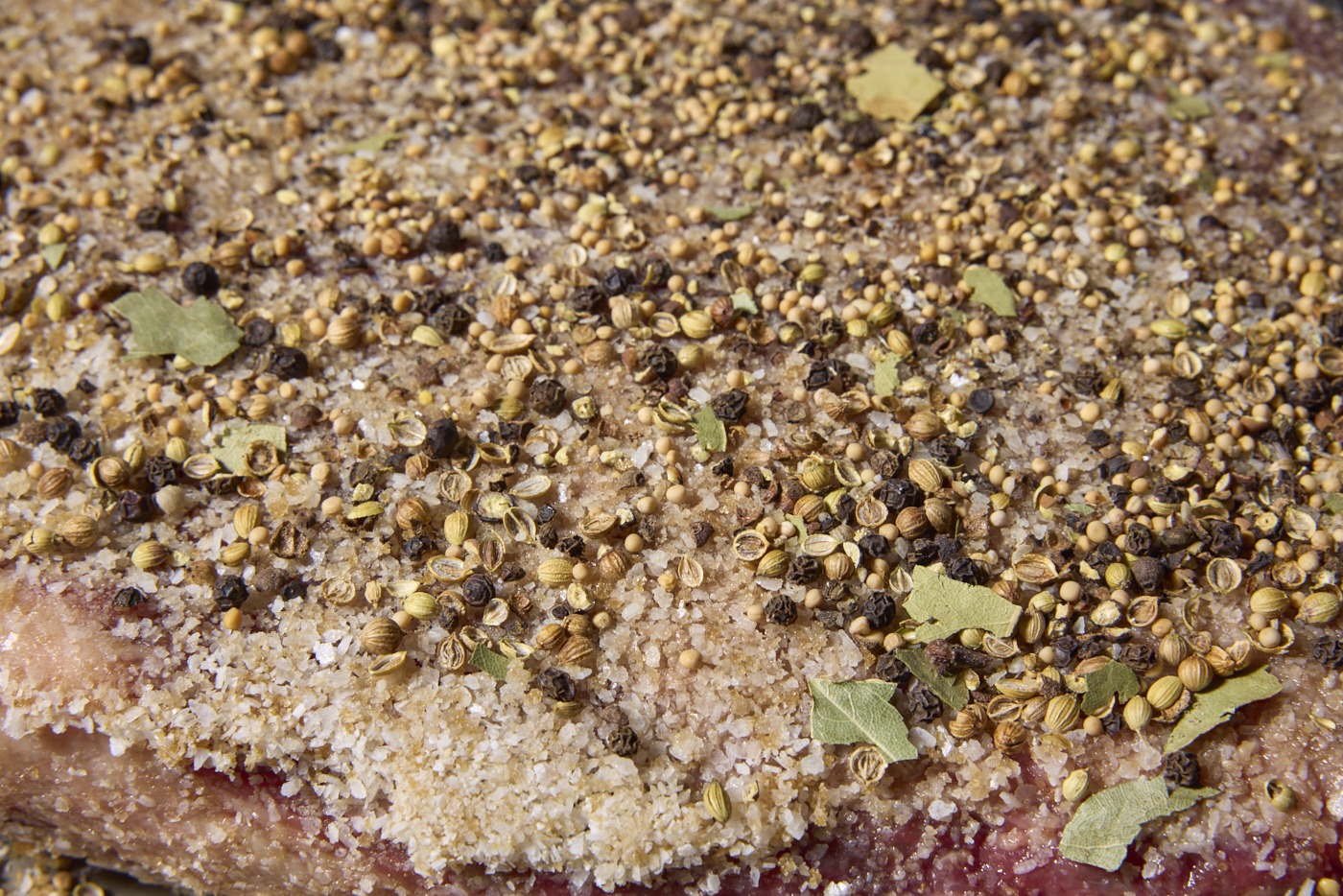
Homemade Corned Beef Cure Recipe
Ingredients
For every 5 lb of brisket (flat or whole):
- 3/4 cup kosher salt
- 1 teaspoon pink curing salt Prague powder #1, NOT Himalayan pink salt, which is entirely different
- 2 tablespoons brown sugar
- 1 tablespoon ground ginger
- 2 tablespoons whole black peppercorns
- 1 tablespoon yellow mustard seeds
- 2 tablespoons whole coriander seeds
- 1 tablespoon allspice berries
- 6 whole cloves
- 6 bay leaves roughly crumbled
- Weigh your beef then do the proper conversion based on this recipe for 5lb.
Instructions
- Pat the brisket dry with paper towels.
- Combine the salt, pink (curing) salt, ground ginger, and sugar together in a bowl.
- Place the brisket in a rimmed baking sheet.
- Rub the brisket all over with the salt/sugar mixture. If there is any extra salt mixture, pile it on/under the brisket in the pan.
- Combine the spices in a bowl, then crush them coarsely with a mortar and pestle or in a tea towel with a rolling pin
- Rub the spices all over the brisket’s surface.
- Cover the brisket and pan tightly with plastic wrap. (Or, as we did, use a very large zip bag meant for meat-brining.)

- Place in the refrigerator.
- Unwrap it, flip it and rewrap it a few times over the next 7-10 days.
- Now you just need to wait 7-10 days…

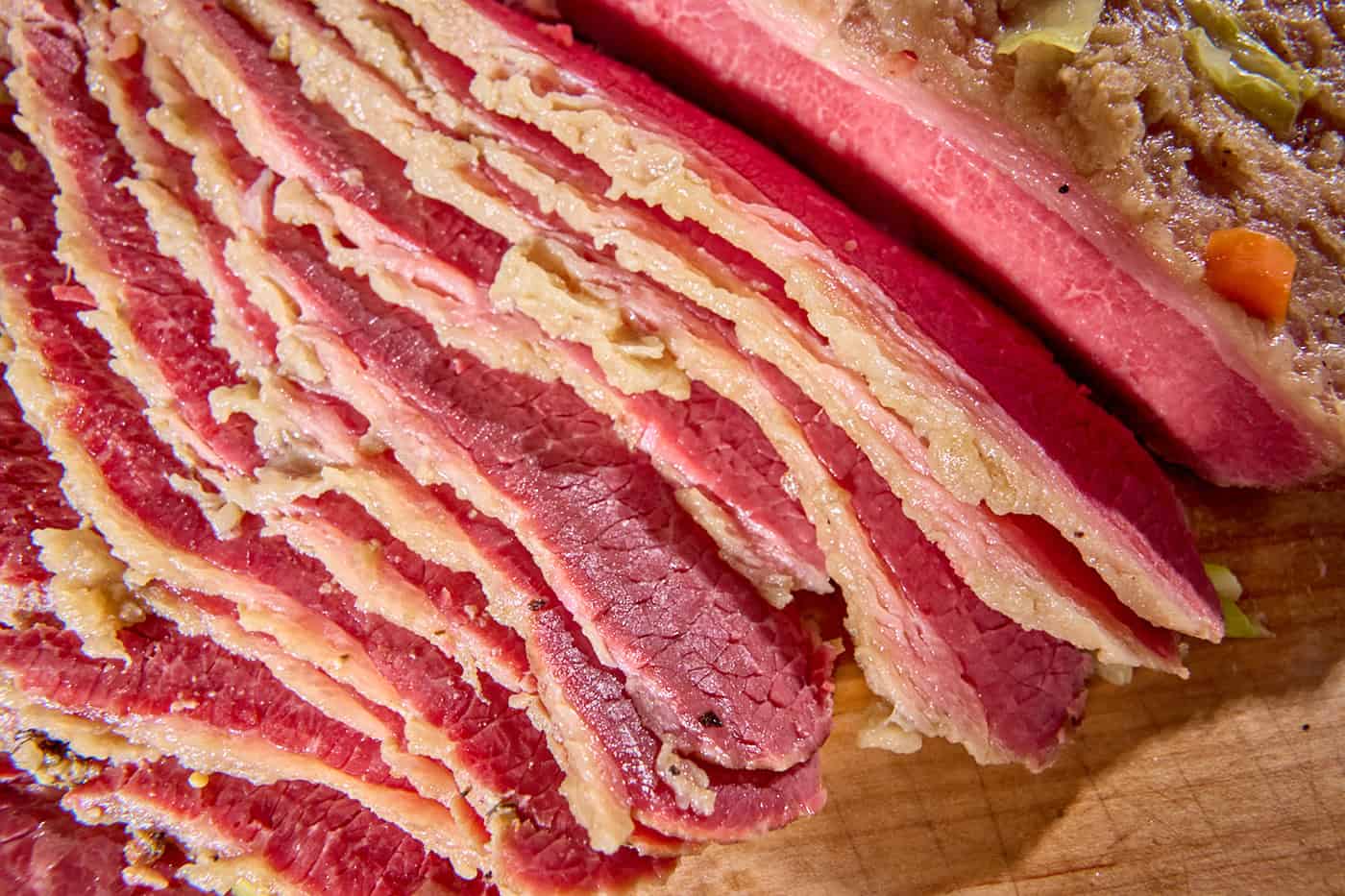
How to cook corned beef: recipe
Ingredients
- 1 corned beef
- 1 onion
- 2 carrots
- 2 stalks celery
Instructions
- Rinse the excess salt mixture from the corned beef.
- Place the beef in a pot. If it’s too big to fit, cut it into smaller pieces and wedge them in together.
- Cover the beef with at least an inch of water.
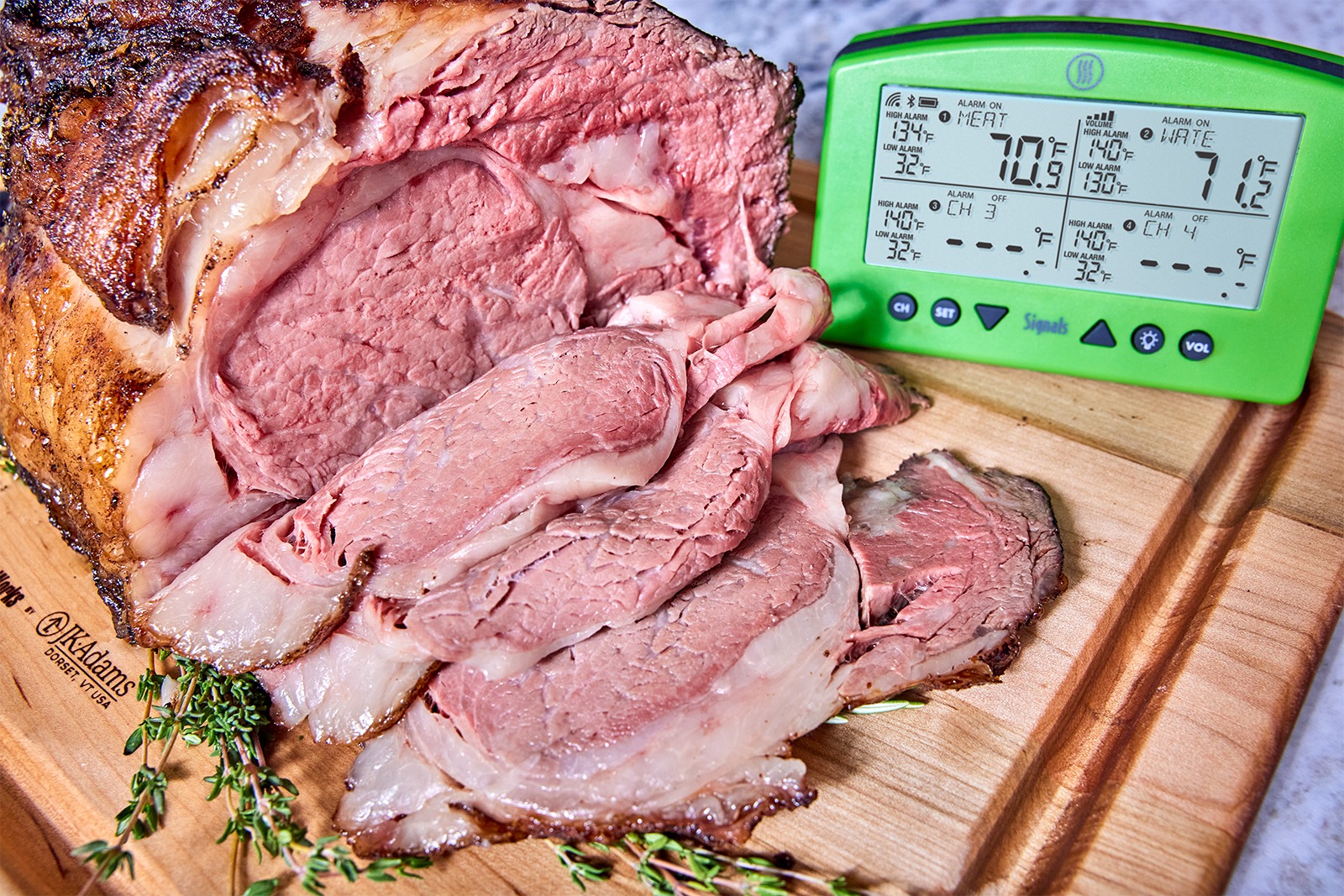
- Insert a probe (RFX MEAT works great) into the beef and either set up another probe temping the water using a pot clip (or dangle a waterproof probe in the water directly).
- Set the high-temp alarms for both the water and the meat to 190°F (88°C).
- Bring your water up to your target temperature, and maintain it there by adjusting the heat on your burner.
- Monitor the internal temp of your corned beef. Once it reaches your target temperature, let the meat cook until it can be easily pierced by a knife or Thermapen ONE—at least 2 hours after the target temp is reached.
- You may need to add more water in the course of the cook, as some will be lost to steam. You may also want to weigh the beef down with a bowl or plate if it doesn’t want to stay submerged.
- Once your beef is nearly tender enough, add the vegetables to the pot and simmer them together for at least 20 minutes, or until they reach the texture you like.
- Remove the beef from the pot and let it cool enough to handle.
- Slice the beef to your liking, and serve with the cooked veggies and some good mustard
For the perfect complement to Corned Beef on St. Patrick’s day, see our Irish Soda Bread post.
For another way to cook your corned beef, check out our post on Smoking Corned Beef!
EXCELLENT article. Thanks so much.
Harvey,
Glad you enjoyed the article! This was a fun project for us to work on.
-Kim
What is the cooking procedure for a pressure cooker?
Basem,
Great question! This recipe from Pressure Cooking Today goes through how to prepare corned beef in a pressure cooker. You could follow the corning instructions in our post, and continue on with the rest of the recipe after using your pressure cooker. It’ll certainly speed up the process!
Thanks,
-Kim
Question…after you boil the brisket, do you drain the water? Do you just leave it in the Dutch oven or put it on a broiling pan? Everything else sounds pretty straightforward, but having trouble following that part of the process…
Thanks!
Guy
Guy,
I’m sorry the process wasn’t more clear to understand. After the brisket is brought to a boil on the stovetop it’s transferred directly into the oven–still submerged in water in the Dutch oven. After cooking in the oven the brisket is allowed to rest in the cooking liquid. I hope this helps. Please don’t hesitate to ask any more questions you may have.
Thanks!
-Kim
Save those wonderful juices for reheating leftovers and for cooking fresh cabbage, potatos, other veg….
Harvey,
Glad you enjoyed the article! This was a fun project for us to work on.
-Kim
Guy,
I’m sorry the process wasn’t more clear to understand. After the brisket is brought to a boil on the stovetop it’s transferred directly into the oven–still submerged in water in the Dutch oven. After cooking in the oven the brisket is allowed to rest in the cooking liquid. I hope this helps. Please don’t hesitate to ask any more questions you may have.
Thanks!
-Kim
It was not clear at all that the pot is transferred to the oven. Yet years later the recipe is still not edited for clarity. At what oven temperature? And how is that different from braising? Thank you.
It is braising, just…oven braising. Keeping the oven at 250°F will keep the water about where we want it to be. But you can also do this on the stove, just monitor the temps as you go!
Basem,
Great question! This recipe from Pressure Cooking Today goes through how to prepare corned beef in a pressure cooker. You could follow the corning instructions in our post, and continue on with the rest of the recipe after using your pressure cooker. It’ll certainly speed up the process!
Thanks,
-Kim
I enjoy your emails and information but I find it difficult to print and save the information
James,
The current format we have isn’t the most user-friendly, and we’re working toward restructuring some areas of our website. Thank you for your feedback!
Sincerely,
-Kim
You state that it can take from 8 to 10 hours to cook to reach a tender stage. How does one know when it’s tender enough, and not overly tender that it falls apart?
Nathan,
You make a good point. The larger the piece of meat, the longer it will take to reach target temperatures and judge doneness. Check out this article by Steven Raichlan about Brisket FAQs. He has a couple of tips, but one is to insert a thermometer probe inside the meat. It should go in out without any resistance–like butter. Best wishes with your corned beef cook!
Thanks,
-Kim
I cooked mine differently as per another source and it turned out amazingly good. Smoked the meat at 240 deg until the internal temp reached 160 deg. Then I wrapped it with foil (I do the same for ribs) which will keep the juices in the meat and tenderizes it. The temp rose from 160 to 180 deg in about 1.5 hours. Then coated it with a glaze and cooked it until the internal temp reached 195. Let it rest for 30 minutes. The meat was very tender and tasted great by itself. The next day my wife made the corn beef and cabbage meal which always is great. Definitely a recipe that I will add to my “Favorites” list.
Bob,
Your smoked method sounds wonderful! The temp ranges you mentioned are so critical that tough piece of meat. There really are so many different ways to prepare a brisket whether it’s corned, smoked, cooked sous vide, or simmered. Thank you for sharing!
-Kim
Bob,
Your smoked method sounds wonderful! The temp ranges you mentioned are so critical that tough piece of meat. There really are so many different ways to prepare a brisket whether it’s corned, smoked, cooked sous vide, or simmered. Thank you for sharing!
-Kim
James,
The current format we have isn’t the most user-friendly, and we’re working toward restructuring some areas of our website. Thank you for your feedback!
Sincerely,
-Kim
Nathan,
You make a good point. The larger the piece of meat, the longer it will take to reach target temperatures and judge doneness. Check out this article by Steven Raichlan about Brisket FAQs. He has a couple of tips, but one is to insert a thermometer probe inside the meat. It should go in out without any resistance–like butter. Best wishes with your corned beef cook!
Thanks,
-Kim
I heard from a butcher friend that the use of celery salt may be just the same as pink salt. Is this true. Our conversation was on… Should I say it.. Nitrates. Easy now! I just want to know about the celery substituting pink salt.
Justin,
Great question! It looks like celery salt, or cultured celery powder, is used as an alternative to curing salt–they aren’t the same thing. The cultured celery powder contains some preformed nitrites. Check out this article from Malabar Spice. If you give it a try let us know how it goes!
Thanks,
-Kim
Justin,
Great question! It looks like celery salt, or cultured celery powder, is used as an alternative to curing salt–they aren’t the same thing. The cultured celery powder contains some preformed nitrites. Check out this article from Malabar Spice. If you give it a try let us know how it goes!
Thanks,
-Kim
Great article. I love corn beef on rye. must be the Irish in me!
Stanley,
Nothing really compares to well-made corned beef. Glad you liked the article.
Thanks!
-Kim
Stanley,
Nothing really compares to well-made corned beef. Glad you liked the article.
Thanks!
-Kim
I cure the meat in liquid for 1 1/2 to 2 weeks, using a similar spice mix to yours. I toast the spices lightly and grind them in a mortar to release more flavor.
I always boiled it and didn’t think to use my ThermaPen. The poke-it-with-a-fork method has worked for years and I got no complaints. Maybe I’ll shake it up and get scientific this year.
I love the idea of toasting and grinding the spices first. Excellent tip!
We get good results using our slow cooker with a mixture of Guinness, brown sugar,home made pickling spice,two split heads of garlic and one quartered onion cooked on low setting around five hours.Never took an Internal,always went by feel but will use my “Smoke” this time to compare.We sear cabbage wedges in bacon fat then some cooking liquid,carrot and taters put on a lid till crisp tender.Say no to soggy veg.Also flats and points cook different from one another,we like points for fat content.
Happy Cooking!
“Say no to soggy veg.” Love it!
Love your detailed article. I like to keep my corned beef for a few days for sandwiches or just to munch on. Will it stay moister if I slice it and store it in a Tupperware covered with the cooking liquid or will it stay moister than if I put it in the container dry?
It should stay moister in the cooking liquid.
There are so many temperatures discussed in this article-I’m confused! The water temp should be 195°, but maybe 180?
For the meat temp, I don’t understand this sentence. “Once your corned beef reaches the internal temperature you want, it will still need to have time for the collagen to break down. Our target temp was 190°F (88°C), and it took 2 hours after reaching that temp for the meat to reach the consistency we wanted. Yours may take more time depending on your temperature and texture preference.”
What is the range of internal temp I may want? Target temp 190°, but after you reached 190°, it took 2 more hours? To what eventual temp?
Thank you.
Jane,
Good questions, I see that is less clear than it seemed when I wrote it. You can cook it in water that is at 180°F for much longer, but I like it closer to 195°F. The meat will equalize with the water temperature, but just because it bets up to that temp doesn’t mean that it is already tender…not necessarily.
If you cook it at 180°F it will take several hours to get tender enough. If you cook it at 190 it will go faster. You’ll hit “water temp” and then need to hold it at that temp for more or less time, depending on your textural preference.
The temperature here is giving us a guide to making sure we don’t overcook it and boil all the gelatin out of it.
If I’m not mistaken, when smoking corned beef, it becomes pastrami. Correct me if I am wrong.
Close! Pastrami also needs to be coated in a pepper/coriander/spice mixture.
I cooked two corned beef roasts, both about 4 lbs, one using Lopez-Alt’s method and one using the simmering method in this article. I used a Joule sous vide unit and a Thermoworks Smoke X2 to monitor the temperature for the first, and a Samsung induction cooktop and the Smoke X2 for the second.
The Lopez-Alt recipe was crap. After 8 hours (not 10) at a rock-solid 180F, the meat was cooked to the consistency of baby food. Even allowing it to cool overnight in its bag didn’t improve it. I can’t believe anyone wants it this way.
So my meal was screwed. now I had to cook the second one and have the NE Boiled Dinner on the 18th.
So the next day I try again using the Thermoworks simmering recipe. Reach an internal temp of 190, hold two hours. Similar results though not as bad. Overdone, overdone. Tasted fine but would not hold un for slicing for a sandwich.
I’m sorry it didn’t work out for you. A shorter hold time at the temperature will make it more sliceable. I’m glad it at least tasted good!
I have oven braised corned beef in the past with great results, but can’t now find a recipe that looks “right.” What would you recommend for oven-braising, or don’t you, and why?
I’d use a large braising vessel and add hot liquid to come 1/2 to 3/4 of the way up the meat. Add onions, celery, and carrots to the liquid. Cook, covered, in an oven set to 325. use a probe and set the target temp for 175. When that alarm sounds, set a timer for 2 hours and continue to cook. Flip the meat over in the braising liquid every 90 minutes thorughout the cook to extract the salt form the emat evenly. Should be great!
I found that simmering seemed to loose to much flavor from the corned beef, so I use the braising method in the oven then I use the liquid to make up the veggies. I’m surprised that this method wasn’t mentioned. I did like the article it gave me a lot of info.
Will the Square Dot oven temp probe also monitor water temp averages?
Yes! But you might wan to use the optional waterproof needle probe for that. It works just as well with the Square DOT, but is meant for submersion.
Please comment on Corning other cuts of meat. Such as top round or eye of round.
Use the same process, but know that a thicker cut like an eye or round will take longer to cure to the center. Adjust the ingredient quantities based on weight. One difficulty would be in the cooking. A long slow braise is great for corned beef because it leeches out some of the excess salt, but an eye of round makes a terrific mediun-rare roast. That will be one salty roast! In general, we tend to salt cure meats that can take some serious cooking (ham and bacon, even), not our steakier cuts. But maybe eye of round “ham” will be good! If you try it let us know how it goes.
Corned beef WAS historically produced in Ireland, and was known as a superior product during the time of the British Empire. However, it became too expensive for the Irish to buy. Ironically after emigrating to the United States, it was cheaper to purchase. But the process did not original with Jewish Americans as you seem to suggest.
https://www.foodandwine.com/news/complicated-irish-history-corned-beef
How about a similar article for cooking a brisket by braising it (not for corned beef)?
We have one! check out our braised brisket post!
Using an induction stove top that allows you to set the temperature could allow us to set the temp to 190 exactly? Does that sound reasonable?
Yes! But verify that it is doing that. Not all induction tops are as honest as we hope them to be.
My method: slow cooker, couple of bottles of Guinness, sliced Vidalia onions on the bottom, the meat, on high for about 3-4 hours, then to low for a couple more. Last hour or 2 before mealtime in go the veggies. No complaints yet. Ronnie.
The corned beef cooked your way with all the vegetabes in with the meat is the way my mother cooked/served as a soup with the corned beef cut up.
I buy my corned beef from the grocery store I don’t brine mine own.
I put my store bought corned beef in a large pan, cover it with at least an inch of water and add extra pickling spices to the water because the package in with the corned beef isn’t enough.
I take the corned beef out of the boiling liquid when it is tender and put it in a baking dish. I then mix up ketchup, brown sugar, and mustard for a glaze. I cover the corned beef with the glaze mixture and put it in a 325 degree oven. I get the vegetable ready while the corned beef is in the oven.
I then add the potatoes and carrots to the cooking liquid and cook until almost done then add the quartered cabbage to the liquid to cook.
I take the corned beef out of the oven and let it rest a few minutes while I dish up the vegetables and then slice the corned beef with the glaze. I usually cook it in the oven for about 20 minutes or until the glaze looks cooked.
I learned the glaze method from my mother in law 50 years ago. It compliments the wonderful flavor of the corned beef. And it also make great left overs for sandwiches.
My method is pretty much the same. Been that way since my mom taught me. Never had a problem. Perfect!
What are your recommendations for trimming a flat prior to the corning process? Leave fat on, trim to 1/4 – 1/2 inch or skin it off?
The instructions for the instant pot cook say to leave fat on the bottom of the flat.
I like some fat cap on there, but it’s entirely up to personal taste. Let’s say, 1/4″.
Sadly, no thermometers required for it, but pressure cooking the brisket comes out amazing. 90 minutes in an Instant Pot or similar brand makes the best corned beef I’ve ever had. I make sure I rinse the hell out of the pre-cured briskets beforehand. Not too salty tasting at all. Using my cheapo Best Buy home meat slicer produces perfect slices, even though I don’t look forward to cleaning the slicer afterwards.
How would you suggest using RFX for corned beef?
Leave it in while you boil the corned beef—it will transmit the temp so you can know how the meat is cooking throughout. You’re looking for a doneness around 195–203°F, depending on how you like the texture, and RFX will help you keep an eye on the progress. The wireless probe is waterproof so it can go in the pot with the beef.
I think it’s so cool that corned beef was born out of necessity and became such a staple! It definitely makes me want to cook it more than just around St. Patrick’s Day. Can’t wait to try these tips!
Fantastic information, the best I have seen yet. I’ve had mine be delicious and have cooked leather, was really trying to dial it in, since my family and I enjoy this so much. Thank You, it’s appreciated and valued!