

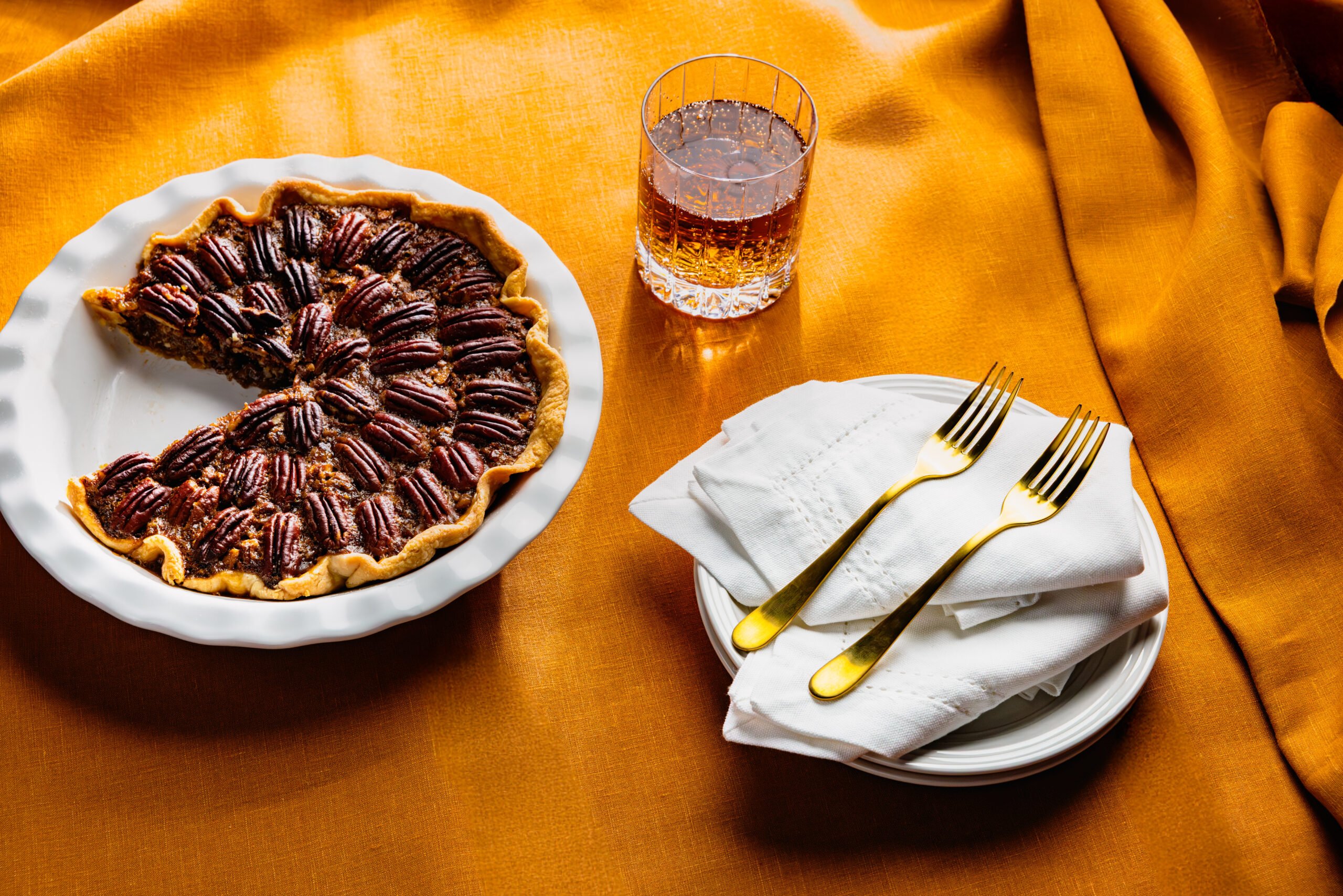
How to Make Pecan Pie Better with Temperature
The Holidays are a time for pies and one of our favorites is pecan. Pecan pie is rich and delicious, with contrasting flavors and textures. But if you’ve ever had the disappointment of baking one that didn’t set up right, you know it’s not always as easy as, well, pie. Try making it with our thermal tips, however, and it’s almost guaranteed to turn out. Celebrate with this classic dessert, cooked to perfection. Read on to find out how.

What makes a perfect pecan pie?
A perfect pecan pie is about three things: crust, custard, and nuts. We’ve written about the crust and how to get maximum flakiness, so here we’ll focus on the filling and the nuts.
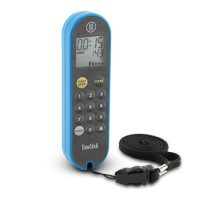
The problem with pecans is that they can seem…soggy. Yes, they’re cooked in a wet custard, but they need to have as much nutty snap as they can get. And if they don’t get cooked right, they don’t exhibit the characteristic maple-toasty flavor for which they are so beloved. So it’s important to toast the nuts before you use them in the pie. A 10-minute roast at 350°F (177°C) (use your TimeStick to track the roast) will do the trick. Your pie will taste more like pecans and will have a better, more interesting texture.

Fixing runny pecan pie filling
As for the filling, it’s simply a matter of composition and temperature. As mentioned, the filling is a custard (though made without milk), and that means eggs. If you don’t use enough eggs in your filling, it can’t set up right. A good recipe should take that into account. The one we use below, adapted from SeriousEats, has just the right binding power.
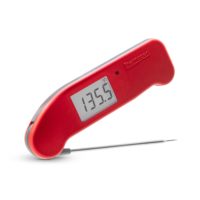
Those eggs need the right temperature, though. Don’t just rely on what the filling looks like in the oven, use its actual temperature to tell you if it’s done. Use your Thermapen ONE to verify the temp during the bake, and shoot for a temperature that lies between 175 and 180°F (79 and 82°C). If you hit that, your fears of a runny pie will be allayed.
Should I chop the nuts for my pecan pie?
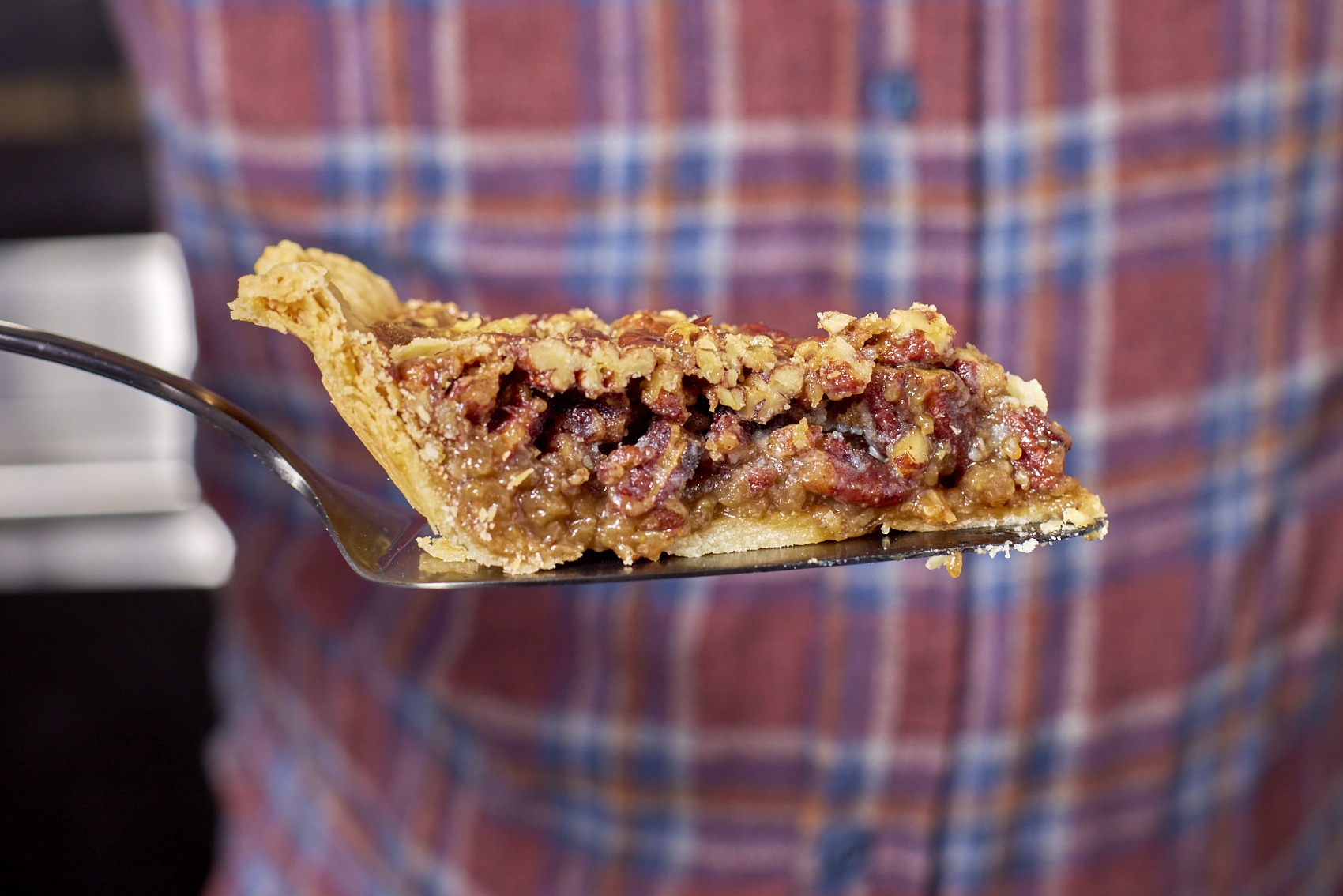
If you’ve toasted your nuts well, the chopping—or lack thereof—is cosmetic. Just chop them after toasting, not before. We chose to chop some of the nuts and leave some whole. We find this gives a pretty appearance while giving a good distribution of nutty flavor and texture.
As one of the Big-Three of pies in America (apple, pumpkin, pecan), 1 pecan has a rightful place at any celebratory meal, especially one during the winter holidays. There’s no reason you shouldn’t make it this year—or any year! Use your Thermapen ONE to help you get perfect results this time and every time. Happy cooking!


Homemade Pecan Pie Recipe
Equipment


Ingredients
For the pie crust
- 3 3/4 C 450g Unbleached all-purpose flour, plus more for rolling
- 2 Tbsp granulated sugar
- 1 tsp table salt
- 20 Tbsp unsalted butter chilled and cut into thin pieces
- 1 C ice water
For the filling and assembly
- 3 eggs beaten
- 2 Tbsp honey
- 1 C light corn syrup
- 1/4 C brown sugar
- 4 Tbsp melted butter cooled
- 1/2 tsp salt
- 1 tsp vanilla
- 3 C toasted pecans 2 C roughly chopped and 1 cup left whole
Instructions
Prepare the pie dough
- Preheat your oven to 375°F (191°C).
- Mix the flour, sugar, and salt for the dough in a bowl.
- Add the cold butter pieces to the dry ingredients and toss to coat. Use your pingers to press the flour into the butter pieces, creating little butter/flour flakes and pieces.
- Make a well in the flour and add ⅔ C of ice water. Combine gently with a fork until loosely combined, clumpy, and still with some dry spots. Tip the bowl out onto the counter and chop through it several times with a bench scraper to break up the pieces and combine things. Chop and re-pile until there are no visible dry spots and no piece of butter is larger than a pea. If any floury areas remain, drizzle with a half teaspoon of water and chop it in.
- Pat the dough into a square, then roll it with a pin until it is ¾" thick. Cut the dough in half and stack one half on top of the other half. Flour under the stack and roll it to flatten and lengthen it a bit. Cut it in half again, the other direction, and do the same thing again. Lift it around the edges with the bench scraper to flour underneath. Flour the top a little if needed, and roll into a ¾" thick rectangle. Cut it in half again across its short axis. You now have 2 portions of dough.
- Form the dough into a disk and wrap it tightly in plastic wrap or parchment paper. Chill in the fridge, 2 hours.
- Unwrap the dough, roll it until it can cover your pie pan with some excess. Put the dough in the pan and crimp the edges how you like. Line the crust with foil and weigh it down with whatever you use for pie weights.
- Bake the crust for 40 minutes. (Use your TimeStick!) Remove from the oven, take the weights out, and prepare to fill.
Make the filling and bake the pie
- In a bowl, whisk together all of the filling ingredients except the nuts. Whisk until very well combined.
- Scatter the chopped nuts in the pie crust. Add the custard and carefully place the whole nuts atop the custard in a design that pleases you.
- Bake the pie for 40 minutes, turning halfway through. If the crust starts to brown too much, shield it with foil.
- Starting at 40 minutes, check the temperature often with your Thermapen ONE until the temperature reaches 175 to 180°F (79 to 82°C). The pie will likely take about 1 hour to bake.
- The filling should be firm but jiggly and a bit puffy. Let the pie cool overnight before serving.
- Serve!

Peach, strawberry, and blueberry are all worthy pies, but if they don’t carry the same weight and “must-have” importance as the other three.↩
Thank you for the recipe.
Question: What should the internal temperature of the pie be when done? “Somewhat firm in the middle after 50-60 mins in the oven” can be subjective.
Thank you –
Nolan
shoot for 200°F.
Thank you for the recipe.
What should be the internal temperature of the pie be when done? “Somewhat firm can be subjective.
Thanks again
Internal temp should be 200°F.