

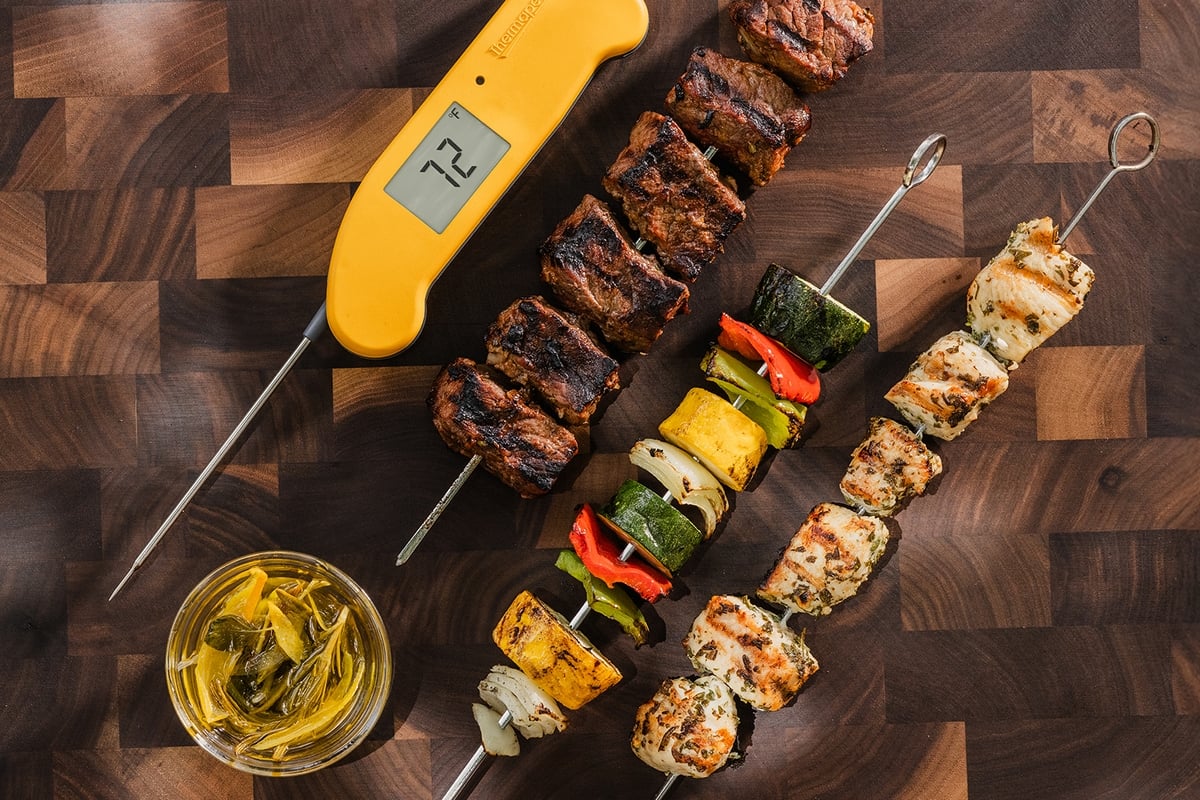
Chicken Kabobs to Steak Skewers: Tips for Food On A Stick
Kabobs pack a punch for a cookout. They come together easily—from ingredients you probably already have lying around in your kitchen—and taste better than their effort would hint. But most people neglect the few grilling fundamentals that separate truly great kabobs from mediocre ones. It’s about more than just marinades—learn the techniques you need for killer kabobs right here.
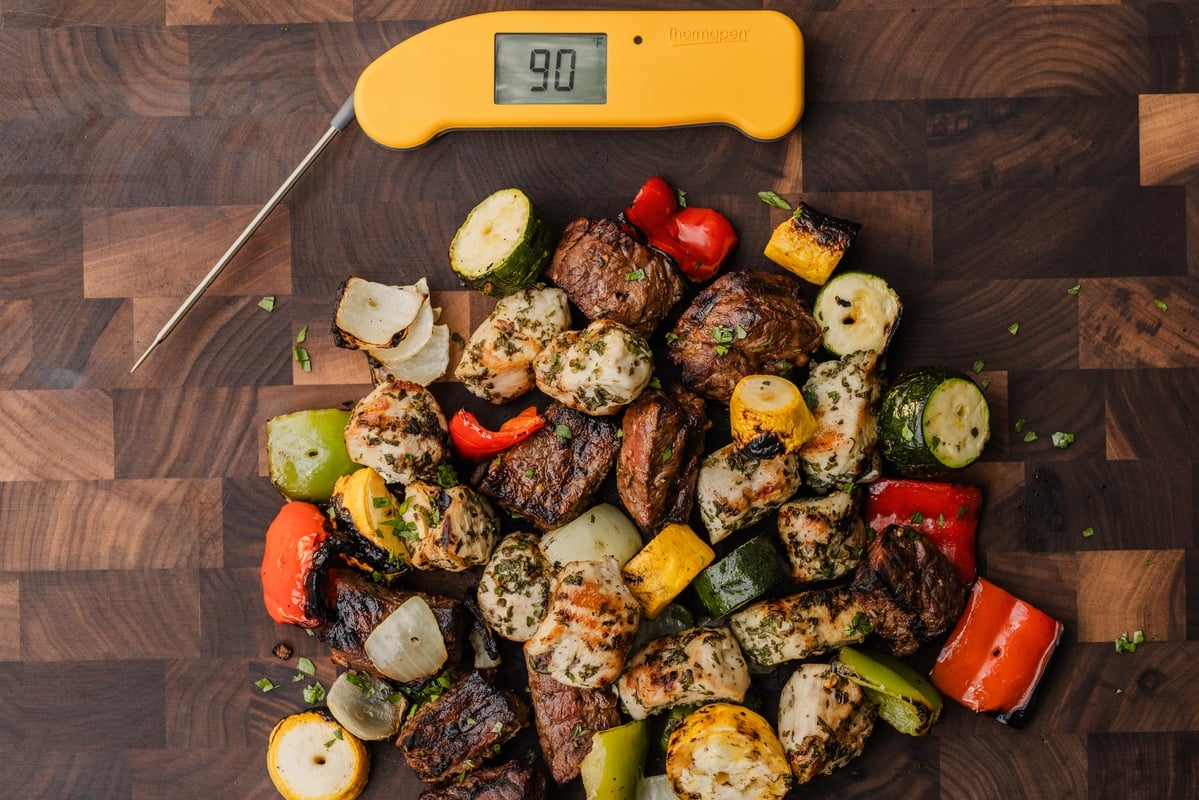
Kabob? Kebab? Shish Kabob? Skewers? What are They?
In American grill parlance, we often refer to food cooked on sticks as “kabobs,” but that isn’t exactly, technically correct. Kabob is an Americanization of kebab, which comes from the Middle East and usually refers to seasoned, ground meat, formed onto a skewer and cooked over fire or coals.
But some long time ago, that ground meat dish lent its name to almost any skewered dish in America. Interestingly, “shish kabob”—transliterated from Turkish—is a dish of cubed meat, not ground, so it is more appropriate to use that term for our American versions.
Really, a better term for these foods would be “skewers,” but, statistically speaking, you didn’t search that term to find this post! And after all, language changes and evolves and we needn’t prostrate ourselves before the past. Call these delectable foods on sticks what you will! (We DO have a great post on proper, ground meat kebabs you should check out.)
Skewer Problems You Didn’t Know You Had
As with everything we cook, we want our kabobs to be safe to eat and delicious, but most people don’t cook them in a way that leads to both results. Here are the most common mistakes people make when grilling kabobs. How many are you guilty of?
- Using tough meats with too much connective tissue
- Putting different veggies and meats on the same kebab for that “meal on a stick” vibe
- Not cutting meats and vegetables into uniform-sized chunks for uniform cooking
- Stacking the chunks tightly together on each skewer and abandoning the power of convective currents between the chunks
- Neglecting to check temperatures, thinking that small chunks should be “eye-ready”
- Cooking vegetables over direct heat
Well, now is the time to get it right. Let’s look at why these matter so you can improve your skewers.
What Types of Meat Work Best for Skewers?
Let’s start at the very beginning. What meat should you skewer? We love all types of meat on our skewers—beef, lamb, pork, chicken, swordfish, shrimp—they are all delicious. But not every cut from every animal works equally well.
Grilling involves very high cooking temperatures so the best kebab meats will be:
- Tender with very little fat and connective tissue—Small chunks of meat cook very quickly on the grill. There won’t be nearly enough time for fat to render and connective tissue to properly dissolve. Meat that is tough stays tough and becomes rubbery when cooked quickly on a skewer.
Aim for steak-like cuts. Avoid tough meats like brisket or pork shoulder. even though they are easy to cut into uniform chunks (see below). And trim away any fat, gristle, or connective tissue you see before cutting tender meat into cubes.
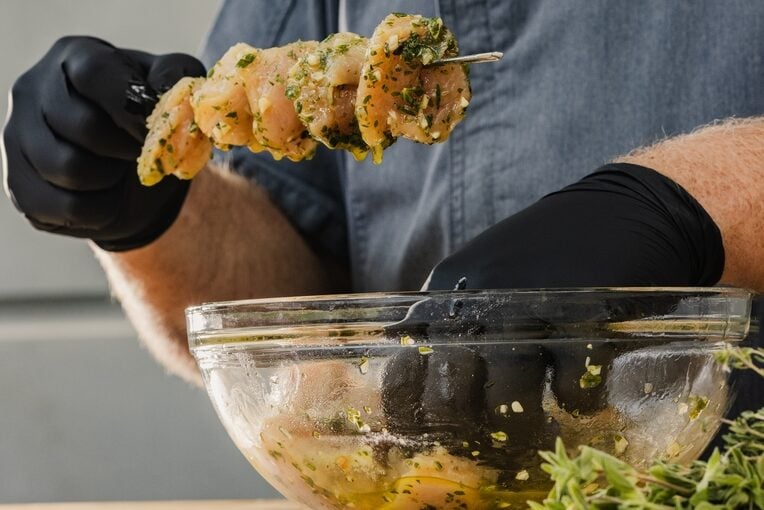
3 Tips for Perfectly Grilled kabobs
1. Cut everything into consistently uniform pieces. You’ll want each bit of meat to be finished at the same time. If the sizes of the chunks of meat are cut inconsistently, the smaller pieces will overcook by the time the larger ones are done. Chunks of about 1-1/2 to 2″ work well.
Jeff Savell of Texas A&M University says that the size of the pieces of meat is critical: “If they’re too small they’ll overcook and dry out. If they’re too large you don’t get the internal temperature right.”
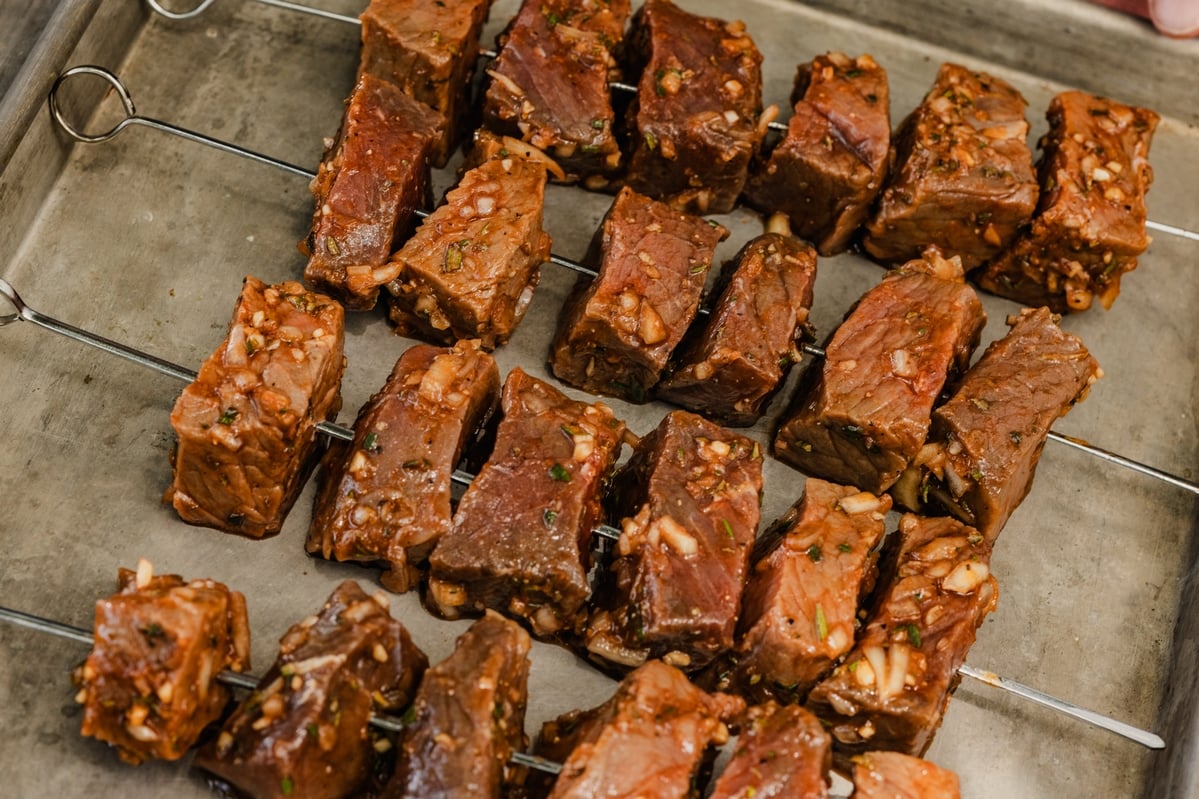
2. Keep different meats and vegetables separate. In Master of the Grill, the experts at America’s Test Kitchen recommend grilling meat and veggies on separate skewers. Kabobs with meat and veggies combined on the same skewer are pretty, but the ingredients cook at different rates! Your vegetables will be overcooked and mushy by the time the meat is done. The same is true for different types of meats and vegetables. For example, chicken and steak have different doneness temperatures, so put them on separate skewers. Similarly, onions and peppers cook at the same rate, but tomatoes cook at a different rate, so separate them out. Cook the ingredients separately for simple, foolproof results.
3. Keep everything spaced out. If you leave a bit of space between each piece on the skewers to ensure even heat circulation all around (see the illustration below), the meat and vegetables will cook more evenly. Alton Brown recommends leaving 1/2″ ( 1-1/4 cm) between the pieces of meat.
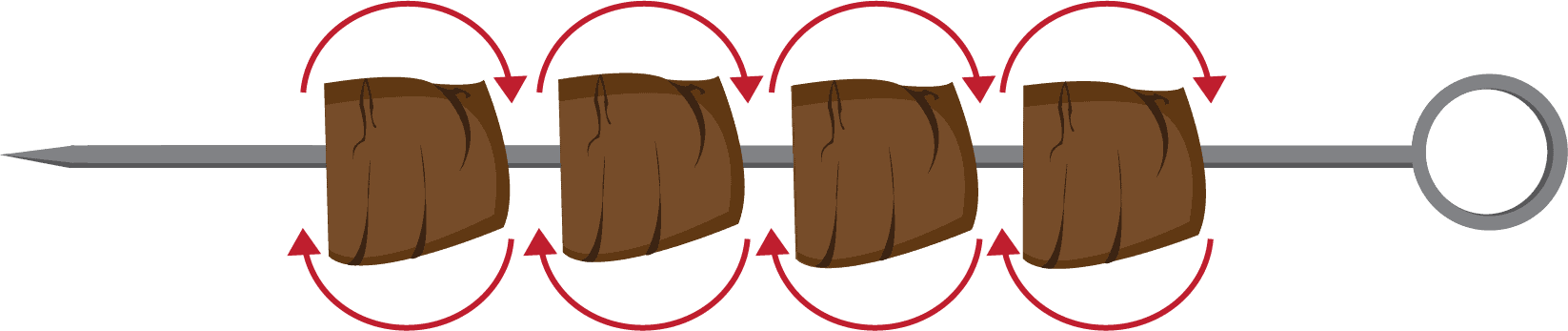
Meat that is packed together tightly on a skewer will still cook, but not as quickly or with as much tasty browning. The heat from your grill will circulate around the meat as if it’s one piece rather than several (see the illustration below). Because of this, the meat in the center will take longer to cook than the meat on the ends, and those end pieces will be overcooked by the time the center pieces have come to their pull temperature.

Both of the kebab-packing methods will work, just be aware of how they will cook differently.
How Long Do Kabobs Take To Grill? kabob Temperatures
People often ask how long it takes to cook kebabs. The answer is: until they’re done. Let’s break it down. How long it takes to cook kabobs will depend on a few factors
- the temperature of your grill and how well it’s maintained throughout the cook
- the size of the cubed meat
- and your desired doneness temperature
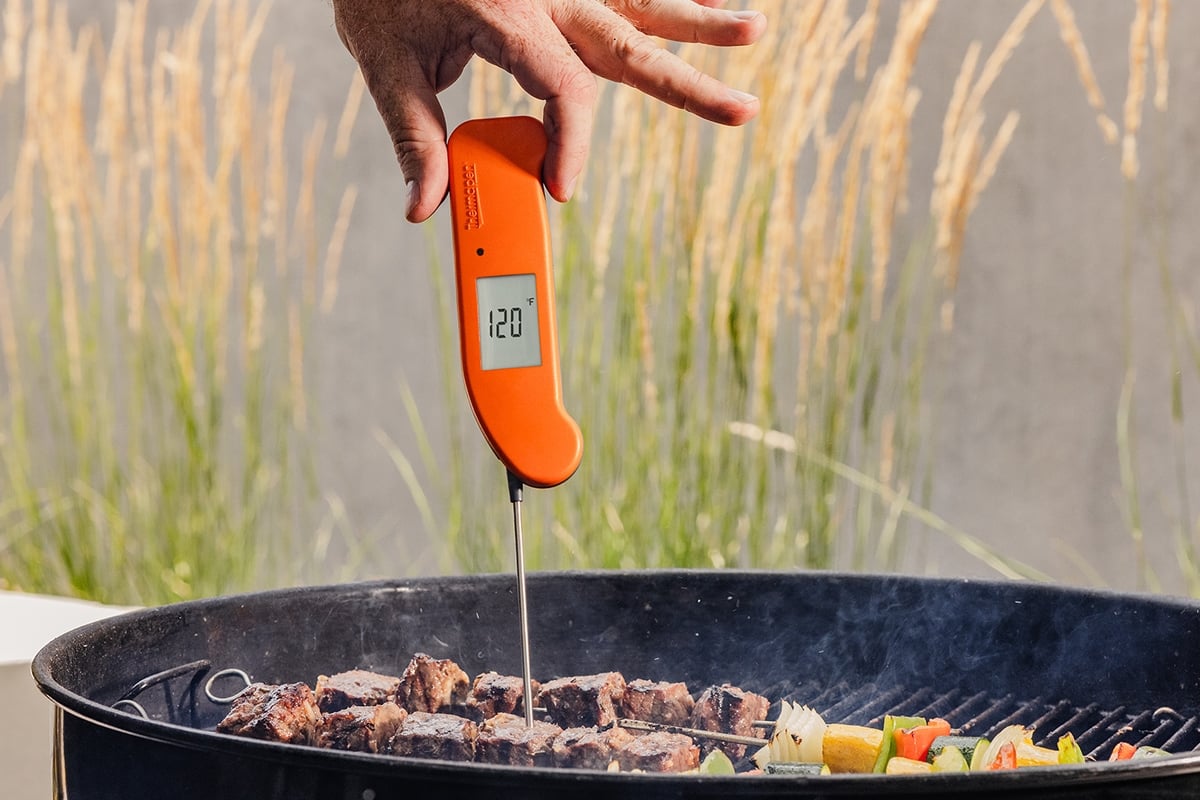
You should always measure meat doneness by internal temperature. Of course, different types of meat have different doneness temperatures, and keep in mind that smaller pieces of meat will cook more quickly. All of these factors are why it’s important to use a fast and accurate thermometer like Thermapen® One to check your kabob temps.
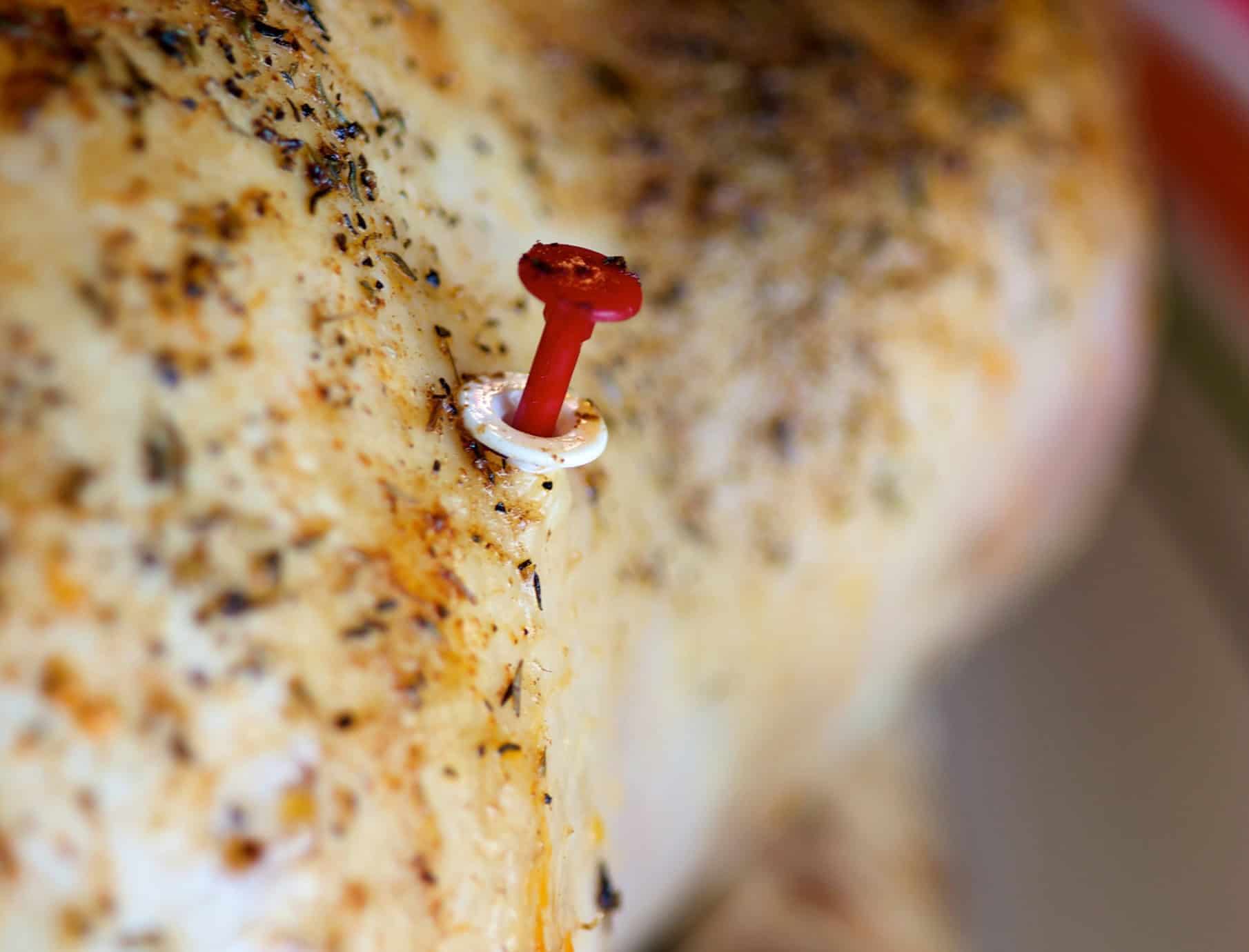
With pieces of meat this small, there will be less carryover cooking. But with the high heat of the cook, there is definitely going to be some of it. Beef should be pulled at about 125-130°F (52-54°C), chicken at 155-160°F (68-71°C), and seafood around 125-140°F (52-60°C). Cook.
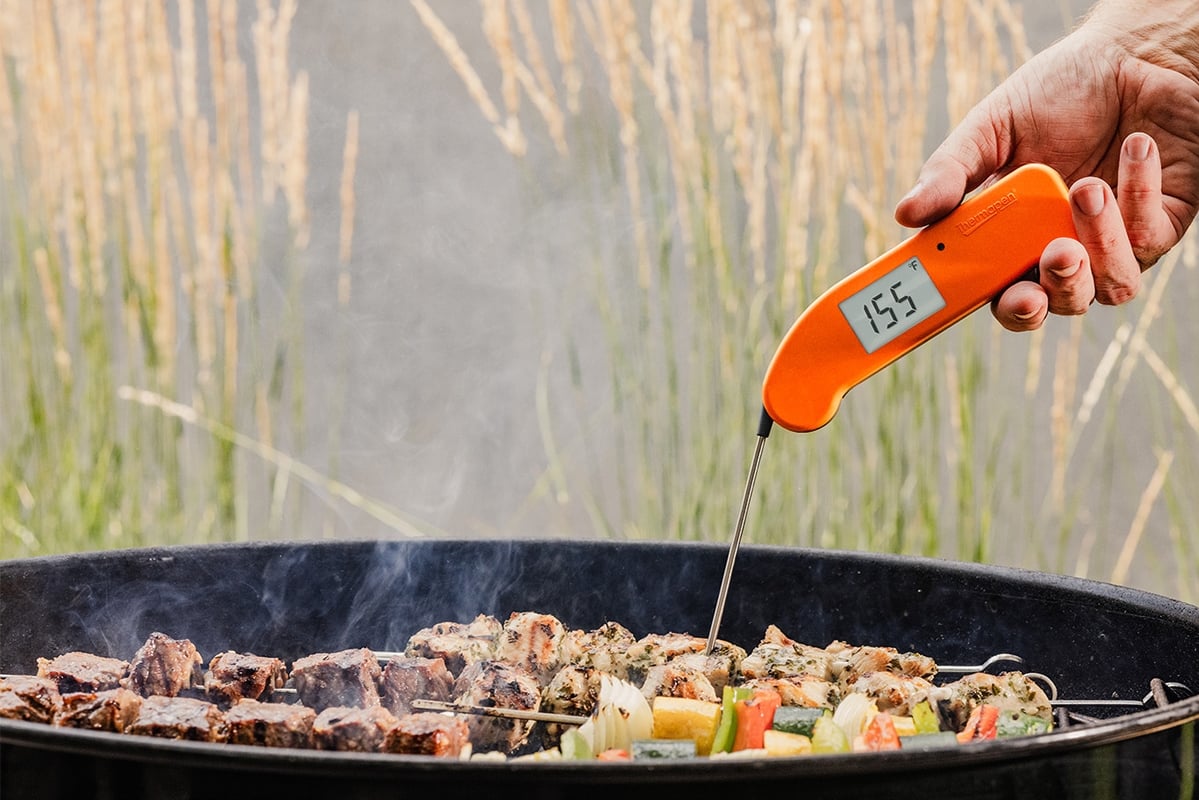
Cooking times will vary based on meat type, size, and cut. But in general, plan on kabobs taking about 10 to 15 minutes to cook.
4 Keys to Great Marinades
Meat and vegetables cut into chunks have plenty of surface area for soaking in flavorful marinades. And the marinades can be as simple or as elaborate as you want them to be—or you can even use your favorite dry rubs.
Marinating meat seasons and tenderizes it, which is especially helpful for cuts of meat that are slightly tough, very lean, or otherwise low on flavor. Kenji points out 4 important components to great marinades in his book, The Food Lab (pp. 327–328)
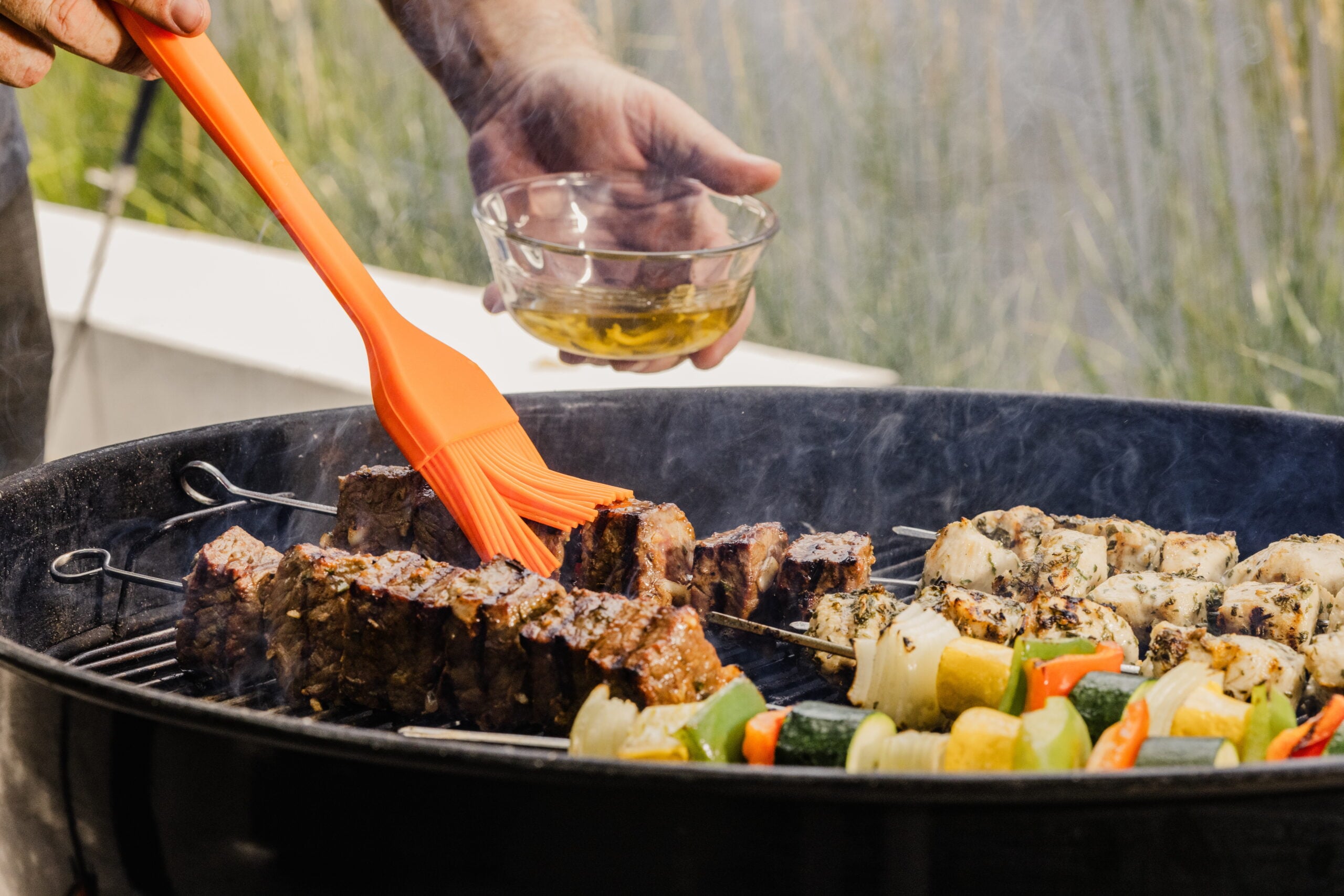
- Oil: Oil makes the marinade thicker and tackier, helping it stick to the meat better. And it carries some aromatics, such as garlic, and some spices, that are oil soluble. A thin coating of oil helps heat to transfer more evenly as the meat cooks, and it also helps keep the meat from sticking to the grill.
- Acid: Acids in marinades help to break down connective tissue, slightly tenderizing the final product. Acids can also denature the protein in muscle fibers, chemically “cooking” it. If the ratio of acid in the marinade is too high, the meat can become opaque and chalky. Keep your acid-to-oil ratio at 1:1 or lower.
- Salt/protease: In addition to seasoning the meat, salt dissolves the myosin in protein fibers, helping loosen the meat and keep it moist. Proteases, found in papaya, pineapple, and ginger— as well as in soy sauce—help to break down tough meat proteins and can be useful in a marinade. Just be careful if using fresh papaya or pineapple in a marinade. Those proteases are very strong and can break meat down too much if they marinate overnight.
- Aromatics: Aromatics are ingredients that only flavor the exterior of the meat. Garlic, onions, shallots, herbs, and spices can all be powerful flavor components, especially when combined with oil.
Together, these four components will give you results that are both tender and tasty.
Note: When Recycling Is NOT OK
Used marinade is contaminated with raw meat juice and is therefore unsafe to consume. Even boiling might not make it safe. If you want a sauce to serve with cooked meat, make a little extra marinade and set it aside before adding the rest to the raw meat.
Marinating Times
So we know what makes a good marinade. But how long should we marinate our food? The answer depends on what we are marinating and what we are marinating it in. Land animals— beef, lamb, chicken, pork, etc.— all marinate for two to 24 hours. Their tougher protein fibers require longer marination to break down and infuse with flavor. Yes, two to 24 hours is a wide range. If you are using protease-rich ingredients like fresh pineapple in your marinade, aim closer to 2 hours. If not, you can go longer—up to 24.
Fish, on the other hand, have much more delicate protein fibers and resist marination far less. Most fish and seafood, including shrimp, only require about 15 to 30 minutes of marination. Tender sea scallops require only about 5 minutes of marination. And you might want to skip the heavy protease ingredients with these proteins. They don’t need much tenderization and will fall apart more easily if exposed to those enzymes.
Special Tips for Grilling Vegetable Kabobs
Marinate: You can marinate your veggies just like you do with the meat (but in separate bags, of course!), or you can toss the vegetables in oil and season them with salt and pepper before threading them onto skewers like we did.
Keep Them Separated: Similar vegetables, like peppers and onions, that cook at the same rate can be grilled on the same skewer. But veggies like tomatoes and mushrooms cook faster. Keep the cooking rates in mind and group your skewers appropriately.
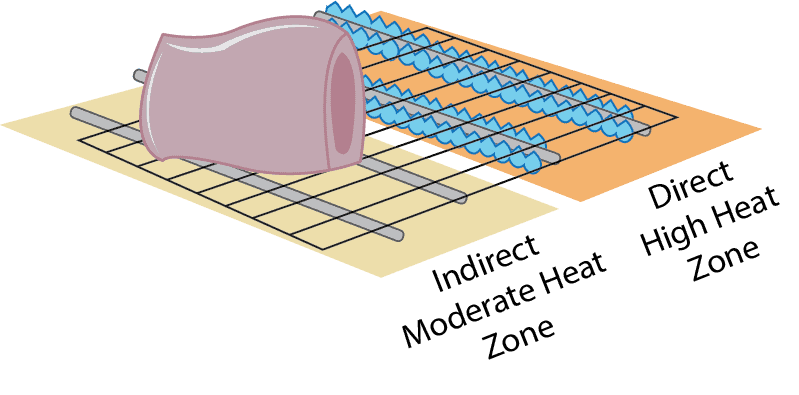
Use a 2-Zone Fire To thoroughly cook your veggie kabobs, most experts recommend cooking them over indirect heat. Setting up your grill with a two-zone fire is ideal. You can grill your meat kebabs over high, direct heat, and grill the vegetable kebabs over the lower indirect heat.
These tips apply to any type of kabob, so use them with any skewered meat recipe you come across. And get creative with your marinades! Grilled kabobs may turn into one of your favorite grilling-season foods.
Kabob Recipes
We made some chicken and some beef kabobs, each with a different marinade. Follow these recipes, or create your own. But remember to use your Thermapen ONE and the thermal tips mentioned above for perfect kabobs, every time.

Grilled Steak Kabobs Recipe
Equipment
Ingredients
- 2 lb steak cut into 1 ½–2” cubes
- 1 onion finely chopped
- 1/3 C beef broth
- 1/3 C vegetable oil
- 3 Tbsp tomato paste or tomato sauce
- 6 garlic cloves minced
- 2 Tbsp fresh chopped rosemary
- 2 tsp finely grated lemon zest
- 1-1/2 tsp sugar
- 2 tsp salt
- 3/4 tsp pepper
Instructions
- Put the cubed meat into a gallon-sized zipper bag.
- Stir together all marinade ingredients to thoroughly combine and pour the marinade over the meat. Mix well to coat all pieces of meat, then force all the air out of the bag and seal it shut.
- Put the meat in a container (in case of leaks) and place in the refrigerator on the bottom shelf to marinate for 2–24 hours. Flip the bag over once or twice during this period for even marination.
To cook the kabobs:
- Fire up your grill and allow it to preheat while you prepare the kabobs.
- After marinating, thread the meat onto skewers, leaving about 1/2″ space between each piece of meat.
- Clean and oil your grill grate, and place the prepared skewers onto the grill over high heat. Flip the skewers every 3–4 minutes, temping with Thermapen ONE until they reach about 125–130°F (52-54°C).
- Once the skewers’ internal pull temperature has been verified, remove from the grill and tent with foil while they rest for about 10–15 minutes.
- Serve!

Grilled Chicken Kabob Recipe
Equipment
Ingredients
- 1-1/2 lb chicken breast cut into 1-1/2″ to 2″ cubes
- 1/2 C olive oil
- 6 garlic cloves minced
- 1/4 C Chopped fresh chives parsley, oregano, cilantro, and/or mint
- 1 tsp salt
- Pepper to taste
Instructions
Marinate:
- Whisk together all marinade ingredients.
- Place chicken cubes into a gallon-size zipper-lock bag and mix well to coat the chicken evenly with the marinade.
- Seal the bag, place in a container, and refrigerate on the bottom shelf of your refrigerator for 3–24 hours; turning once or twice for even marinating.
Cook:
- Fire up your grill and allow it to preheat while you prepare the kebabs.
- Remove the chicken from the marinade and thread onto skewers, leaving 1/2″ of space between each cube.
- Clean and oil your grill’s grate and place the chicken kebabs on the grill leaving about 2″ between each kebab. Turn every 3–4 minutes.
- After about 10 minutes, check the temps on the kebabs with your Thermapen ONE. As each skewer reaches 155–160°F (68-71°C), remove it from the grill and tent with foil.
- Rest the kabobs for 10-15 minutes, then serve!
Resources:
5 Keys to Making the Best Grilled Skewers of Summer, Anna Stockwell, epicurious.com
This is one of the most informative guides I have ever seen. Thank you.
Robert,
Thank you!
Happy Cooking
-Kim
Great post!
Thanks, Elisha!
Excellent tips—thank you! My husband had almost sworn off kebabs, but was guilty of all 6 of the calamities. I’m looking forward to sunny weather, great kebabs, and a happy grill master!
Anna,
Hopefully this post will get your husband to grill kebabs with confidence. Bring on the sunny weather!
Thanks,
-Kim
As an avid live-fire cook I have to point out a glaring omission to the ‘Common Kebab Cooking Calamities’ list of things not to do here, and here it is: ALWAYS use either a wide, single flat skewer or TWO rod-type skewers for each set when grilling kebabs. Not doing so will guarantee that your kebabs will rotate when you try to turn them resulting in uneven cooking and a frustrating experience. It takes more time to double-skewer but the end result will be worth the effort.
Mark,
Thank you—yes! Using two skewers is a fantastic tip to keep the food on your kebabs from rotating.
Thanks again!
-Kim
This was a great article-just like all of the others you have published. I use flattened stainless steel skewers or double threaded bamboo ones whenever possible to make turning food on the grill easier. Please keep your articles (and your products!) coming.
Many thanks
Bill,
So glad our content is helpful for you!
Thanks,
-Kim
“When Recycling Is NOT OK
“Used marinade is contaminated with raw meat juice and is therefore unsafe to consume. Even boiling might not make it safe. If you want a sauce to serve with cooked meat, make a little extra marinade and set it aside before adding the rest to the raw meat. —Master of the Grill, America’s Test Kitchen”
The first two sentences not only SOUND ridiculous, they ARE ridiculous. What this is saying is that beef that is cooked to the pull temperature “beef should be pulled at about 125-130°F” is safe to eat at that temperature but that liquid that has been in contact with this beef is not safe even at 212°F, over 80°F higher!
Totally ridiculous statements!!!
If the meat is safe to eat at such a low temperature, any liquid from the meat which has been heated to boiling for several minutes is even safer, as long as the liquid hasn’t been allowed to sit at room temperature any longer than the meat has.
The interior of meat is, generally, sterile. Bacteria live on the surfaces and get spread around during slaughter, butchering, etc. When we marinate meat, we’re creating high-contact with the surfaces, and the marinade is often quite nutritious to bacteria. Cooking the meat kills the bacteria on the surface, because they experience much higher temps than the inside of the meat. To then take the marinade that has had raw meat soaking in it for hours and pour it on our (now food-safe) surfaces is not wise.
Bringing it up to a boil will kill anything living in it. Then it can be applied, and it will be hot, which is nice anyhow.
Note that shiga toxin is heat stable – boiling will kill the bacteria producing it, but unless you really need a natural laxative, does nothing for your health or those you are feeding.
EXCELLENT INFORMATION!
I have purchased 4 instant read Thermapens for my family and recommended them to my friends and I wouldn’t enjoy cooking as much as I do without them , My friends that did buy them have said they wouldn’t be without them ether . They inturn have recommended to their friends. I also have several other pouts of ThermoWorks. If it wasn’t for Cooks Illustrated I probably would have not been aware of your company. Needless to say I have a ” investment” in their cookbooks and products they have recommended.
I never was interested in cooking until about 3 years ago now I split my time between cooking and wood working
Bob,
Thank you so much for the kind words!
Happy Grilling,
-Kim
This is a really helpful and highly detailed article. Thanks so much!
Christina,
So glad you liked the article!
Thanks,
-Kim
Fantastic article. A game changer that has put kabobs on a regular rotation at my house.
I have to ask if the swordfish recipe is correct. I made them and the cumin was WAY overpowering. Perhaps its supposed to be 3 teaspoons instead of tablespoons?
Shawn,
Glad the article was helpful for you! The swordfish rub recipe is written how we used it. If you find the cumin overpowering, definitely take the amount down the next time you use it.
Thanks,
-Kim
Why wait for sunny weather for the kabobs, any time is a good time.
Bob.
Bob,
Agreed! Anytime is the perfect time to fire up your grill.
-Kim
Double skewering is even better when one uses a double metal skewer available from several companies, e.g. Weber. They are very stable and I use them for many types of meat- easy to turn, just grab a center piece of meat with tongs and turn…no rotation and wobbling like with 2 separate skewers. Also easier to skewer many types of veggies with 2 thin skewers rather than one larger one, which on occasion fractures the veggie.
Jim,
Great tips. Thanks!
-Kim
I am saving this article in ‘favorites’! Thank you.
Any special tips on keeping onions, peppers, mushrooms, from splitting when you put the skewer in? Should I get out my drill and make a pilot hole?
Thanks, Sharon!
My only thoughts on not splitting your veg when kebabing would be:
Hope that helps!
Tim
Thanks, Tim!
This is probably the best and thorough information I’ve ever seen……and I grill quite a bit. Thank you!!!!!!
This blog post exceeded all of my expectations, and then some! I learned so much more than I was looking for and I’m so grateful I read through. Definitely bookmarking it for future reference. Thank you!!
Thanks for the comment, and happy cooking!