

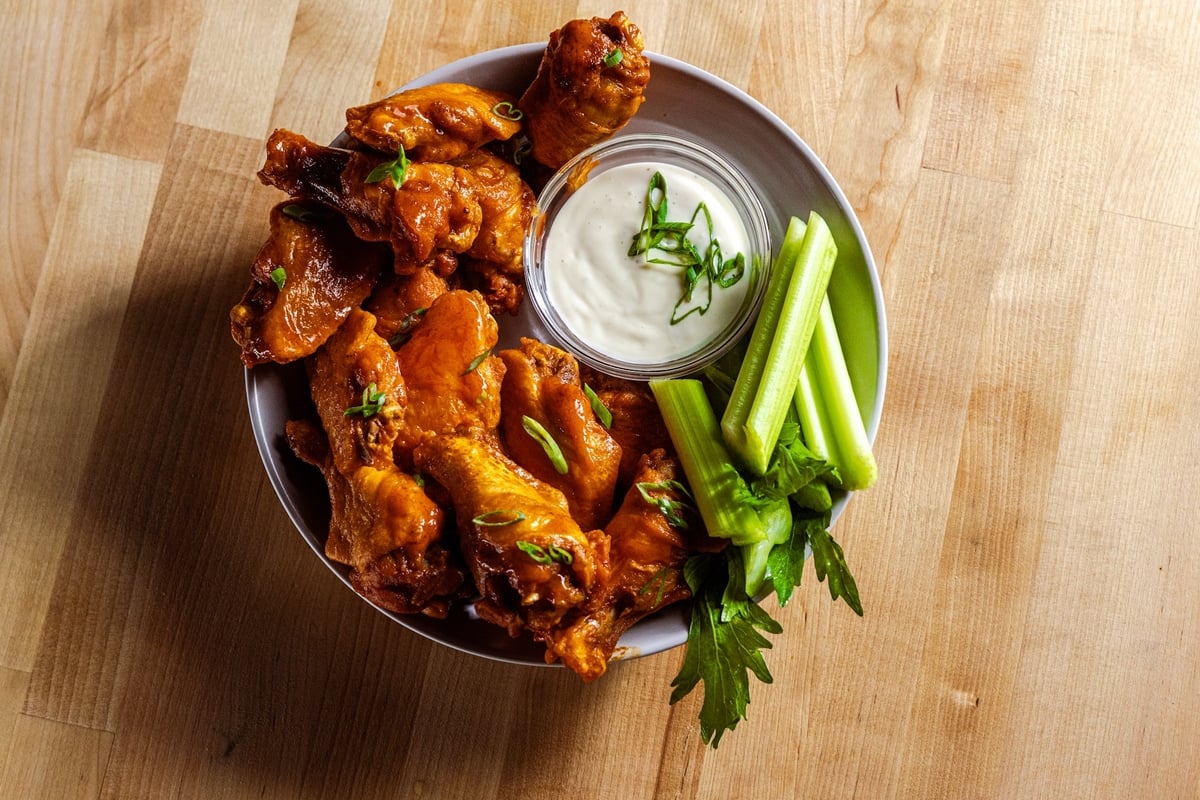
Chicken Wings for the Win
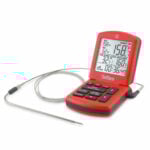
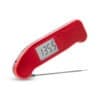
The not-so-secret hope of my heart whenever anyone says, “come watch the game at my place this weekend,” is that there will be wings. Not just some wings, either. Lots of wings. Wings—preferably plenty of flats!—with blue cheese dressing for dipping. Sadly it doesn’t often happen, and the reason may be that many people don’t know how easy they are to make, or how simple the recipe is. Yes, you can get complex with garlic teriyaki, Moroccan spices, or tandoori flavors, but for “the game” I just want classic Buffalo-style hot wings. So today we’ll talk about how easy they are to make, especially with the help of ChefAlarm® and Thermapen® ONE.
Get the gear for this cook here:


Chicken wings: background and history
This spicy bar-staple snack originates from the Anchor Bar in Buffalo, New York. In 1964 Teressa Bellissimo gathered some chicken wings typically used for stock and deep-fried them for a group of her son Dominic’s friends who were at the bar. She flavored the crispy wings with a secret sauce and they were an instant hit that has been a regular menu item ever since. Buffalo locals know them simply as “chicken wings”—not Buffalo wings. Wings got a boost in the 1980’s when producers needed to find things to do with the glut of extra chicken wings that was left after the production of one of America’s favorite meats: boneless, skinless chicken breasts. Someone had the clever idea to convince a few fast-food chains to start serving wings, and after that introduction, the upstate New York specialty became a national phenomenon. Today, chicken wings are hard to keep in stock for many grocers, especially during football season.
Fried wings tips and temps
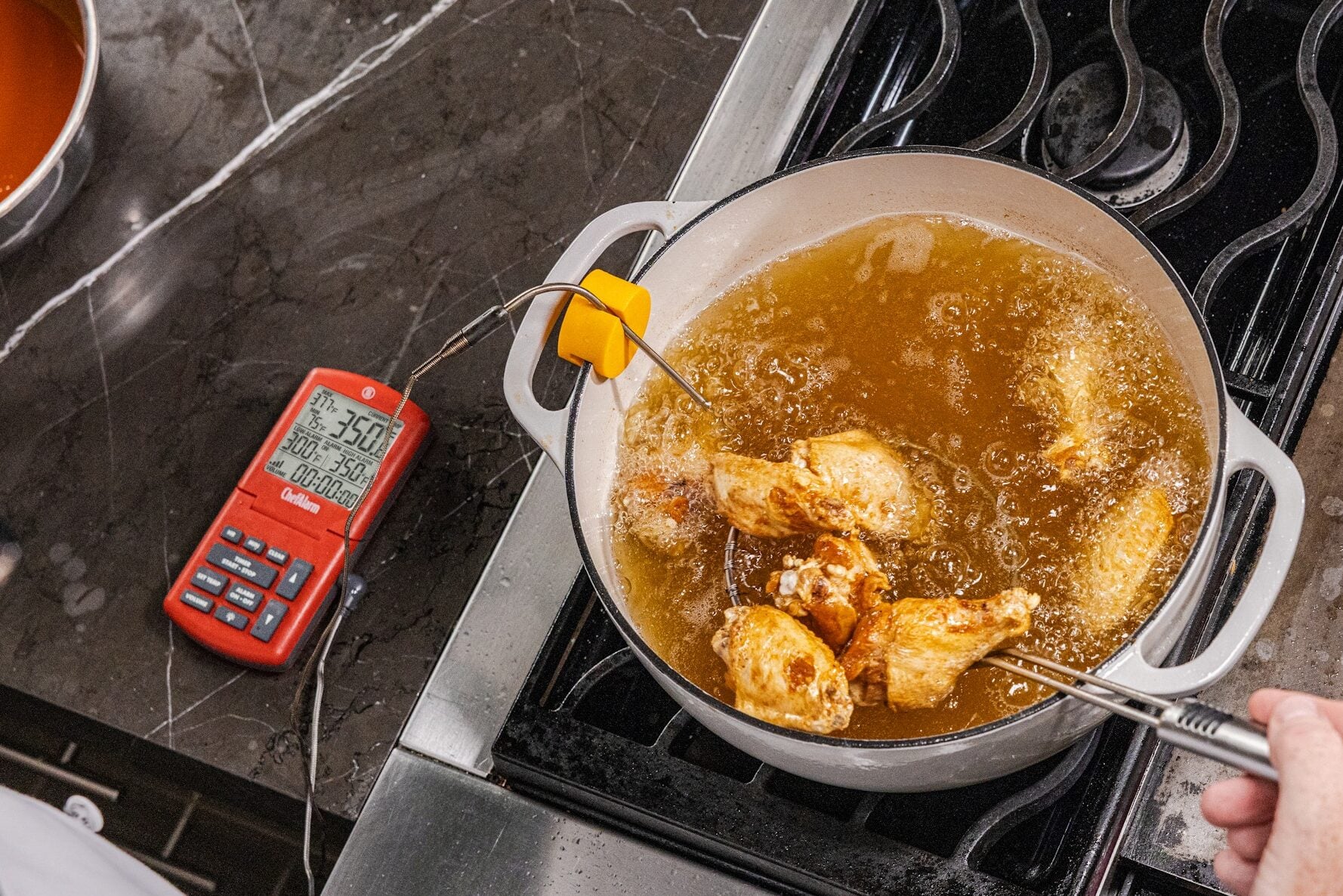
Cook your wings in oil that is 350°F (177°C)
Chicken wing doneness temp is 175°F (79°C) for maximum tenderness and safety.
We find the traditional deep-fry method to be the best for wings. A standard deep-frying oil temperature for a crisp exterior is 375°F (191°C), but at that temperature, the skin of the wings can overcook by the time the meat has come to its minimum doneness temperature of 165°F (74°C).
For that reason, we find that the oil temperature needs to be a little lower to allow the meat to cook without overcooking the skin; 350°F (177°C) is the perfect temperature. And because wings occupy a space somewhere between fully white meat and fully dark meat, they are best cooked all the way up to 175°F (79°C) rather than just the minimum safe temperature.
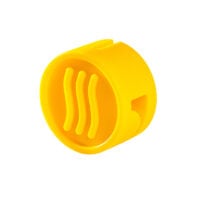
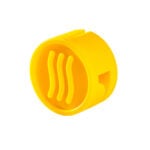
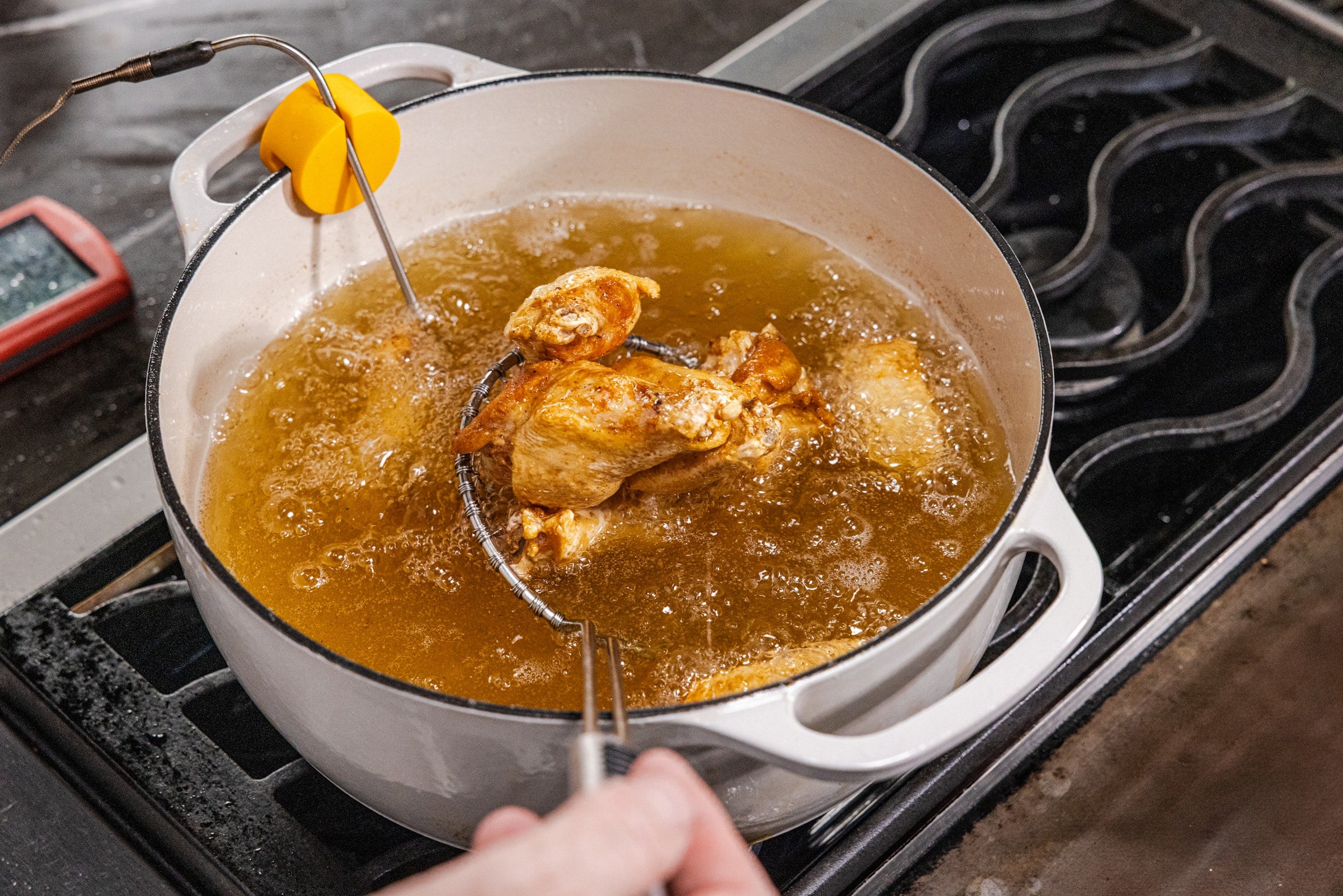
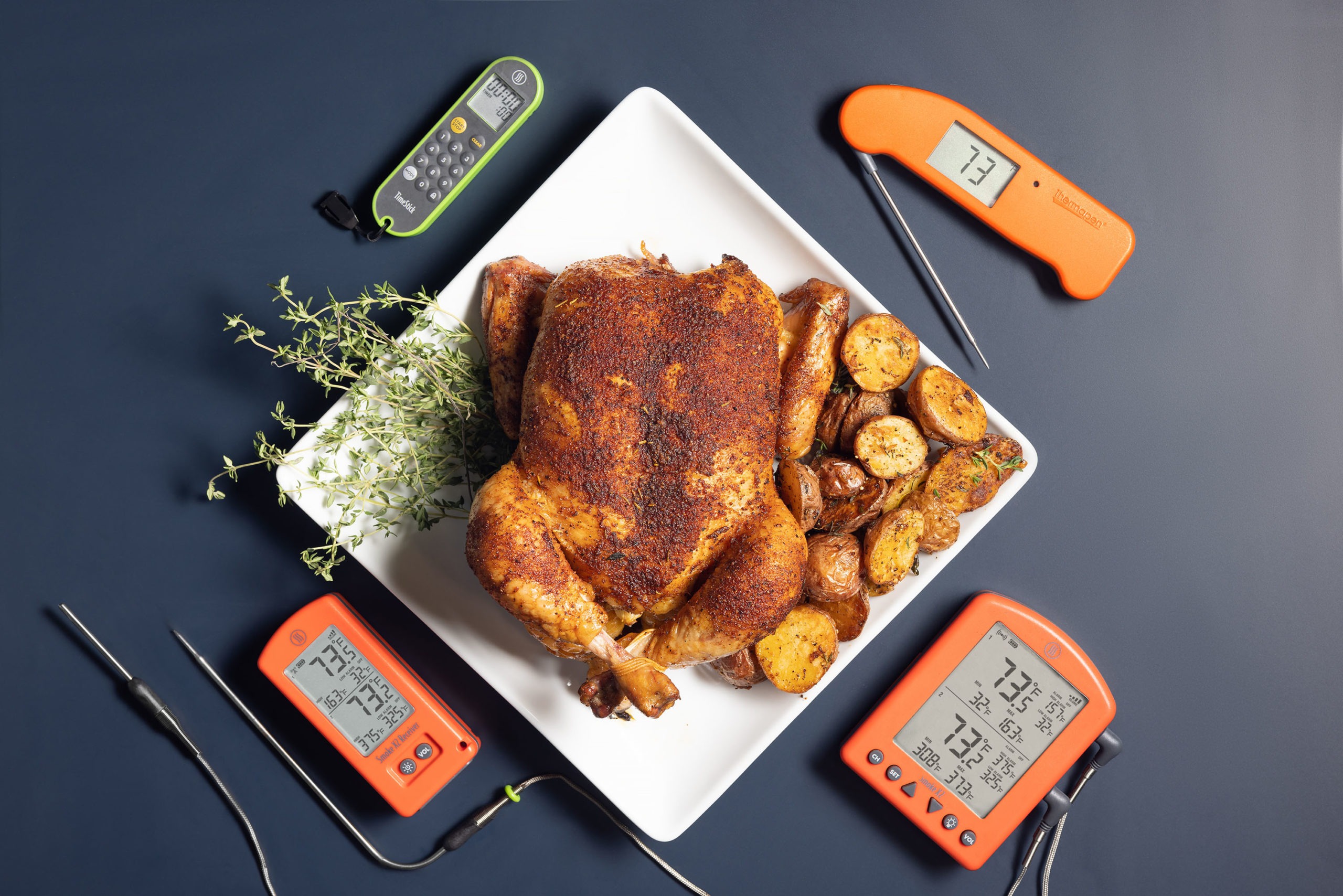
To make sure your oil has achieved the right temperature for frying, don’t drop in a breadcrumb or pinch of flour to see if it sizzles—use an accurate thermometer. ChefAlarm is perfect for deep frying, and for things like this, we like to use the optional Straight Penetration Probe in conjunction with the Hi-Temp Silicone Pot Clip. Not only can you see when the oil reaches your target temperature, but you can also make sure the temperature recovers properly between batches and doesn’t get too hot during the cooking.
For best results, use a neutral-flavored, high-heat oil for this project, like peanut oil. It’s our deep-frying oil of choice for its clean taste and smoke point of 446°F (230°C). But don’t use too much of it!
Fill the pot no more than half full in order to avoid spillovers. That being said, make sure you also use enough oil that the wings float and do not touch the sides of the pan. A large, deep pan is best. –Modernist Cuisine
The Vessel: Our go-to deep-frying vessel is an enamel-coated cast iron dutch oven. As mentioned in our Grill-Worthy Burgers Indoors blog post, cast iron’s poor heat conductivity properties translate to fantastic heat retention properties. Oil temperature drops when food is added to the hot oil in a fryer; the hot cast iron helps to even out the temperature throughout the cooking process.
Chicken wing sauce
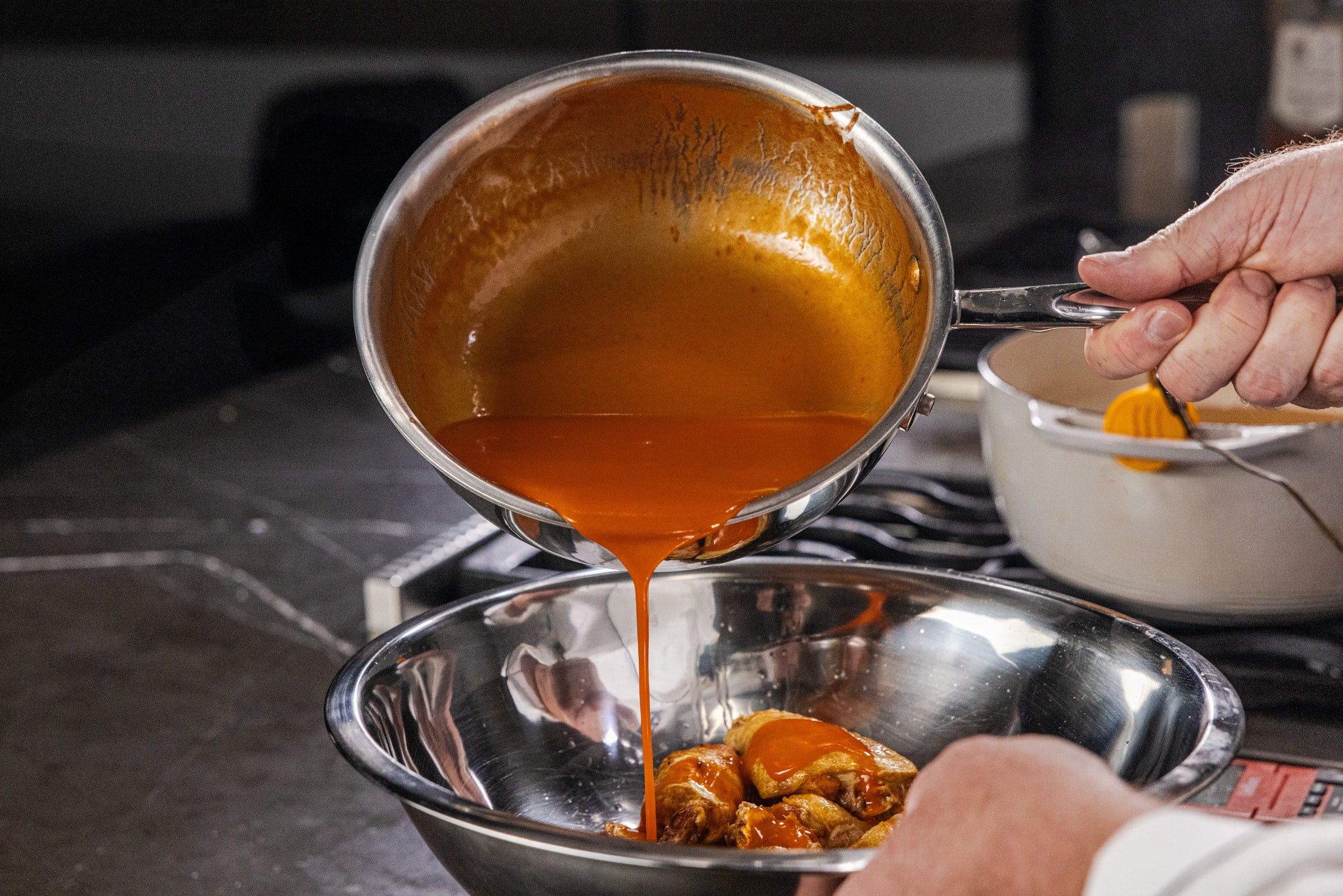
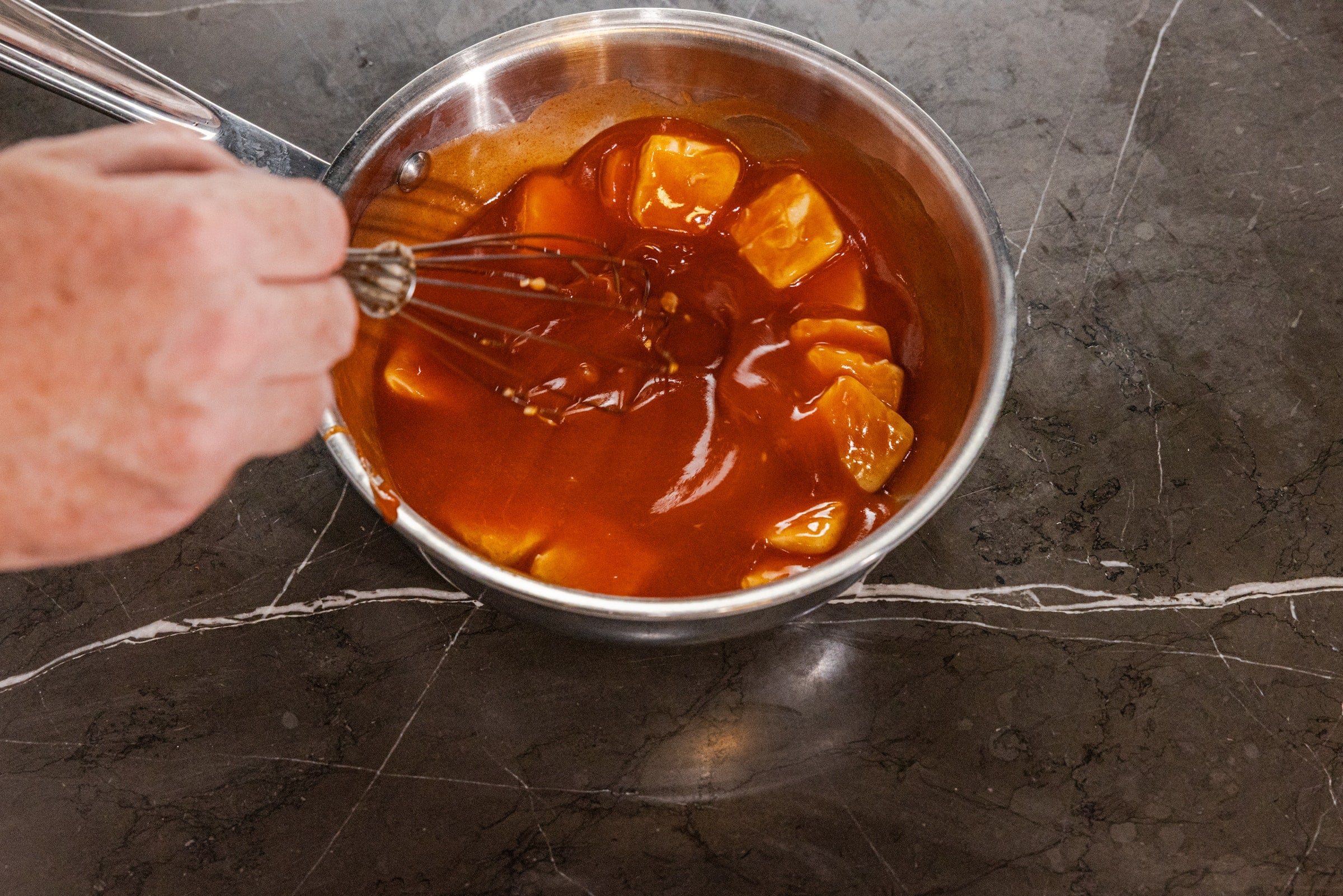
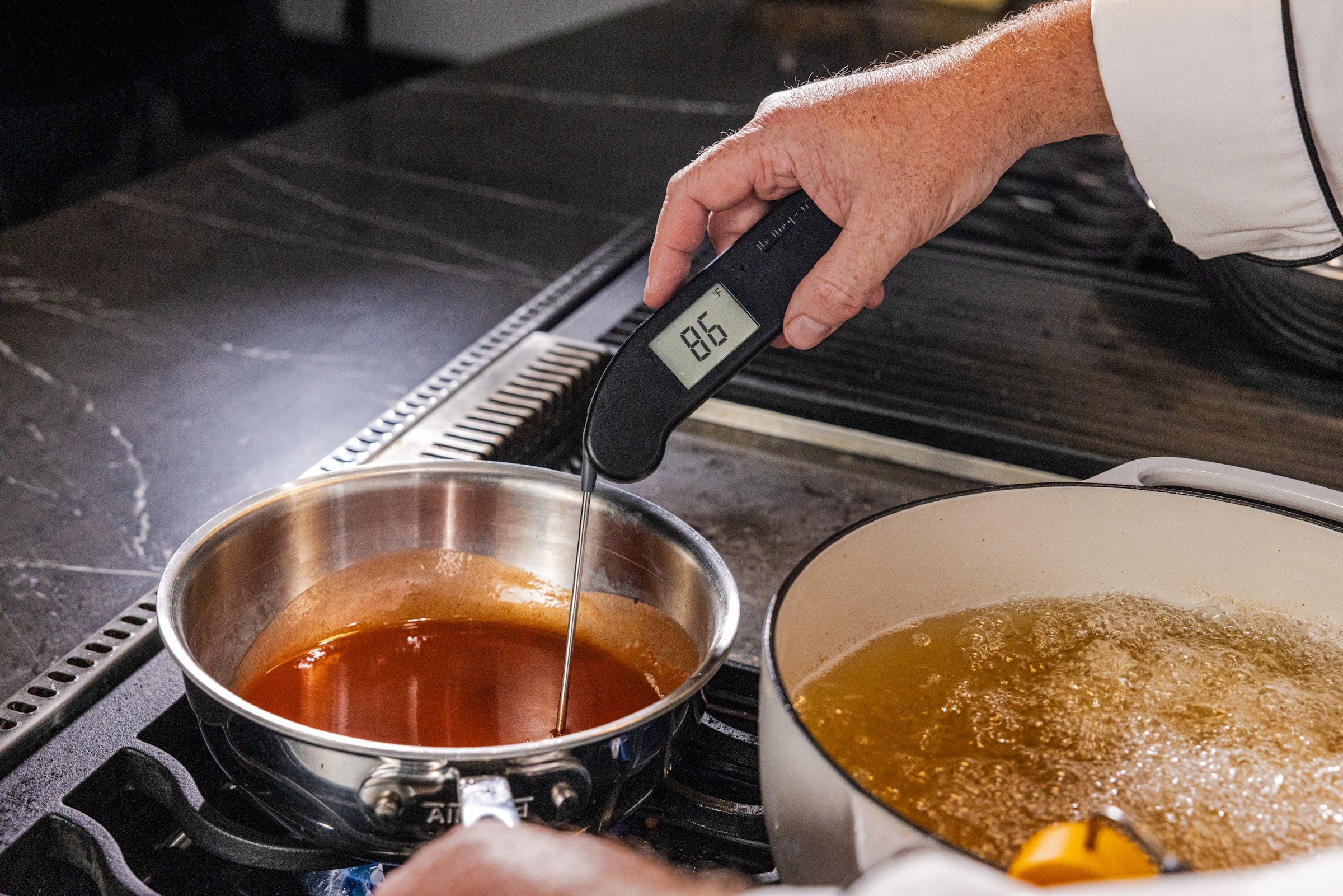
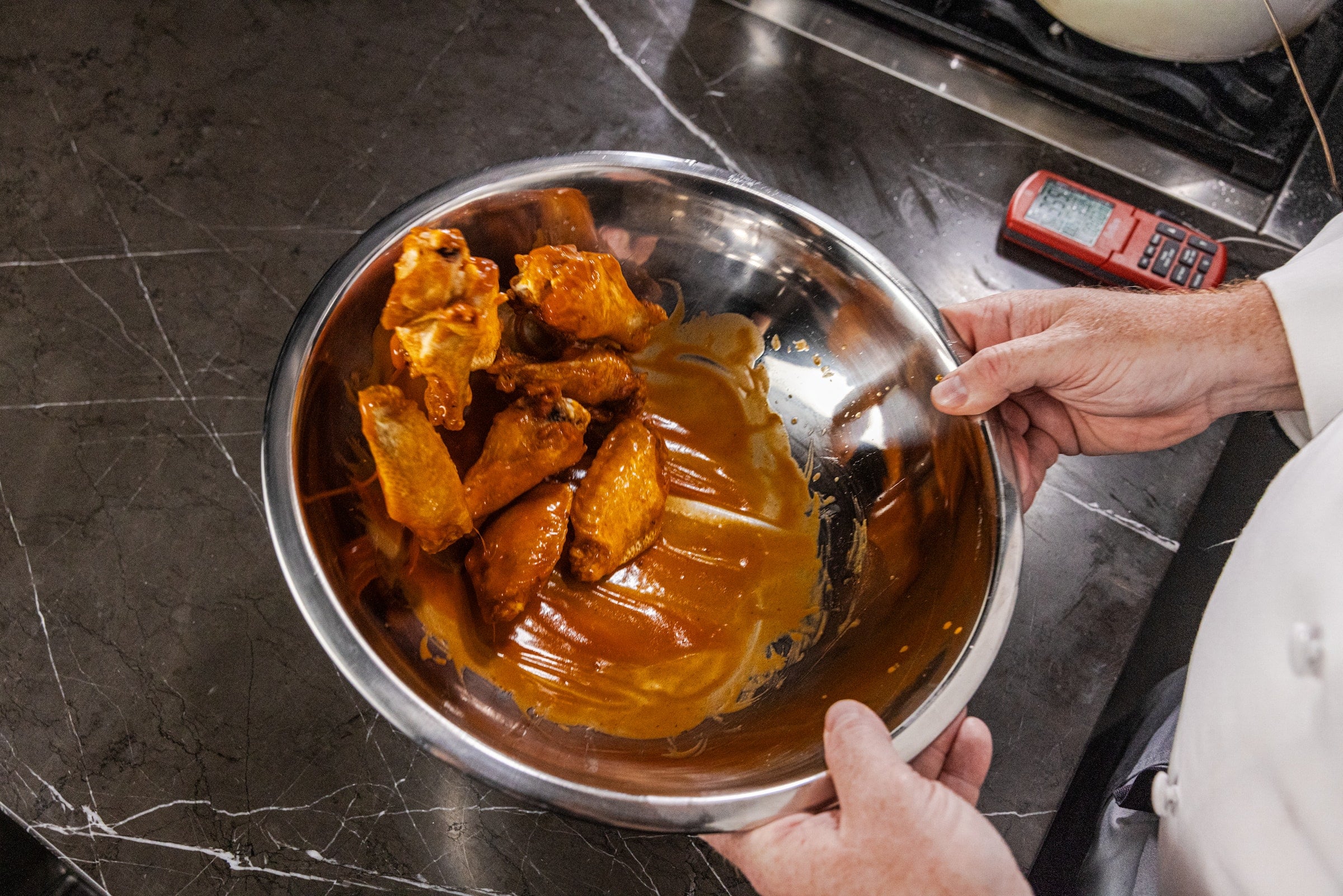
You make classic chicken wing sauce by whisking together Louisiana-style hot sauce (usually Frank’s) and melted butter. That’s it. It’s so simple it’s almost unbelievable. But you can make it better. By first preheating your hot sauce to about 110°F (43°C) (use your Thermapen!) and then whisking in cool butter that has been cut in pieces, you create an emulsion that is thicker, clingier, and has more body to it, which means better, saucier wings!
Making wings is super easy. If you’re already set up for deep frying, then you’re already half-way there! Be sure to monitor your oil temps with your ChefAlarm and check the final temperature of your wings with your Thermapen, and you’ll be the one with the football party that everyone wants to go to.
Classic Chicken Wings Recipe

Ingredients
- 4 lbs. chicken wings
- Peanut oil as needed for frying
- 1 cup Frank’s Red Hot sauce
- 1/2 cup butter cut in pieces, kept cold
- Chunky bleu cheese dressing as desired for dipping
- Celery sticks
Instructions
- Heat peanut oil in dutch oven (no more than half-full, to avoid bubbling over!) over medium-high heat until it reaches 350°F (177°C), monitoring the temperature with your ChefAlarm. (The optional straight penetration probe is great for deep frying.)
- Pat chicken wings completely dry with paper towels.
- Using a slotted spoon or spider, add some of the chicken wings into hot oil and fry for 7–10 minutes—use the timer on your ChefAlarm! Be sure not to crowd the pan. Adding too many wings at once will dramatically drop the temperature of your oil and risk a boil-over. You’ll need to fry in 2-3 batches.
- While the wings are cooking, heat the hot sauce in a small pot over medium-low heat, checking it with your Thermapen ONE until it reaches 110°F (43°C). Remove from heat.

- Whisk the cold butter into the hot sauce until completely melted. Set aside
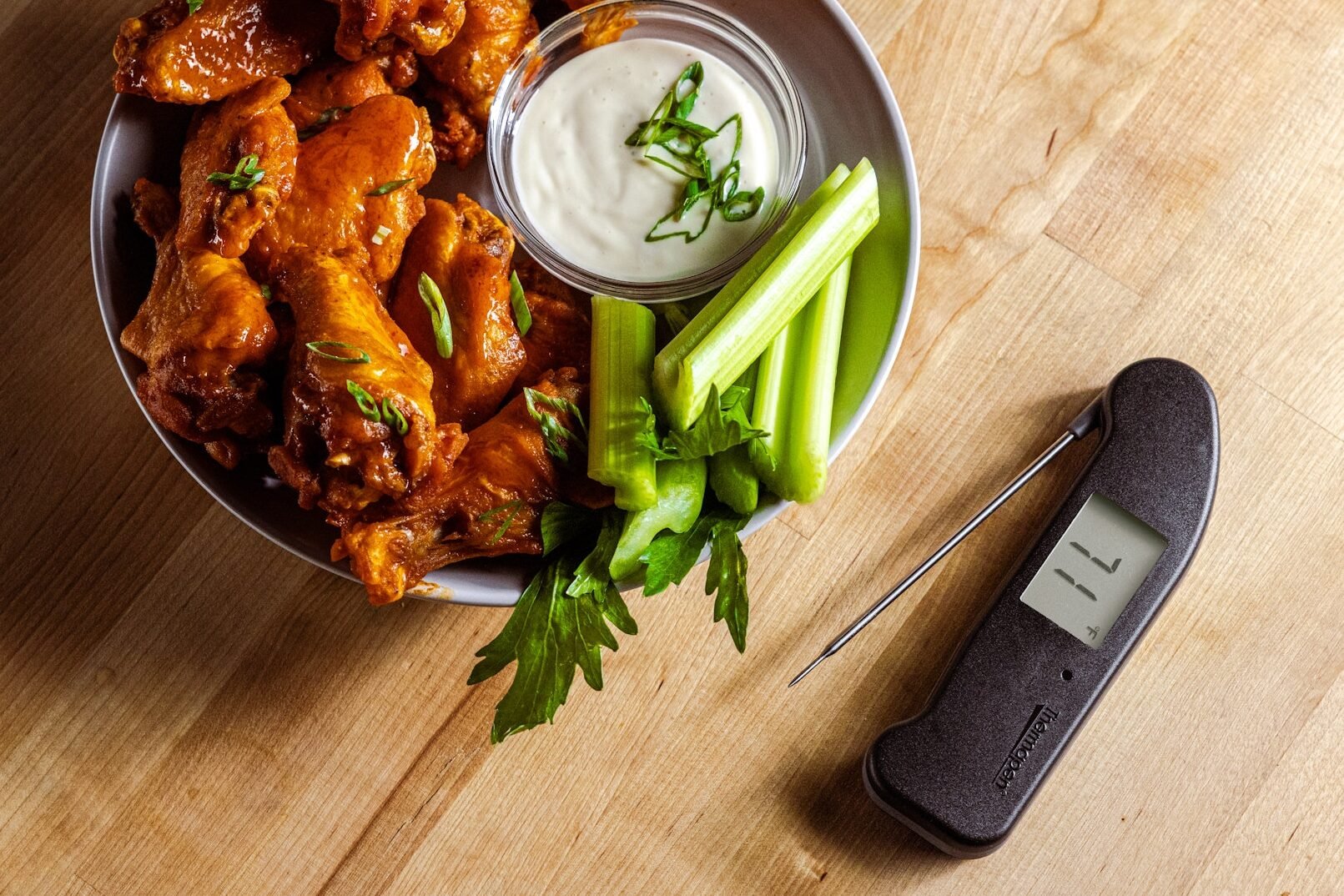
- When your 7-minute timer goes off, quickly spot-check the internal temperature of a few chicken wings with your Thermapen ONE to make sure they have reached 175°F (79°C).
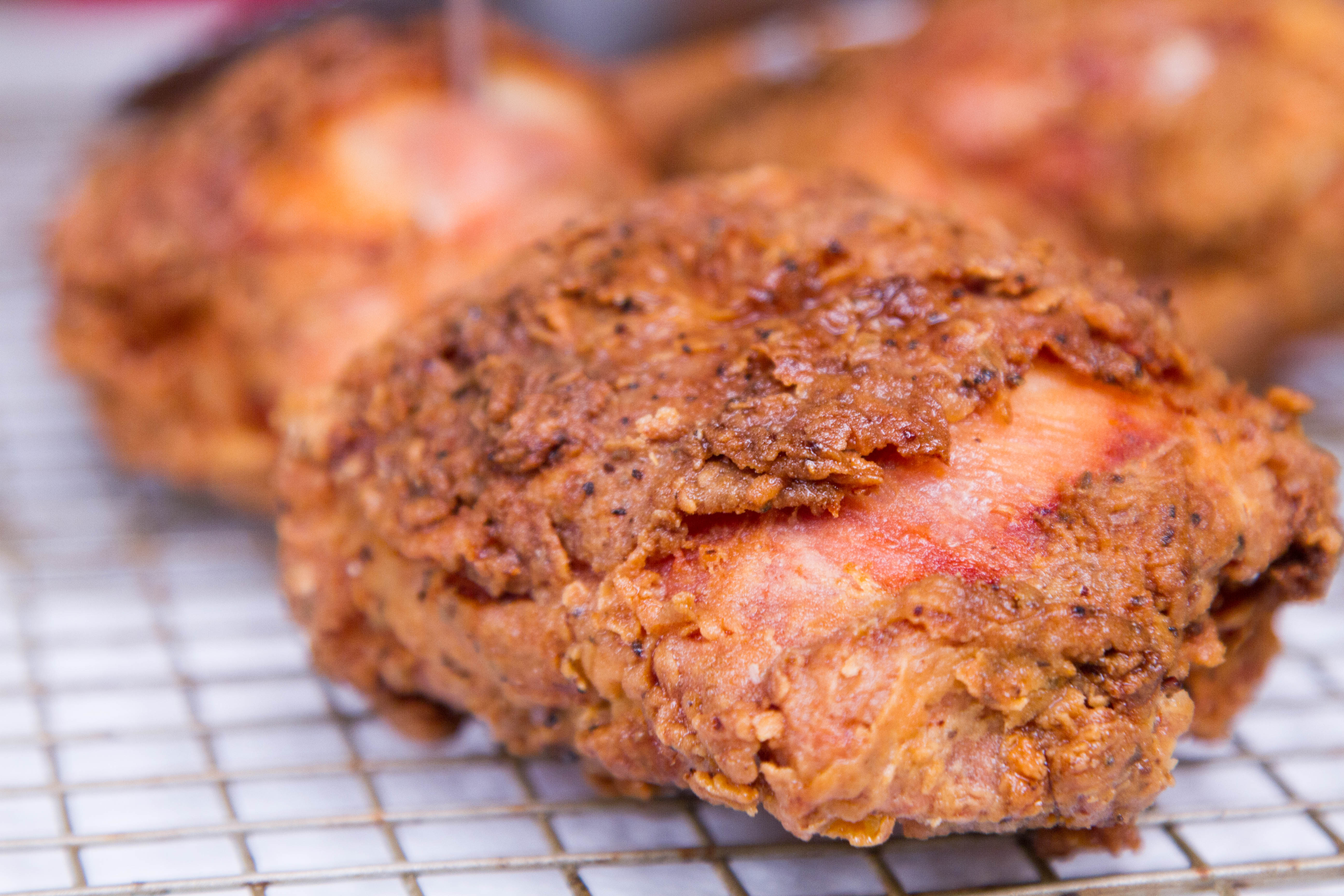
- If they've reached temp, remove them from the hot oil and transfer to a sheet pan lined with paper towels or a cookie sheet with a cooling rack to drain excess oil. The wings will be crisp on the outside, juicy on the inside.
- Allow the oil temperature to come back up to 350°F (177°C) before adding more wings.
- After all of the wings are cooked and drained, place them in a large bowl, add wing sauce, and toss to coat.
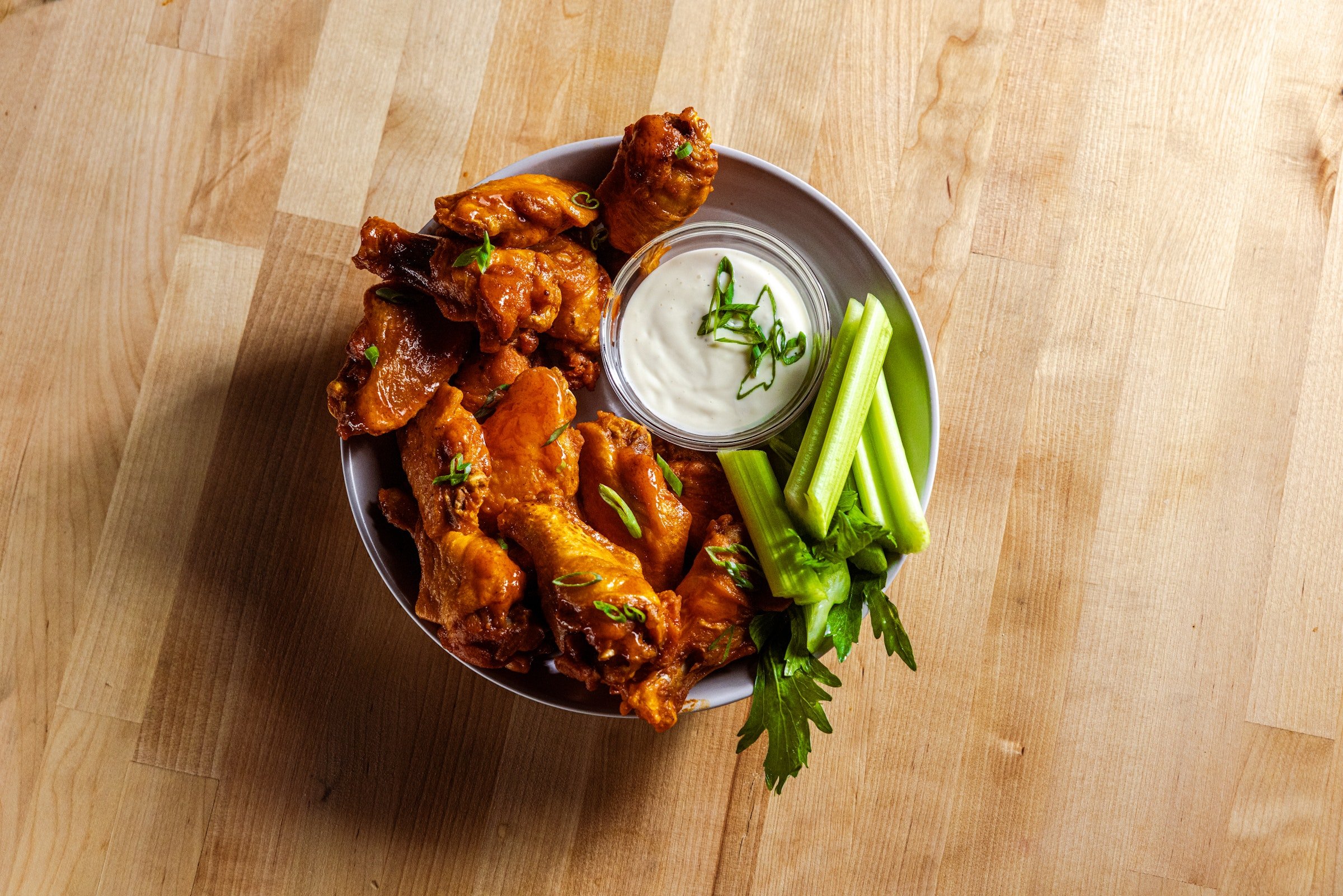
- Grab plenty of napkins, serve with bleu cheese dressing and celery sticks, and enjoy!
For more on chicken wings, check out our recipe for grilled wings.

Hi thanks for the tips how do i keep the temp or get it back to the 325 or any temp once it drops when im frying in my ducth over, because my chefalarm drops like 100 degrees in my cast iron dutch oven please help thanks
Ranetta,
The oil temperature will drop as soon as you add the food to be fried–and that makes it tricky. It’s typical for the oil to drop in temperature by about 50-60°F. A 100° drop in temperature is a bit much. My suggestion would be to add less to the oil with each batch you fry to not drop the temp too much. As soon as you drop the chicken wings (or whatever you’re frying), increase the heat on your stove to help maintain the oil temperature. Give it another try and let us know how it goes!
Thanks,
-Kim
The first kind has always been my favorite type of chicken wings. Buffalo is usually always a good way to go. My second favorite is the sweet BBQ wings more often than not. I get that one when I am not in the mood for something spicy.
Sarah,
There are so many great recipes out there for chicken wings. If you aren’t in the mood for spicy, buffalo sauce is for sure not the way to go! Sweet BBQ wings are awesome.
-Kim
Bring wings to room temp