

How to Make Peach Cobbler: From Filling to Doneness
Peach cobbler is an iconic late summer/early fall dish that brings delight to any meal. Be it at a picnic, a cookout, or a holiday dinner, the refrain “Save room, there’s cobbler for dessert” will always be met with Ooohs and Aaaahs, as well as accelerated face-stuffing to get to dessert faster. But what makes a good cobbler? Does this dish even belong on a temperature-centered blog? Oh yes, my friends, it does. Let’s take a look.
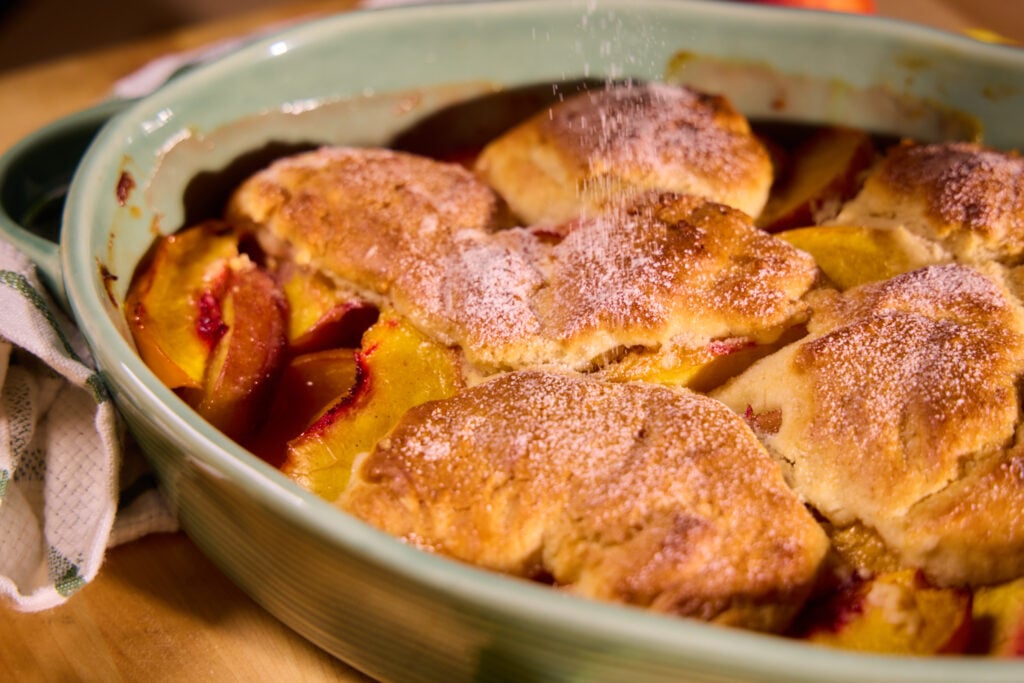
What is peach cobbler?
We may as well cover this question first. A “cobbler” is a dessert dish composed of fruit, usually fresh, often with added sugar, that is cooked with a biscuity batter atop the filling, usually in a deep dish.
“Whoa. Hold up there,” you say, thinking of your Grandmother’s cobbler that was nothing like what we just described. Look, names for things get shuffled. Regional variations exist. Language changes. And no other baked fruit dessert is interpreted in as many ways as cobbler is.
But we can look at “generally accepted” terms to see what’s what. So, here’s a short list of baked fruit desserts and their generally accepted definitions (with credit to The Oxford Companion to Sugar and Sweets, ed. D. Goldstein). And don’t worry, if you want to keep calling your buckle a cobbler, no one will come after you!
Fruit desserts defined: the difference between a cobbler and a crisp
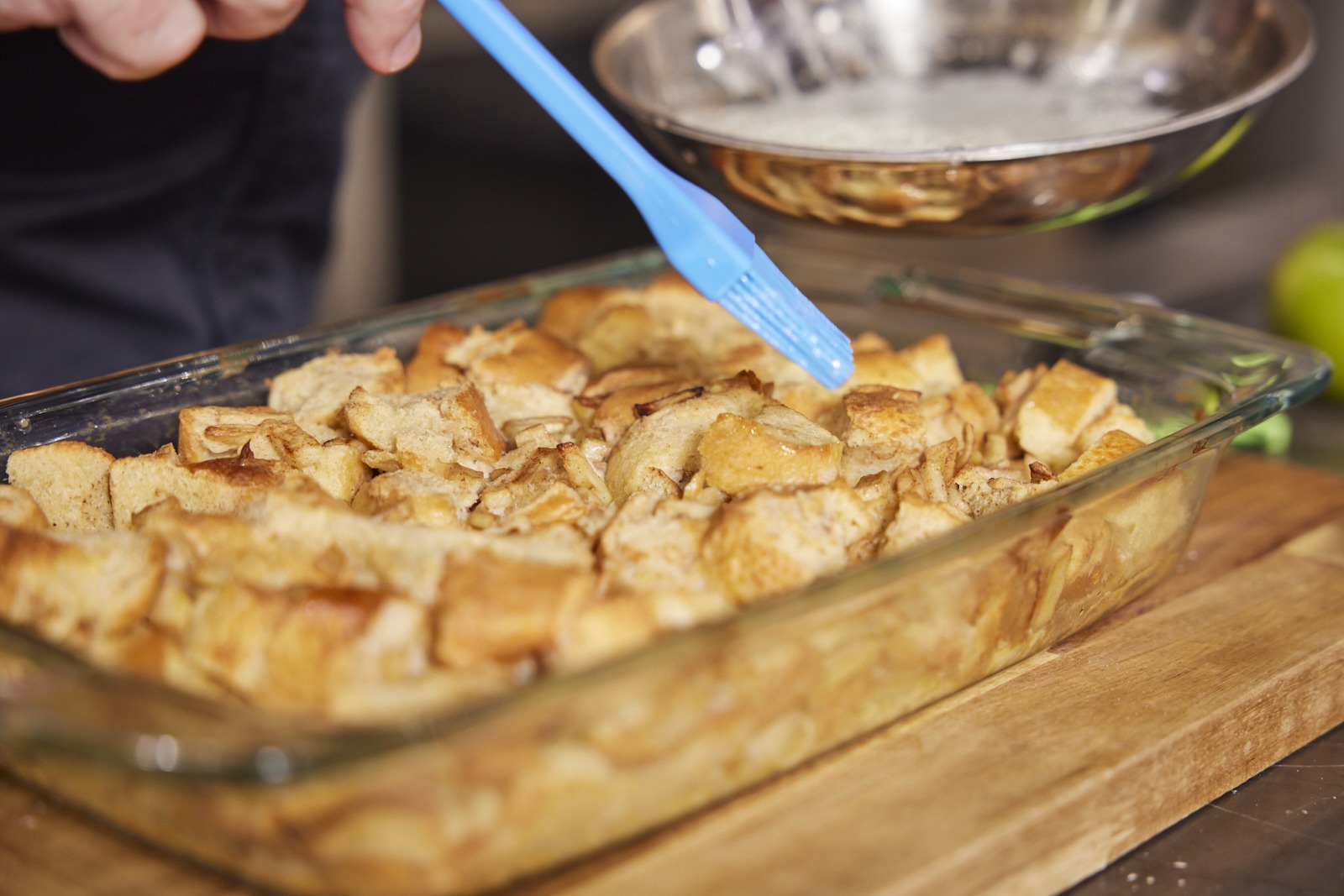
- Betty: The fruit is layered with buttered bread crumbs or bread cubes. Apple is the most common.
- Buckle: Batter is poured over the fruit, settling in and around it, then baked. There is often a streusel topping. Blueberries are most common.
- Cobbler: Baking-powder biscuits, whether free-form or cut and shaped, are placed atop the fruit. This gives it a cobbled look. In the South, it sometimes has a bottom crust as well, making it more like a pie. Many “cobblers” are actually buckles with a poured-in batter.
- Crisp/crumble: No solid difference between the two exists, but either way, the fruit is covered in a streusel-like topping, with or without oats, depending on region.
- Pandowdy: A biscuit-type cobbler, but with the biscuits broken up halfway through and pushed down into the fruit.
- Slump/Grunt: a biscuit-cobbler, but with the dough steamed like dumplings in the fruit atop the stove. Hails from New England.
- Sonker: Cooked fruit is mixed with a pancake-consistency batter and baked. Obscure.
To us, a great cobbler is fruit-forward, not cloyingly sweet, and has a great biscuit on top that is fully cooked. Let’s look at how we can achieve that.

The best Peaches for Cobbler
Apple pie demands a “baking apple” such as Granny Smith or braeburn. Peach has no such requirements, from a textural standpoint. If a peach is good to eat, it’s good to put in cobbler.
But there is the question of effort. Peaches come in two styles: freestone and clingstone (or cling).
Freestone peach pits detach easily from the flesh, leaving a clean, pit-shaped hole in the middle. Cling peach flesh attaches to the pit, making it hard to remove. If you have a multitude of peaches available to you, we recommend freestone peaches for cobbler. Elberta is one of the most popular peach breeds, and it is freestone.
Actually, I’ll backtrack that a little bit. If a peach would almost be good to eat, it will be great in cobbler. If you don’t want your peaches to cook down into unrecognizable mush in your dessert, you should use slightly under-ripe specimens.
Keep the eat-over-the-sink peaches for snacking, and use the almost-there-just-give-it-another-couple-days peaches for cobbler. The higher acid-to-sugar ratio helps prevent the dish from being over-sweet. And the firmness will give your peaches just the right amount of structure after baking.
Thickening peach cobbler
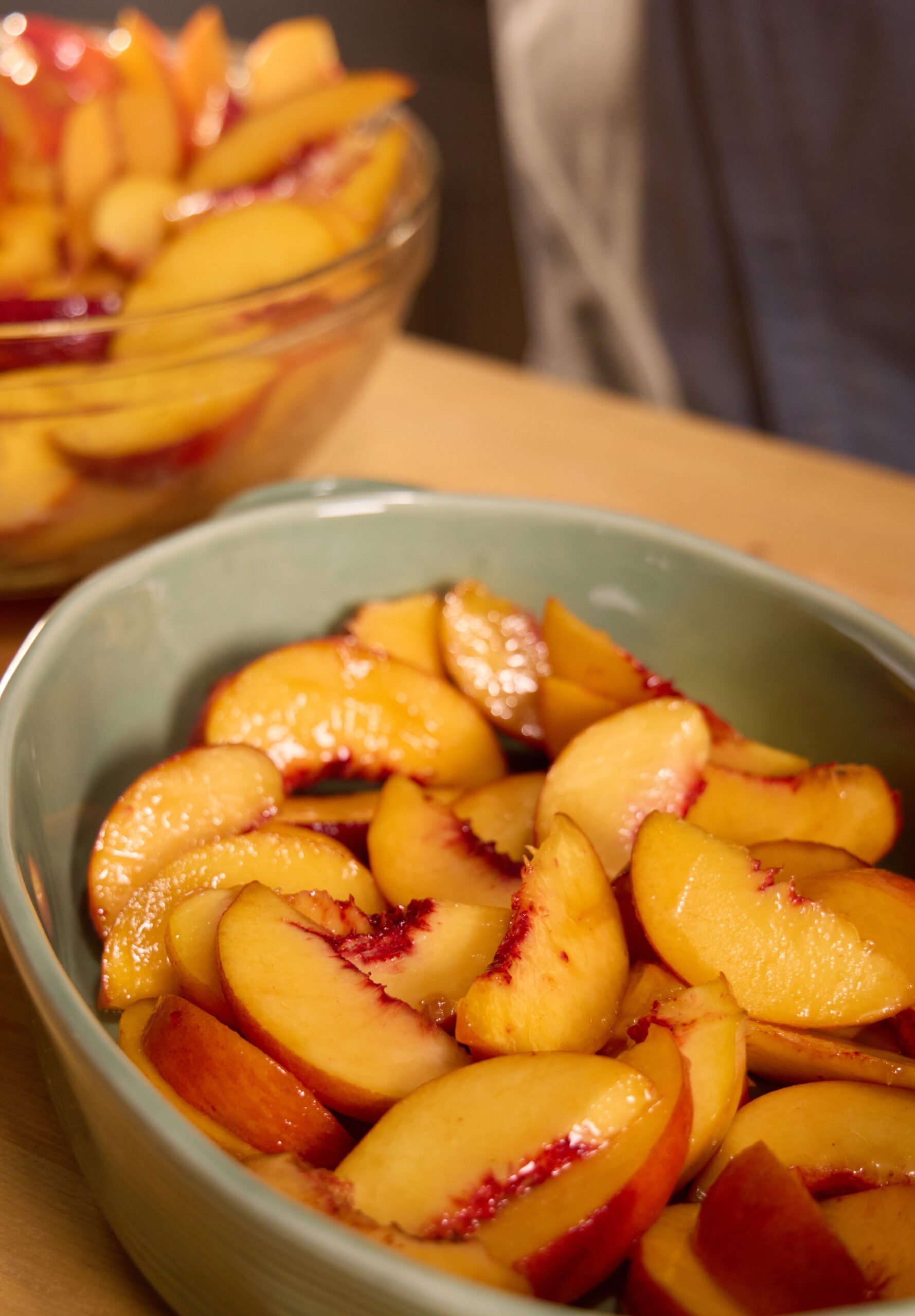
If you take peaches, toss them with a little sugar, and put them in a baking dish, then top them with dough, you’ll end up with a delicious peach soup with bread on top. Cobbler must be thickened.
Thicken your cobbler with your favorite starch. We like cornstarch for this, Brown Eyed Baker prefers tapioca starch. You can choose your starch based on your own preference. But we don’t recommend using flour, as it tends to cook up a little more gloopily.
Starch science: How do starches thicken a sauce?
Starch granules consist of tightly wound, long strands of glucose molecules. As the granules absorb water and heat up, they burst, unraveling into tangled nets of glucose strands. Those long-chain molecules stick to each other, criss-cross, and make it harder for the water to flow freely—they thicken the water. At that point, the sauce or filling also becomes more translucent.
Gelation—the process that causes thickening—starts around 120–140°F (49–60°C), depending on the kind of starch you’re using. Though it is a thermally significant process, we’re not going to break out our Thermapen® ONE to check the temperature of the dish yet. We’ll trust the filling to heat enough to thicken.
But we can proactively help it along its way. Following the advice of Serious Eats, we prepared our peach filling and put it in the oven in our baking dish for 10 minutes while we made the biscuit topping. This thermal head-start primes the power of the starch by getting the filling that much closer to gelation. That means your cobbler sauce will have the rich, lustrous look and feeling you want.

Peach cobbler doneness
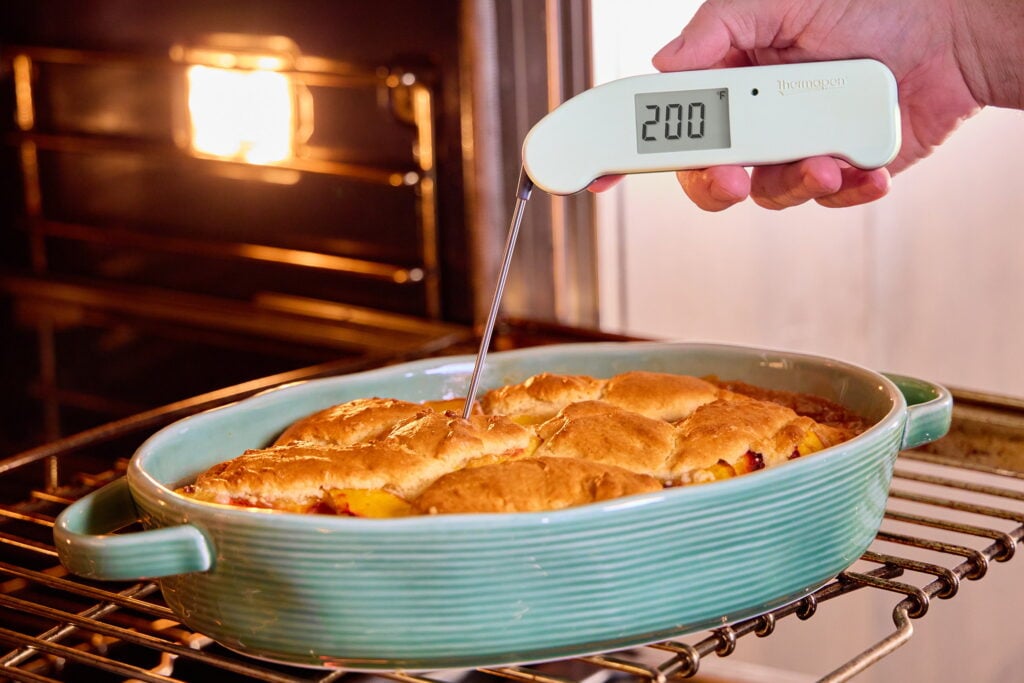
There is a place for your thermometer in this cook: biscuit doneness. No one wants a raw-doughy biscuit on top of their cobbler, and it would make you a bad host to serve one. So now is the time to break out your Thermapen ONE.
Biscuits fall in the “quick breads” category, and should be pulled a temperature no lower than 200°F (93°C). A couple of quick pokes with your Thermapen will tell you if all your biscuits are completely done or not. (That one-second full reading helps you get it back in the oven fast if they aren’t there yet.) Judging them strictly by eye is not a reliable test, but true temperature is!
After you remove the cobbler from the oven, let it sit for 10–20 minutes to cool and for the sauce to thicken up.
Is there an easy peach cobbler recipe?
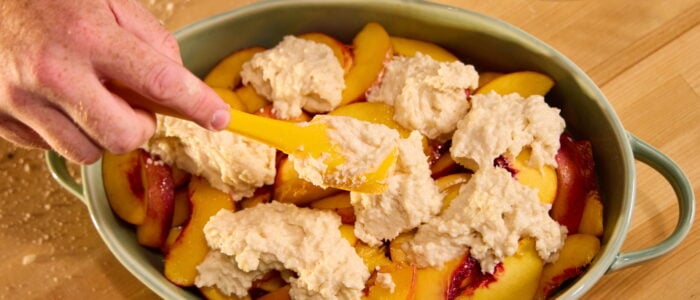
There are two ways to answer this question. First, Yes! This is an easy peach cobbler recipe. There is no great technical skill. You just slice peaches, toss them, make the easiest biscuit dough ever, and bake.
Another way to answer the question is…”that depends.” It depends on what you call easy and what you want out of a cobbler.
Many “easy peach cobbler” recipes take a few cans of peaches, empty them into a vessel, and pour on a dry cake mix and some liquid. And sure, that’s easy. But it’s also barely a cobbler—more of a buckle than anything. 1
And it’s fine. It’s incredibly sweet, the peaches taste like canned peaches with sugar on them, and the topping isn’t biscuit. But it’s not nearly as good as this cobbler is, and it’s only marginally easier.
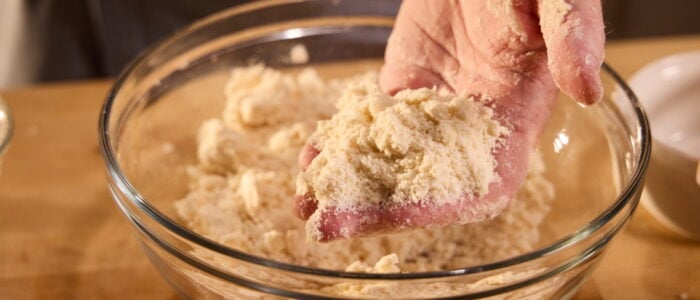
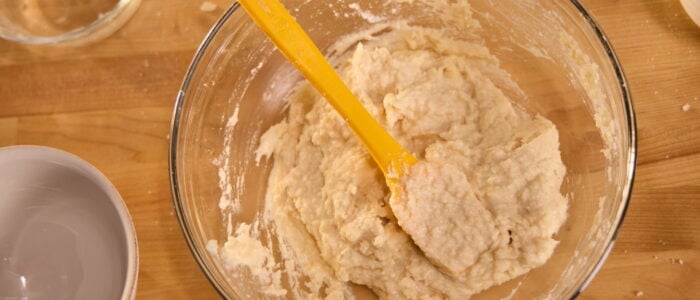
If you put in the little bit of effort to use fresh peaches and make the quick biscuit, you’ll be rewarded with flavor that surpasses your effort. If you take the easiest route, you’ll get a cobbler that tastes like you took the easiest route.
Perhaps that’s a snobbish way to look at things, but with this recipe, you can put in a tiny bit of time and reap incredible results. The flavor you get from fresh (or fresh-frozen then thawed) late-summer peaches beats canned and cake-boxed versions hands down.
Can I make peach cobbler with frozen peaches?
Yes. Thaw them completely first. It will be best if they are fresh-frozen, not previously cooked. If that means a zip-top bag packed to the gills with peaches that have frozen together in a block, that’s fine. IQF peach slices from the store will be great too.
Just know that you shouldn’t expect the same peach texture as you would get from slightly underripe fresh peaches.
Peach cobbler filling: skins or no?
This is up to you! We made a test batch wherein we blanched and peeled the peaches, and it was delicious. And we made the batch you see in these photographs. And it was delicious. We really liked the look of the skin-on peaches for photography, and when we ate this batch, we didn’t even notice them. Or if we did, they just added a little texture.
If you want a more homogeneous mouthfeel, blanch your peaches for a minute or two, then shock them in ice and peel them. If you want a more rustic appearance and taste, leave those skins on! Either way, it’ll be wonderful.
Head to the store, find a farmstand near you, or shake your own tree this weekend and make a cobbler. Remember to temp the biscuits to know they’re just right. Then serve it, hot or at room temperature, on its own or with some vanilla ice cream.
People will be sad they didn’t heed your warning to save room! But that doesn’t mean you can expect any leftovers. Happy cooking!
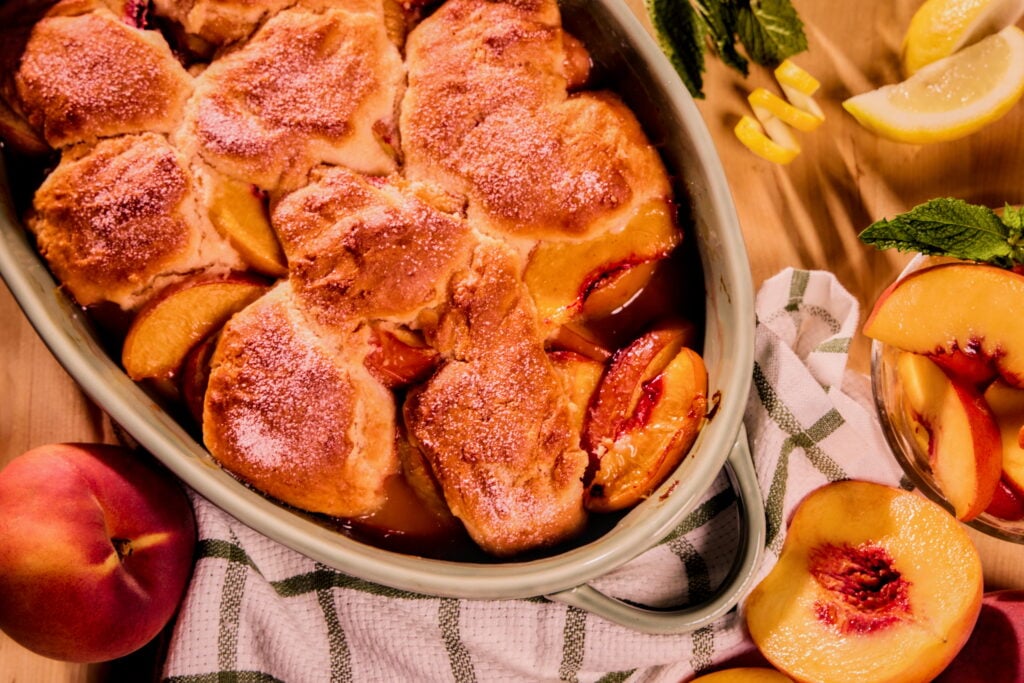
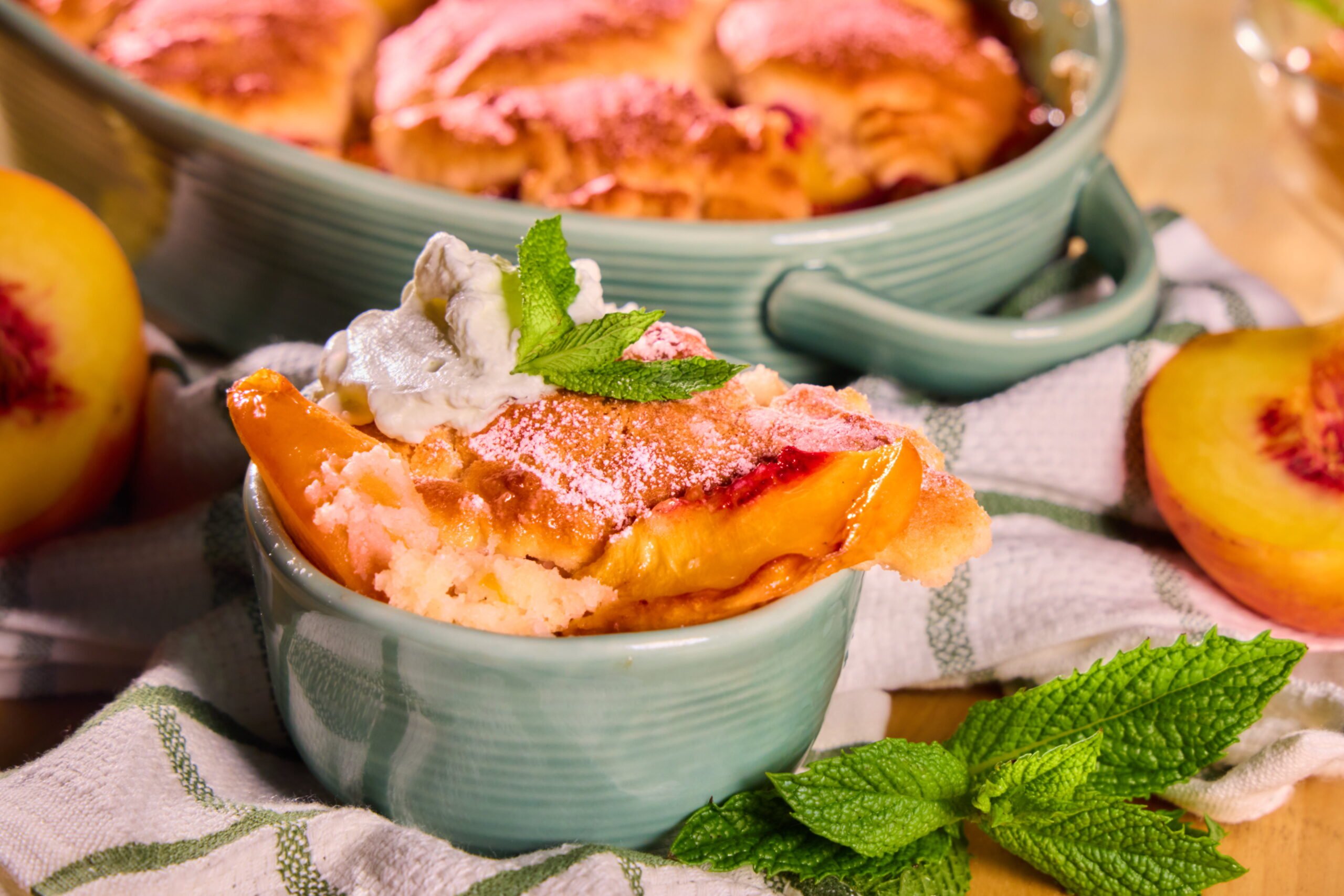
Peach Cobbler Recipe


Ingredients
For the filling:
- 3 lb Fresh peaches pitted and sliced (with or without skins)
- ¼ C Sugar
- ¼ C Brown sugar
- 2 Tbsp Fresh lemon juice
- 1 tsp Vanilla
- 1 ½ tsp Corn starch
- Pinch of salt
- 2-3 drops Almond extract
For the topping:
- 1 C (5 ¼ oz) AP flour
- ¼ C Sugar
- 1 ¼ tsp Baking powder
- ¾ tsp Kosher salt
- 6 Tbsp Butter chilled, cut inot ¼” pieces
- ½ C Whole milk
- Whipped cream or ice cream for serving
Instructions
- Preheat your oven to 400°F (204°C).
- make the filling by combining all filling ingredients and placing in an 9”-square baking dish, or equivalent.
- Place the dish in the oven and bake for 10 minutes while preparing the topping.
- Cut together the dry ingredients and the butter, rubbing it through your fingers, until it resembles coarse meal.
- Stir the milk in with a silicone spatula until just holding together. Don’t overmix!
- Remove the peach pan from the oven and drop the batter/dough onto the cobbler in splotches, leaving a hole in the center.
- Put the cobbler back in the oven and bake about 40 minutes, until a Thermapen ONE inserted into the biscuits reads 200°F (93°C).
- Let it rest 20 minutes before serving with your chosen topping.
Maybe I lied when I said no one would come after you.↩
1 C 5 ¼ oz AP flour
Is this 1 cup plus 5 1/4 liquid oz of flour?
It should be 1 volume cup of flour, or 5 1/4oz by weight of flour. I missed the parentheses.