

Butterflied Pork Butt: The Fastest Way to Juicy, Smoky Perfection
Get juicy, smoky pulled meat with more bark in every bite—no 12-hour cook required.
We all love good pulled pork. It tastes like summer and a perfect food for a family BBQ. But it takes forever to cook, sometimes ends up dry and overcooked. And there usually just isn’t enough flavorful bark and seasoning to go around.
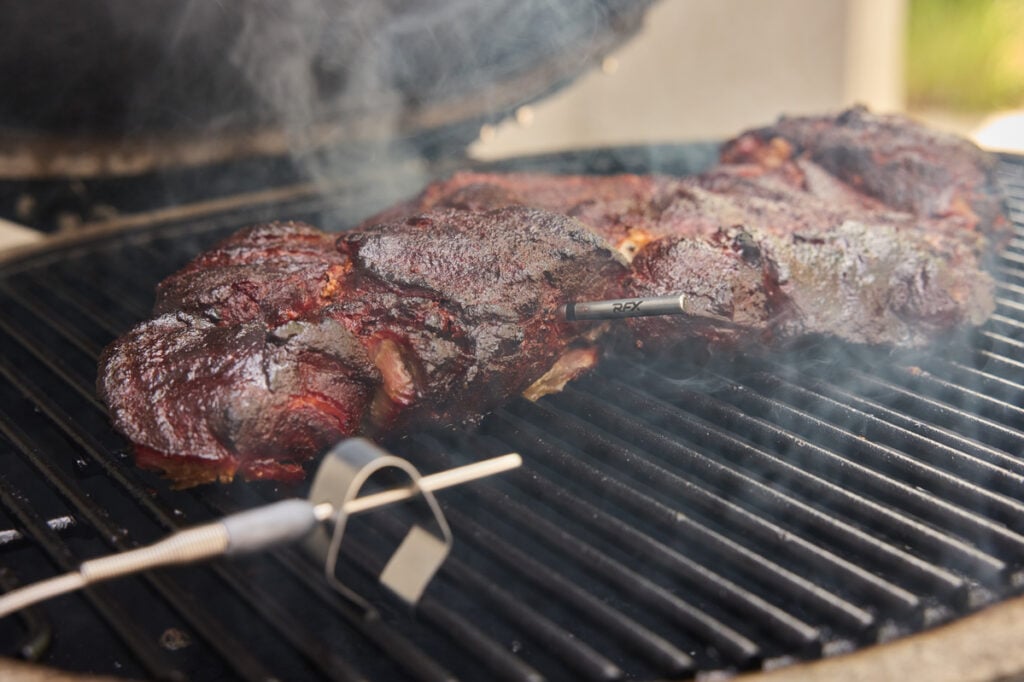
We wondered: Can make pulled pork that’s smokier, more tender, and faster than the traditional methods? Spoiler alert: The answer is yes. With an RFX™ Wireless Probe Starter Kit—along with some thermal thinking and clever butchery—we were able to master killer meat in about four hours.
Our butterflied pork butt ditches the bone in favor of some heavy seasoning. By the time it’s done, every bite has crust, smoke, and the kind of pull-apart tenderness you usually only get after an all-day cook. Read on to learn how to make your own.
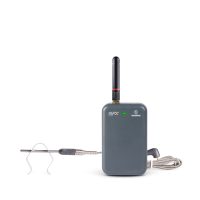
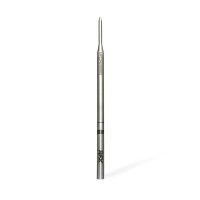
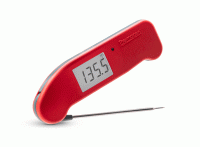
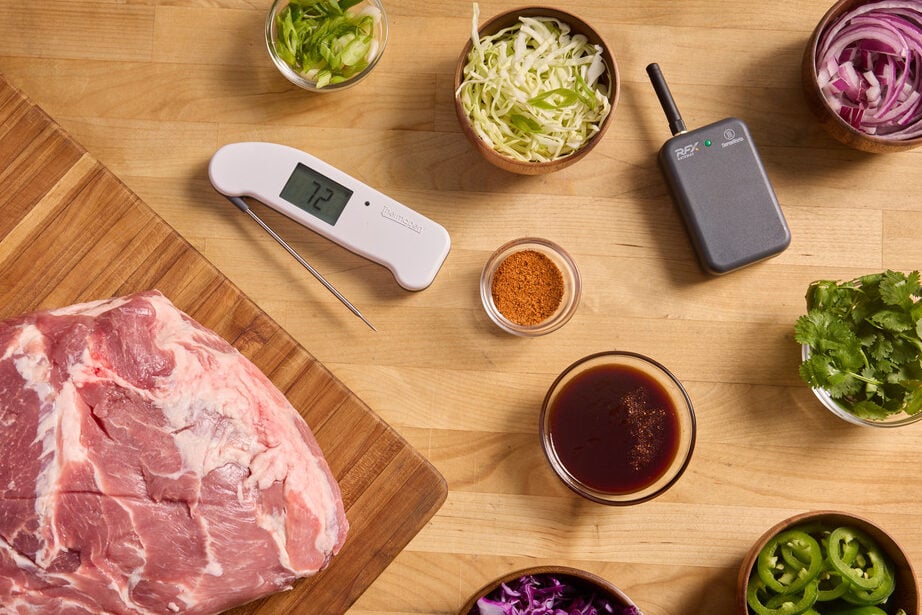
Get the gear you need for this cook:


The Problems With Traditional Pulled Pork
They Are Slow and Can Get Dry
To make a pork butt pull-apart tender, you need to break down its connective collagen—a process that requires both time and heat. Usually they get enough of both by the time they hit about 203°F (95°C). The problem, from a time perspective, is the shape of a pork butt. They’re shaped like an oblate spheroid, or maybe a giant meat boulder. However you describe them, they’re thick and wide with a relatively small surface area.
That bunched-up mass makes heat transfer slow. If you rush a pork butt, the outside dries out long before the inside is tender—which explains why 12-hour cooks are the norm…and why some of them still yield overcooked results.
They are Often Bland
Even when you nail the temperature and texture on a pork butt, there’s still the issue of seasoning. We all know that the best bits of the pork butt are the ones with the most bark—those smoky, seasoned edges. Sadly, in a whole butt, the ratio of bark to meat is low. Once everything’s pulled and shredded, the inner meat often ends up…lackluster at best.
That blandness is why it’s often sauced and why many pitmasters inject pork butts with flavorful brines and mixtures—it’s a great workaround, but not everyone has the gear (or time) to take that extra step. This is where our method comes in.
Our Solution: Butterfly Your Pork Butt
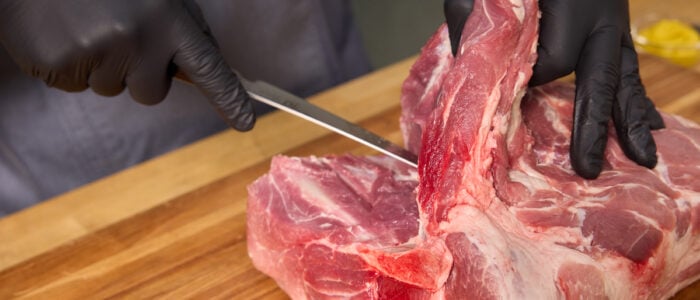
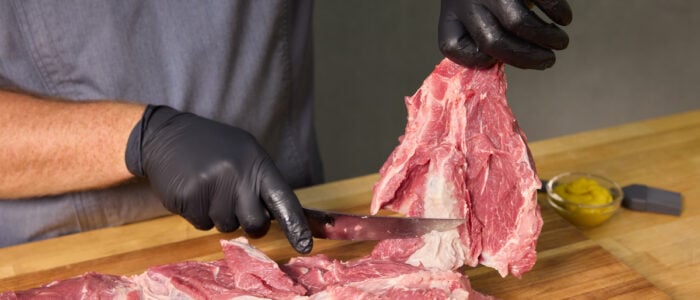
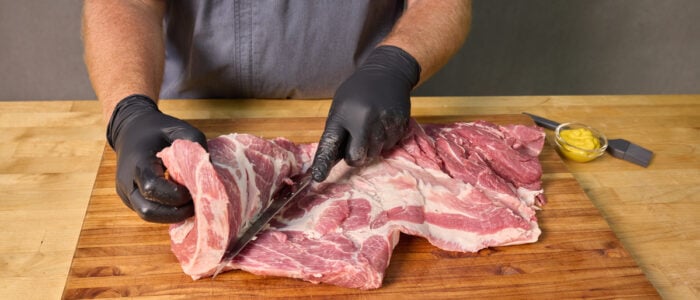
By removing the bone (or buying a boneless butt) and slicing the shoulder so it lays flat, you create a longer slab of meat that’s only a little thicker than a rack of ribs. When the butt is rearranged like this, you gain two major advantages:
- Faster Cook Times: Heat penetrates more quickly through the thinner cut.
- More Flavor: The increased surface area means more rub, more bark, and more smoke flavor per bite.
The result? More smoke, juicier texture, richer bite—in a fraction of the time.
But Doesn’t Bone-in Meat Taste Better?
Good question. The idea that bones add flavor is surprisingly controversial. As Kenji López-Alt points out for Serious Eats, “The flavor exchange theory is completely bunk…The bone’s main role is insulation. It slows cooking and protects meat from overcooking. That’s why meat near the bone is usually more tender.”:
So, unless you’re cooking something where looks or presentation matter (like a tomahawk steak), there’s no advantage to keeping the bone—especially when we’ll be shredding the meat anyhow. Plus, boneless butts are easy to come by and relatively affordable at large discount club stores.
How to Cook Butterflied Pork Butt
Step 1: Smoke, Unwrapped
- Butterfly your pork butt and apply rub. (A binder is optional—more of a personal preference than a thermal necessity.)
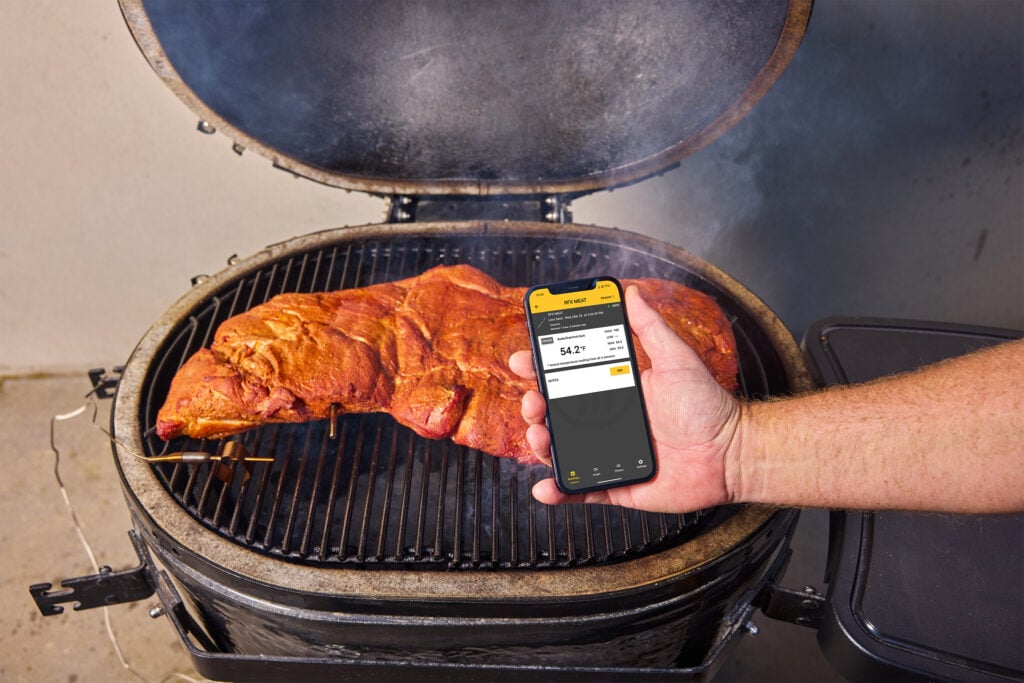
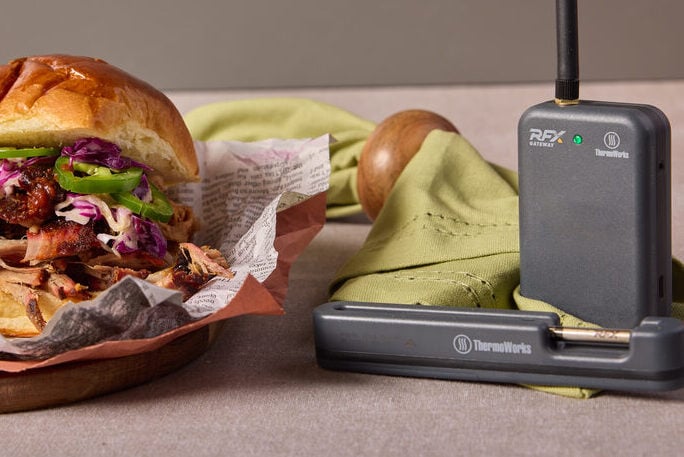
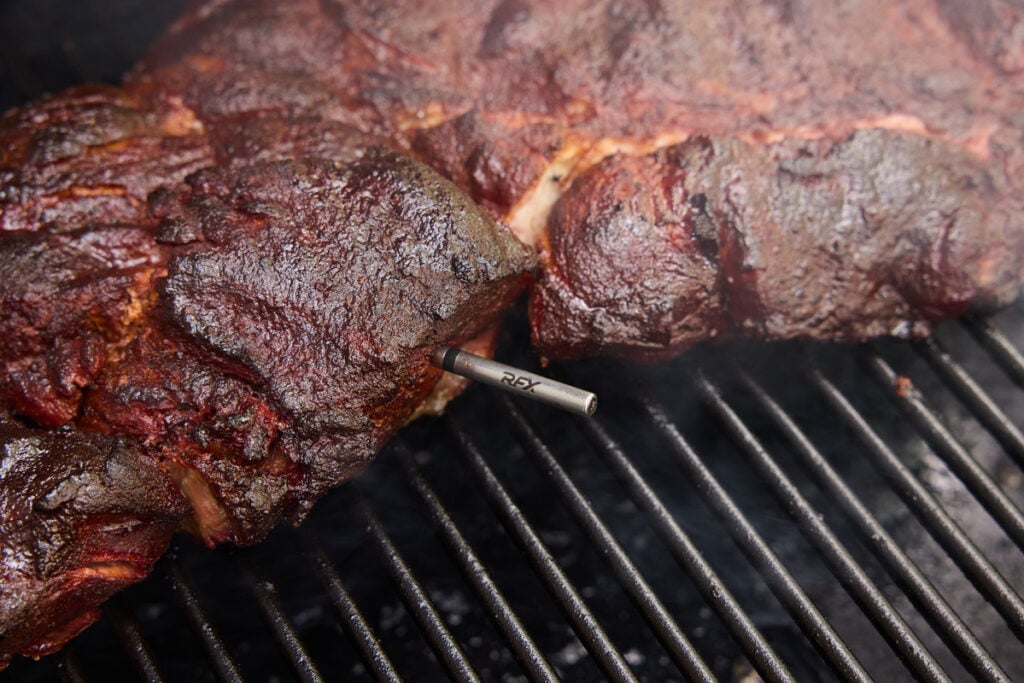
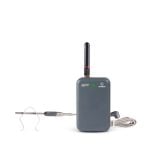
- Insert your RFX MEAT™ wireless probe into the meat, ensuring it reaches the minimum immersion line.
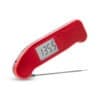
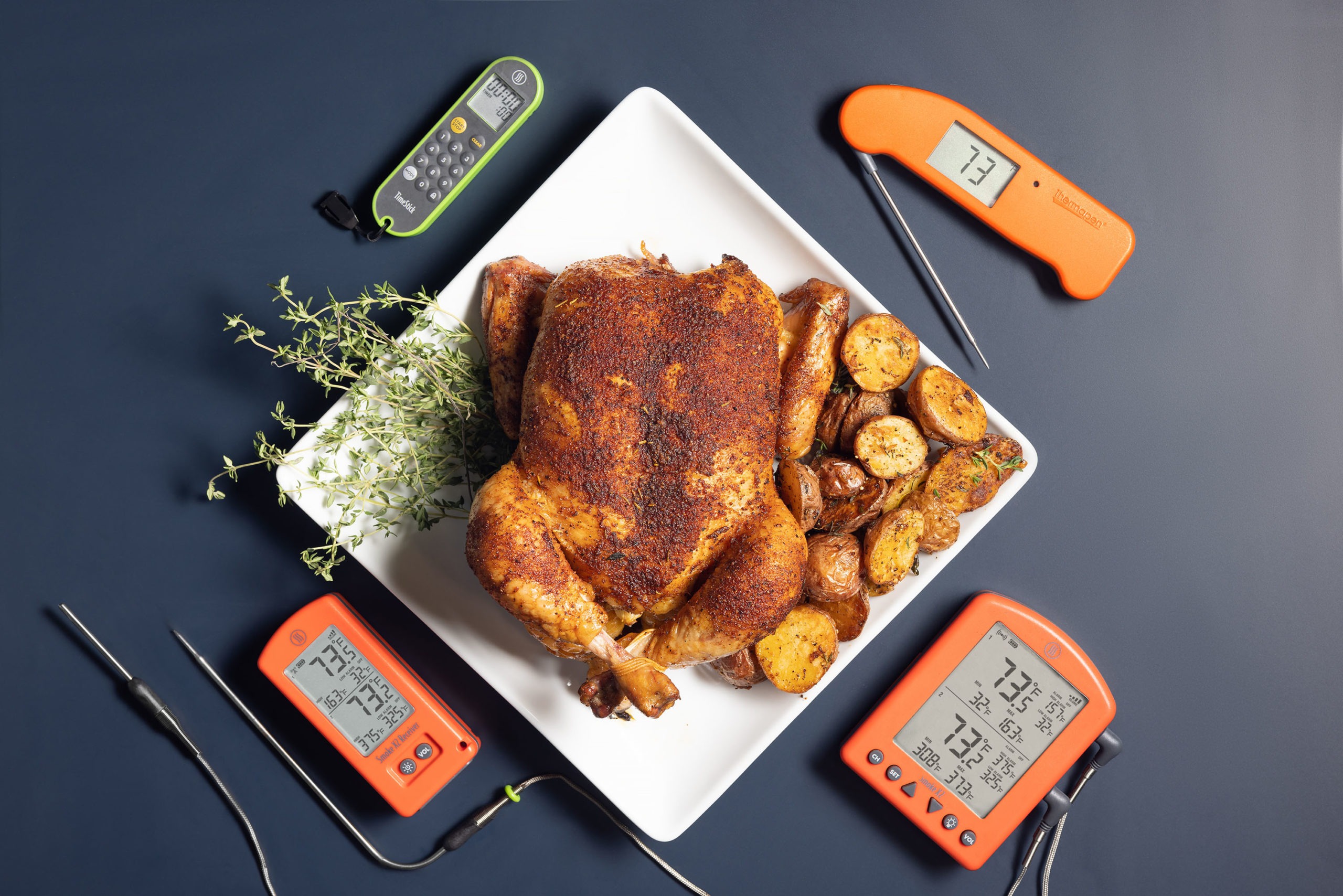
- Smoke your pork butt at 250°F (121°C) for about 2 hours, until the bark sets and the internal temp hits 160°F (71°C). We recommend double-checking this with Thermapen® ONE.
Tip: If liquid pools on top of the meat, prop one side up with foil balls to drain it off.
Wrap the Shoulder
Step 2: Wrap and Cook
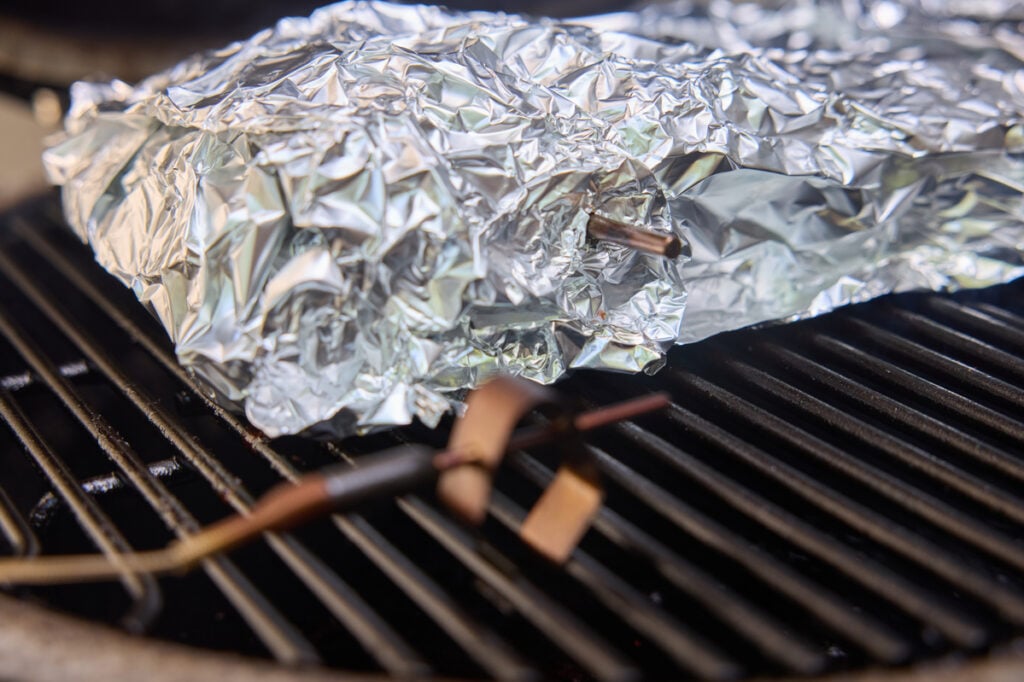
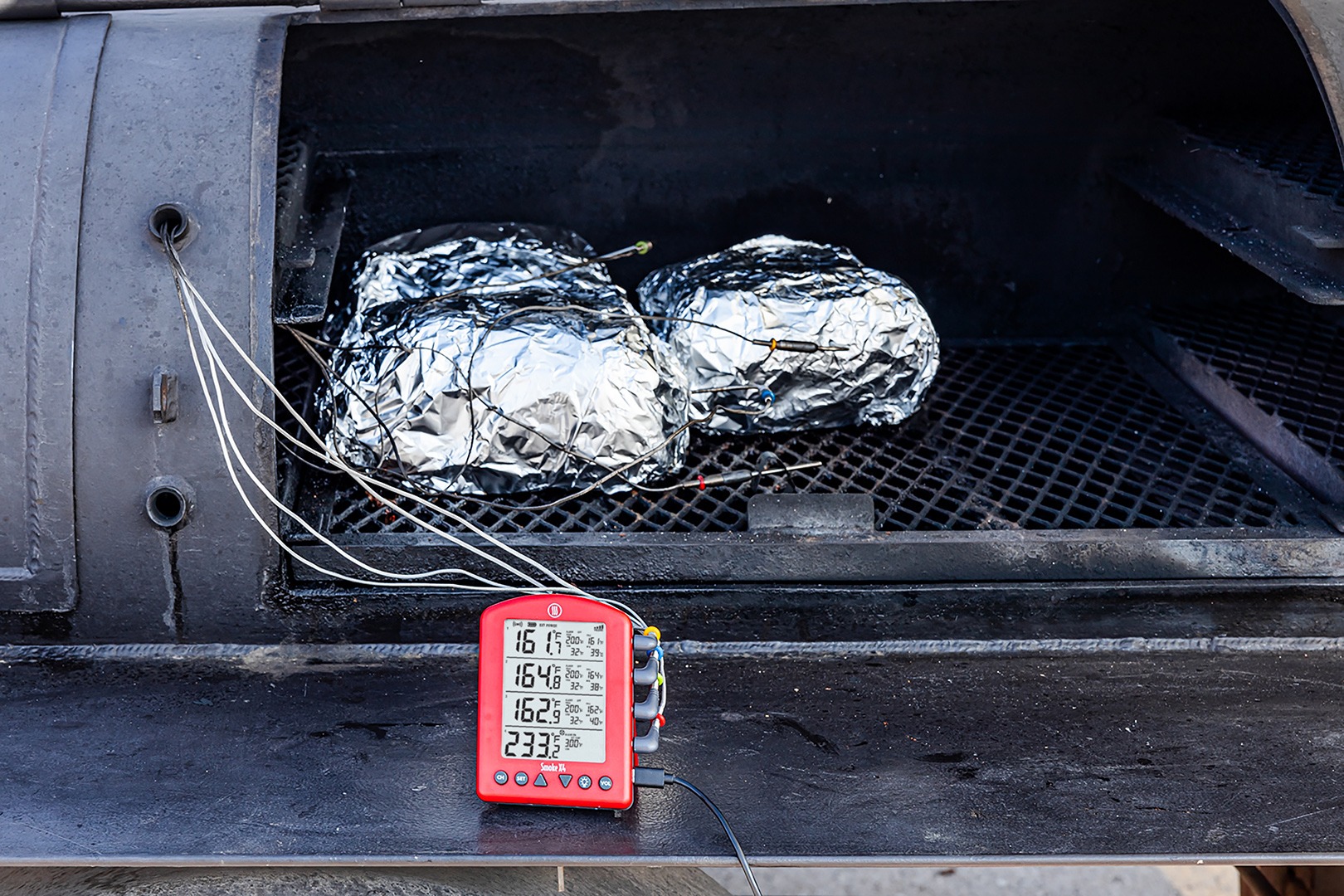
- Once the bark is set, wrap the pork tightly in foil. You can add extras like butter, apple juice, or brown sugar—especially if you like a sweeter flavor profile.
- Re-insert RFX MEAT probe through the foil into the meat, and return the pork to the smoker. Set your high-temp alarm via ThermoWorks app to 203°F (95°C).
This wrapped stage takes about 2 more hours, during which you’ll break down that connective collagen.
Step 3: Unwrap and Finish
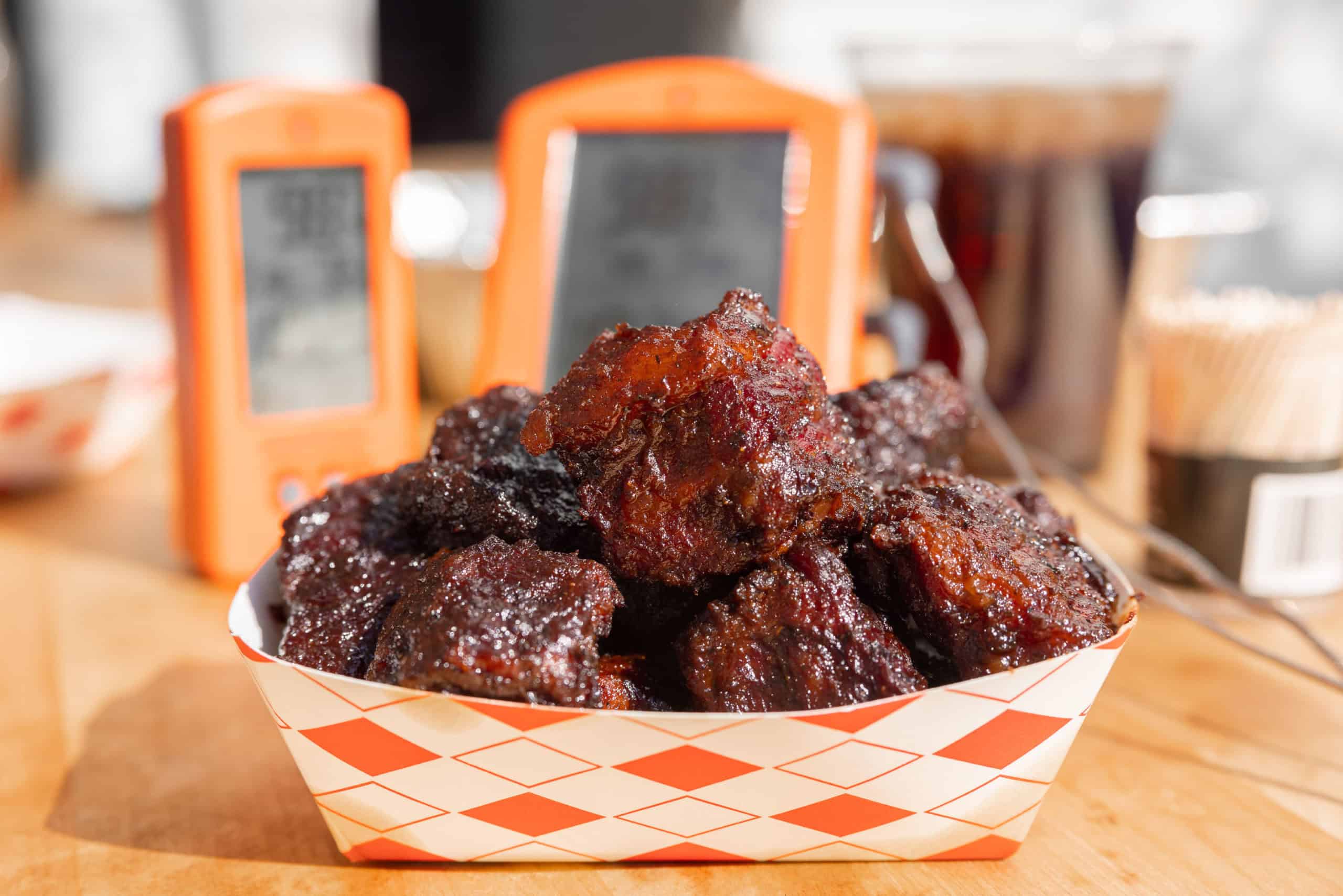
- Unwrap the pork and return it to the smoker for another hour to re-set your bark and evaporate any excess liquid.
This is also your time to brush the pork with a sticky-sweet sauce to give it a lacquered appearance, if you’d like. Expect the internal temp to drop sharply right after unwrapping. That’s normal—moisture is evaporating fast.
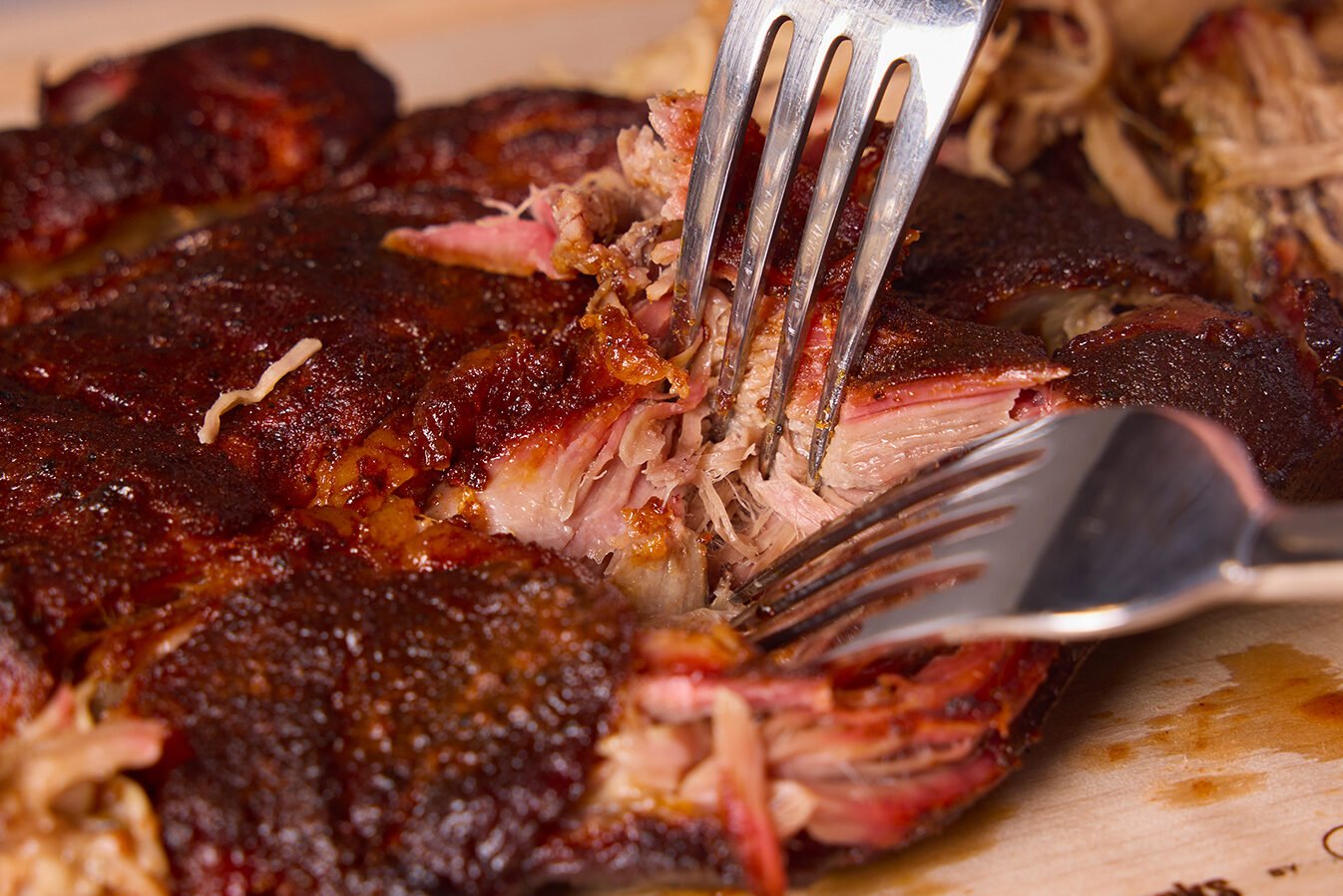
This has become our go-to method for pulled pork. It’s faster than traditional low-and-slow cooks, easier thanks to tools like RFX, and boasts more bark and deeper smoke than its “traditional” counterpart. Try our butterflied pork butt this weekend—or even tonight. You could have melt-in-you-mouth shredded meat ready by dinner. Enjoy better pulled pork, easier, with thermal thinking and ThermoWorks tools. Happy cooking!
Butterflied Pork Butt: A Recipe for Fast Pulled Pork
Ingredients
- 1 pork butt boneless, or deboned yourself
- 2 Tbsp binder optional
- 6–8 Tbsp BBQ rub
- Apple cider vinegar for spritzing
Instructions
Prepare and dry-brine the pork
- If you are using a bone-in pork butt, debone it. In either case, butterfly the pork butt by cutting along the seam already created by the deboning, rolling the pork out as you go until the whole thing is about 1–2” thick. Trim off any stray bits that may burn in the smoker.
- If using binder, rub it into the meat all over. Season the pork butt all over with BBQ rub, keeping one hand clean to touch the bottle and using one “meaty” hand to move the pork around. Place the pork on a sheet tray on a rack and place in the fridge, uncovered, overnight.
Cook the pork
- Using Billows and RFX GATEWAY, preheat your smoker to 250°F (121°C).
- Insert RFX MEAT up to the recommended insertion line in the thickest part of the pork. Set the high-temp alarm in the app to 160°F (71°C).
- Close up the smoker and cook until the alarm sounds, checking every so often and spritzing any parts that start to dry out with apple cider vinegar. Also, check for pooling liquid on top of the pork. If a pool forms, prop the meat up using a foil ball to drain it while it cooks. This should take about 2 hours.
- When the high-temp alarm sounds, your bark should be fairly well set. Spritz the pork and wrap it in foil. Re-insert RFX MEAT through the foil up to the recommended insertion line. Put the meat back on the smoker. Reset the MEAT high-temp alarm to 203°F. Cook. This should take about another 2 hours.
- When the alarm sounds on the pork, after about 2 hours, unwrap it and put it back on the smoker for the bark to re-set and get tacky. Brush it with something sticky-sweet if you want it to look lacquered and beautiful. Cook for 1 more hour.
- Probe the meat with your Thermapen ONE. The temperature will have dropped a great deal, but check for texture as much as temperature. If it still offers a little resistance in a few places, allow it to rest, wrapped, on the counter for 15–30 minutes.
- Shred that pork! It should be very easy to pull apart and shred.
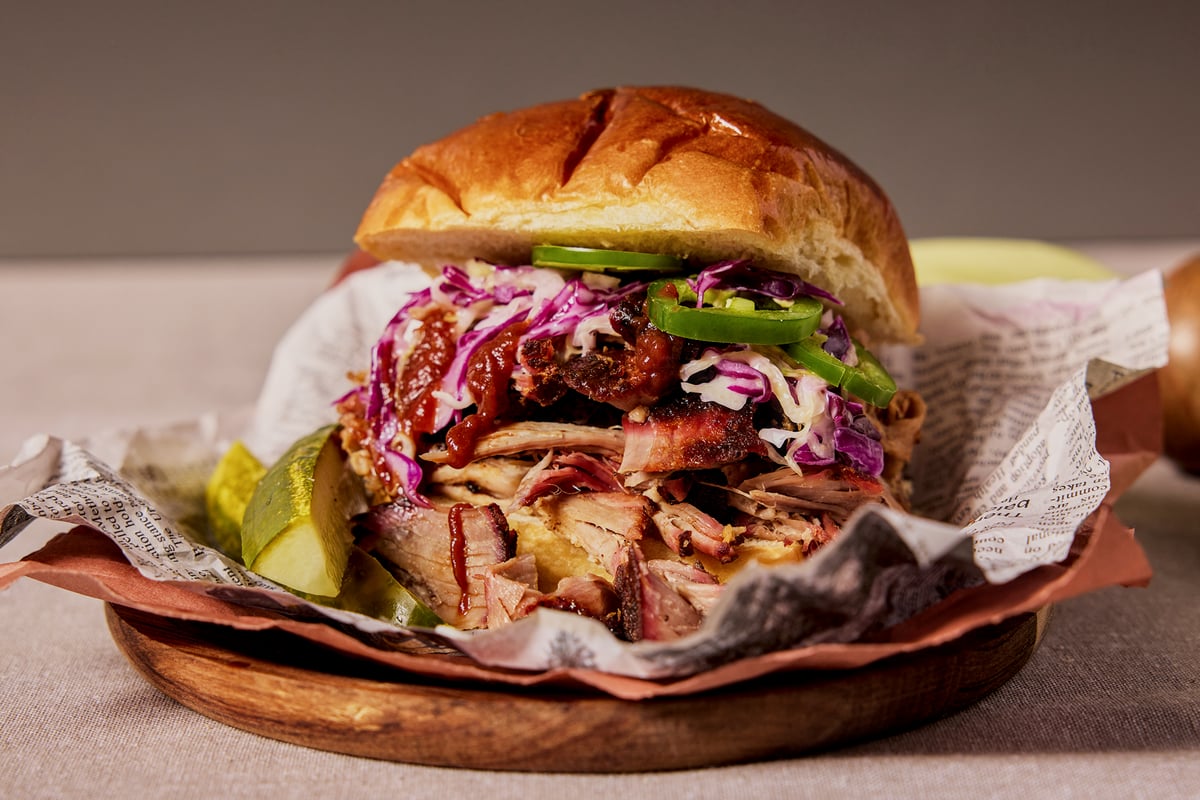
- Serve on a bun with coleslaw, some potato salad, and pickles. Or any other way you want!

Great idea, I am going to try this. I butterfly (spatchcock) Chicken and Turkey, why not a butt! I know it will take less time and cook it until it is done however what is the total time or at least an estimate. Thanks
About 4 hours.
Any thoughts about wood chunks in the smoker?
I love apple for pork, but whatever you like will be great.
This is not easy to come by, but fig wood (wood from a fig tree in case “fig wood” is confusing- it is uncommon after all) is AWESOME for smoking pork. Chicken, too. It makes a very sweet smoke and it is almost impossible to overdo it.
That sounds DELICIOUS! Almond wood is also a subtle, sweet wood.
Most important part of this method was left out, how long did this cook take? Is it two hours, ten? And I don’t see any real bark formation, it looks a little red but nothing like a long smoked pork butt.
It takes about 4 hours total, maybe more for a very large shoulder. The bark was well set and passed the scratch test. Bark will certainly get darker and barkier in a long cook than it did here, but none of us could tell the difference in taste!
Scott,
That’s fantastic! Using a stick burner is fun, but not everyone has the time or the skills. Give the butterfly method a try in your stickburner—I’d love to hear how it goes.
With some rain in the forecast, I have a shorter window than usual. I’m thinking your butterfly method might be just perfect to squeeze the smoking session in. Plus I’m a little busy right now and like the idea of not tending for an extra long time. I’m gonna give it a try on my Weber bullet.
Comment when you do it, I’d love to hear how it goes!
Cooked two pork butts using the butterflied method in my gravity feed smoker yesterday for my family and the neighbors, it came out fantastic. The seasonings were more prominent,and plenty of great tasting bark. It took about 5 hours, using cherry wood for the smoke. Since every body enjoyed it so much I am sure to cook using this method again and again,
I made this yesterday on a conventional 18″ weber kettle with kingsford charcoal briquettes and applewood chunks. In a light rain.
Started with a 7lb 12oz butt. Removed 2lb 7oz of bone and fat in the butterfly process. Put 5lb 5oz on the grill. Temp control was difficult. It varied between 200 and 275 (I do this type of cook very infrequently, so I don’t know how much charcoal to use, how much to open the vents, when I need more fuel, etc.) Apparently I was having about the most fun possible! But, if someone had dropped a nice temperature controlled smoker off on my patio, I wouldn’t hesitate to use it. Rather I would think I’ve now got extra time to do something more fun. If better/easier control helps someone put a better meal on their table then good for them.
Anyway, instead of going back to the grill (and all the control difficulty) for the second half of the cook, I finished with three hours in a foil covered shallow roaster in the oven at 300 F. I know I won’t win any contests doing that.
Total cook time was 7 hours given that I ran too cool on the front end, but the result was great. I will use this butterfly method again for sure. It’s cut 5 hours off my cook time even with my mistakes.
Fantastic!
Hey Randy. You might want to check out the Pit Barrel smoker. I bought one in 2015 and it has really set my backyard bbq’s free! I used offsets before that with mixed results and very long days. This cooker does stuff in about 2/3rds the “normal” time and has very consistent controlled temp pretty much built-in. It allows me to focus on the funner stuff of prepping the meat, experimenting with my own rubs and sauces, and getting other stuff done while the cook is on. There’s always plenty of bark and beautiful red rings. Oh, and not one of my family, neighbors or friends – not even one – has ever complained about the meat being too tender and juicy. Hmmm. Anyway, check it out.
Great great post!
Will try this as soon as I can.
Another example of why I stay a fan of your Co. Thanks!!
Rich,
Thank you! Let us know how it goes!
Isn’t this exactly boneless country-style ribs? (except I might pull them at 195 to keep them a little firmer).
Unfortunately, “country style ribs” seems to be a poorly defined name. It is rather loosely applied by various butchers to either strips of pork butt or of pork loin, depending on what they have on hand. If this is what they sell in your area as Country style ribs, then yes!
I usually cook shoulder whole at about 230-250 F. Even when it does come without a bone and already butterflied, I tie it. Usually takes 16-19 hours. I tried this method yesterday at 230 until it got to 160, wrapped it, added 1/4 cup of broth and finished to 200 at 275-280F. The flavor was great, definitely way more flavorful that traditional way. Normally I enhance the flavor by sprinkling more rub and mixing it in after it was shredded. This time I did not have to do that. One downside, however, was that my shoulder came out a lot tougher than usual. It was very difficult to shred so I ended up slicing some of the pieces. The texture was still pretty good, and was NOT chewy. Guests liked the taste of this method much better.
Tried this yesterday. Overall it was OK. I liked that it had a bit smokier flavor but I didn’t like that it was a bit tougher compared to the non-butterflied version. The cook time was just under 5-hours compared to around 9-hours wrapped and 18-hours unwrapped.
Overall I was hoping for more flavor. I may try this method again and work the bark a little more. My go-to method will still be cooking whole and wrapping but this quick version is nice for when time is a little short.
So, I know that I am committing heresy asking this question, but I live in an apartment now so my Traeger is in storage. If I butterfly the pork, would I cook it (unwrapped) in the oven at about 180 (basically lowest temp on my electric oven :(() until it hits the alarm temp of 160 and then spritz an wrap and bump oven temp to 200 and cook until alarm sounds at 203?
Absolutely! Just because you can’t smoke it doesn’t mean you can’t enjoy some tender meat. I’d still use the temps we recommend for the smoker, part of the point on this one is to cook it more quickly.
Is it doable to start smoke it OUTSIDE of storage? Would that be allowed? Get a few hours of smoke, then finish off in oven. Don’t know if it’s doable at storage site, but when I’m pressed for time, or it’s brrr cold, it works for me. Frees me up to prepare other dishes and warms up the house!
I am going to try this method out soon. I was wondering if this recipe would work without the texas crutch at the end (ie foil wrapping). It strikes me that not wrapping might help the bark develop a bit more. Although, it would add to the cook time, of course. Any tips or advice on whether it would be safe or just silly to try this recipe without wrapping would be greatly appreciated.
Amelia,
I think it would work. Of course, as you say, it will take longer, but I feel certain it would work, and would still be faster than a whole, solid butt. Give it a shot and let us know how it goes!
I’m down with good BBQ, I don’t care how you produce it. Especially at home. It SHOULD be easy IMO. When you have family and a job, smoking a brisket becomes a chore. I personally have to take time off work to do it properly. Having a device that manages temperature better than I can not only frees me up to do things like be with my family, work, take care of other random things, sleep, etc. but it also makes better BBQ, which I think should be the ultimate point at the end, good BBQ. Competition BBQ and restaurants are for sure using technology, very few today are doing what people are calling “traditional” style. If it tastes good, who cares how it was made?
I started with a 8# butt. About 5-6# after removing bone and fat cap. I started the smoke at 10 AM at 270. To my shock, it had reached 160 by 11:30. Wrapped in foil and transferred to a 330 degree oven. Again, to my shock it had reached 190 by 12:45. I decided to slow it down, reducing the oven temp and unwrapping the meat. At 2:30 it had reached 201. Checked it with thermopen and it was like butter. Unwrapping it allowed a nice bark to form.
Verdict:
Only an hour and a half in the smoke was not enough to get good smoke flavor. Next time I will start at 230 degrees. When it reached 160, I will wrap and heat until it reaches 190. Then the last 10 degrees will be done unwrapped.
I tried this yesterday and it will be my go to way of doing pork butt in the future. While it was cooking I misted it every 1/2 hour with a 50/50 solution of Apple juice and cider vinegar and heavily misted it when I wrapped it. After cooking I put it in a cooler and covered it with towels so it could rest. It was very tender, moist and flavorful. My wife raved about it and she doesn’t like pulled pork, or barbecue.
I’m going to simplify and give this a try with pork steaks so I don’t have to do any butchering. I probably will keep my temperature at 225 to give the collagen a little more time to render.
Haha. Totally get your point. It has taken me years to be ok with my focus on taste, with a preference for using technology to make it easy. I am totally capable of doing things the hard way but don’t see the point anymore.
My approach splits the difference. I cut the butt in half just inside the bone. One half bone in, one half boneless. Funny, they cook in half the time. It doesn’t interrupt my sleep schedule having them ready for dinner.
Do you have recipes for the three sauces you like.
Sadly not. I just reach for them at the BBQ restaurants! I improvise them sometimes, but never measure anything for it.
My first thought about this method would be the loss of moisture…..and residual liquid fat that makes BBQ tasty. Why sacrifice those components for more bark when the balance is already there?
I will stay with the whole smoked butt and dress the pulled pork per ENC preference.
There isn’t any more moisture loss, as far as I can tell. This method comes out juicy, fatty, moist and delicious. Personally, I find most pulled pork to be a little bland, and the increase in bark fixes that.
Sounds tasty, but you constantly leave behind folks (like myself) who don’t have a smoker (or a grill, for that matter). Why don’t you publish more recipes that can be cooked in the kitchen, on a stove or in the oven? Or include that variant with the smoking instructions?
You’re right, of course. For this recipe, though, you can follow all the same steps, with the same temps, just in your oven, and it’ll come out great. I’d just use some smoked paprika in your rub to get some smoke flavor in there.
Sounds like a great method! Sure beats a 10-12 hour smoke. I’m going to give it a try this weekend. How did you set up your smoker? Direct or indirect heat, and did you use a water pan?
We did not use a water pan. I’d say the heat was…direct? It was a pellet smoker in this case.
Your thoughts on foil versus pink butcher paper for the wrap portion of the cook.
Both are great, foil will finish the cook faster. There is som transpiration that occurs with the paper, making the “seal” incomplete. ti will still get you through the stall more quickly than naked, but a little slower than foil. But becuase there is some water loss through the paper (resulting in a longer stall than foil) the bark can be a little nicer. I’ll use which ever one is closer to hand.
This is good to know! Gophers finally got my fig tree, so I’ve got it cut and drying now.
The best way to seriously good pulled pork. I have used this method for past two years and 20+ butts. Try pecan wood for a smooth and delicate smoke flavor. I found a “trick” to get the smoke flavor throughout the meat. AFTER shredding, wrap in foil, warm in oven (200 degrees) for 30min to 1 hour. The beautiful flavor of the bark and smoke gets infused throughout the meat. God Bless America. Land of the free, home of the brave and BBQ!
Currently in hour 3 (foil stage). Using a Weber kettle, meaning temps are tough to keep low, but the bark looks nice. Excited to see how this works. Thanks for the recipe!