
Sushi rice (Sumeshi) recipe
Adapted from the recipe by Theng Khang at SeriousEats.com


Ingredients
- ½ C unseasoned rice vinegar
- ¼ C + 1½ Tbsp C granulated sugar
- 2 Tbsp /18g Diamond Crystal kosher salt; if using another salt, use half as much by volume or the same weight
- 1 2-inch-square pieces of kombu
- 2 C 195g short-grain sushi rice (Tamaki Gold Koshihikari is a good brand)
- 2 C water, preferably filtered
Instructions
Make the vinegar for the rice
- Whisk together the vinegar, sugar, and salt in a non-reactive bowl. Add the kombu squares, cover, and allow to soak for 24 hours or at least overnight for the kombu flavor to infuse into the vinegar.
Make the rice
- Place the rice in a large bowl and cover with cold water. Agitate and rub the rice between your fingers until the water is very cloudy. Drain the rice, refill with water and repeat until the water runs clear.
- Move the rice to a fine-mesh strainer and suspend the strainer in a bowl. Run cold water over the rice for 2-3 minutes, allowing it to fill the bowl and spill over the edges into the sink.
- Pour out the water in the bowl and let the rice drain into the bowl for 10 minutes.
- If you're using a rice cooker, follow the manufacturer's instructions for making sushi rice in the cooker.
- If cooking on the stove, put the rice in a 2–3 qt. pot with the filtered water. Bring to a boil over medium-high heat, then reduce heat to a low simmer and cover the pot.
- Cook until the water is absorbed, about 10–12 minutes. Remove from heat and allow to steam in the pot for another 10 minutes. Try not to cook past the point where the water is all cooked out or you will get toasted rice on the bottom of the pot—tasty, but not great for sushi.
- Measure out 6 Tbsp plus 2 tsp of the seasoned vinegar.
- Move the rice to a large, nonreactive pan, like a 9 x 13" glass cake pan. If there is any crusty toasted rice, keep it out of the final product.
- Pour the seasoned vinegar over the back of a rice paddle as you wave the rice paddle back and forth over the rice—this helps distribute the vinegar evenly over the rice.
- Use the paddle to flatten the rice gently into one even layer, breaking up clumps as you go.
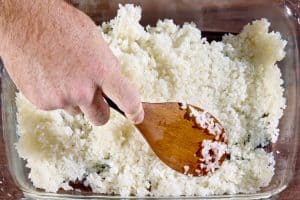
- Scoot all of the rice to one side of the pan, then cut out and flick paddle-sized chunks of rice from the main body to the other side of the pan, cutting up and small clumps you find. the point here is to make sure every grain of rice has the chance to be individually seasoned on all sides, that no clumps are blocking the absorption of the vinegar. Keep it up until all the rice is separated and in an even layer again.

- Let the rice rest for a few minutes, turn use the paddle to turn the bottom to the top all over the pan.
- Now test the pH of your rice using your pH meter. Remember to calibrate before testing using the appropriate buffering solutions and to make a slurry of the rice with some distilled water (a small mortar and pestle is great for making the mush).
- If the measured pH is above 4.6, add more of the seasoned vinegar to it and test again.
- Your rice is now ready to serve or save for later! If you keep it in the fridge overnight, let it sit at room temperature for a few hours before you make your nigiri, rolls, or anything else.


Tried this recipe?Let us know how it was!